Stop Your Dreaming and Your Idle Wishing

The DeclineMy heart belongs to the Village Green, but as of late, I’ve been waking up with the rhythmic quips of Arthur dancing merrily throughout my head.

Yes sir, no Sir. Where do I go Sir? What do I do Sir? What do I say?

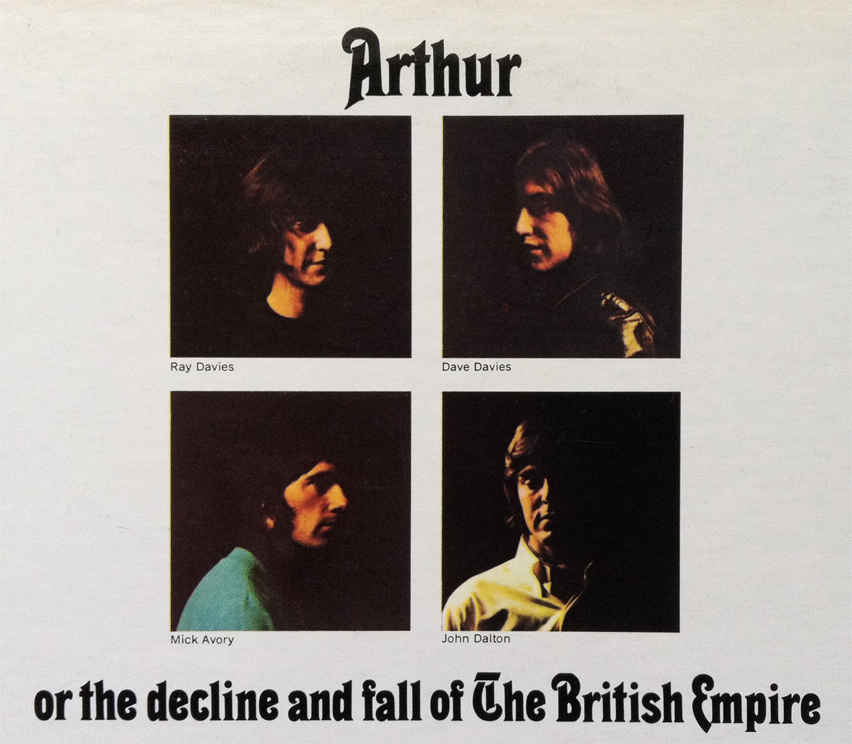
Not to sound like a blemished disc, but in my humble opinion, it really doesn’t get any better than the Kinks. 1968 gave us The Kinks Are the Village Green Preservation Society, and the world was forever grateful. 1969 brought us Arthur (or the Decline and Fall of the British Empire), and we were once again reminded of how fortunate our helpless souls really are. GOD SAVE THE KINKS!
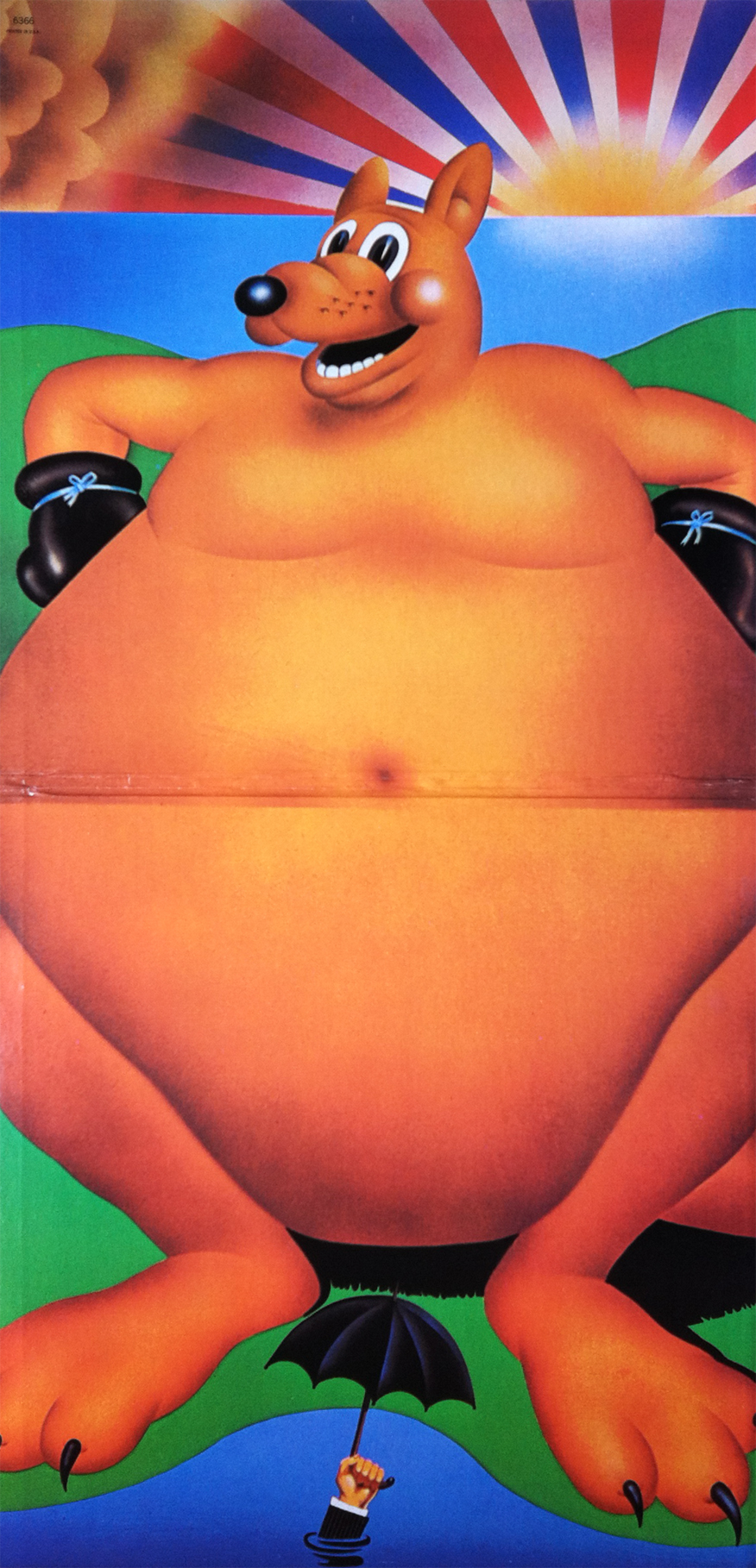
If Only Life Were Easy it Would Be Such Fu-u-u-un!

Arthur1969 was a colorful year… or so I’m gathering. Fat-assed, punchy kangaroos named Arthur (with an apparent case of the dribbles), baking, medium-rare against the British sun, make for a rather kinky inner gatefold design. Had the music for Arthur (or The Decline and Fall of the British Empire) not been so impeccably genius, such mundane overindulgences may have garnished more criticism, but as it stands (or squats), this objectifiable throwaway acts more as a condiment for chuckles than an in-depth revelation of the band.

The British sun sets over many lands… as well it should. God save the Kinks!

Burl Ives Sings Little White Duck

The IvesFrom the big, barren beyond to the boisterous, bellowings of Burl Ives. Burl Ives Sings Little White Duck, nonetheless… (manufactured by underpaid and sleep deprived enthusiasts in Southern California… The Prudent Groove), to a room scattered with eager young minds with nothing more than the hopeful wonderment of an undeveloped mind, an acoustic guitar, and the classic Burl Ives goatee.

Burl Ives Sings Little White Duck raises more questions than the amount of entertainment it provides, but I doubt my kind is the target demographic. I’ve got a lot of respect for the man, and not just because my father sported the same goatee one year for Christmas. For me, Burl’s warming tone is reserved for the winter months, but now with this new addition, the listening radius may be expanded to those rare times when I feel compelled to relive the first grade.

The Planets, Circa: 1958

HolstThe dynamic eccentricities of classical music are foreign to me. I don’t know near enough about the genre to speak with even a Kindergartener’s education (not knocking Kindergarteners… they are people too), but I know what I like, and I like The Planets.

Seven tracks representing all the known planets circa: 1916 (omitting Earth, for obvious reasons, and poor, poor Pluto), The Planets, by Gustav Holst, has been respected the universe over, for the past 98 years, while monumentally demanding a home in every serious collector’s nook.

Listening to Isao Tomita’s interpretation of said album while formulating this entry may have been less than a logical endeavor, but experimentation has its place.

Happy Birthday, Emile Berliner

Emile BerlinerToday, we honor the birth, ingenuity, and modern-day-forward-thinking of phonograph pioneer, Emile Berliner. Evolving from the Edison-based cylinder phonograph that preceded him, Mr. Berliner had the wherewithal to secure his disc record gramophone into the thickened soil of format obsessed enthusiasts, and whose achievements in developing the preferred, modern day musical vehicle (as of the past decade +) need not go overlooked. Happy Birthday, Mr. Berliner, and thank you for shining a light into the darkened void of my obsessive behavior… this next round is on me.

Duophonic

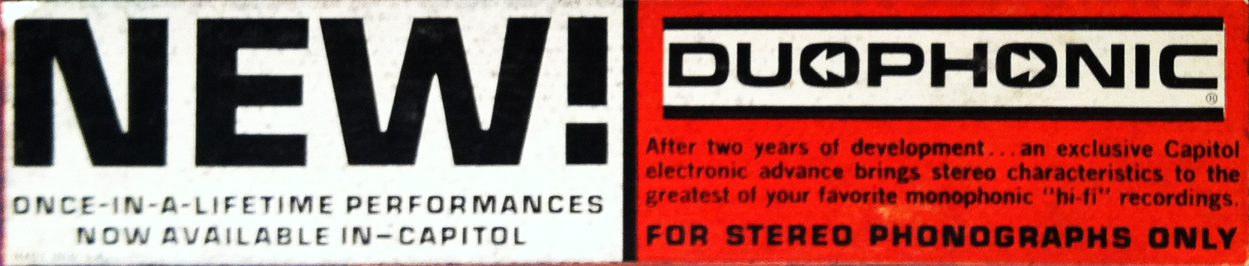
DuophonicThe cheap man’s stereo, Duophonic was little more than a 1961 marketing ploy devised to capitalize on the illuminating craze of stereo LPs, while simultaneously rehashing mono recordings to fool the listener into “hearing” (or “not knowing the difference”) true stereo sound. This Wikipedia article spends a lot more time on the subject than I’m willing to offer this evening.

Now I Don’t Hardly Know Her, But I Think I Could Love Her

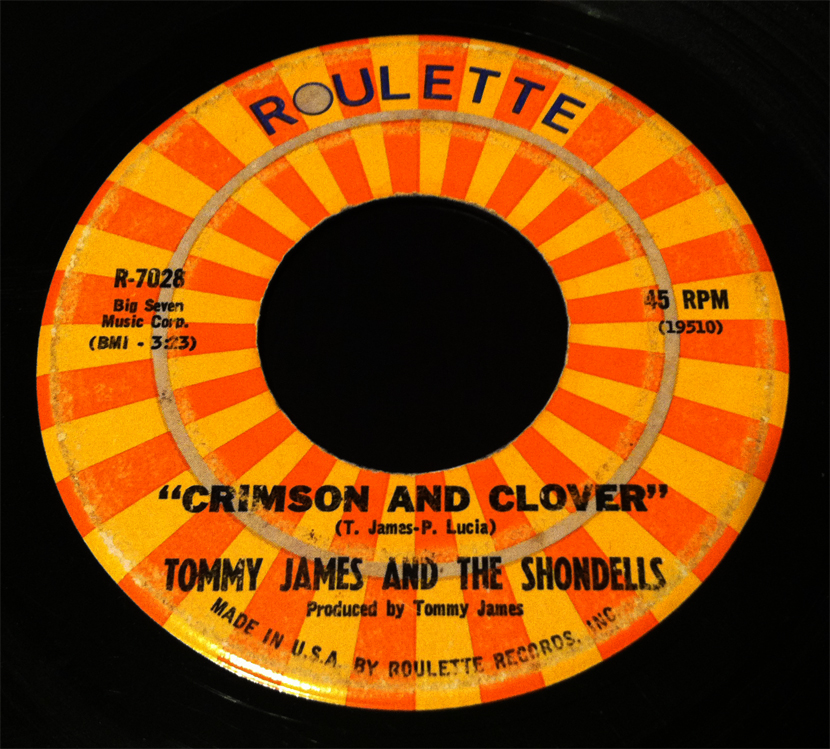
RouletteCrimson and Clover was probably the first “perfect” song I’d ever heard. I was 13, at a Jr. High dance and, well, you know how things are in Jr. High… Crimson and Clover, like the tail of some whoever I was chasing that week, managed to elude me for several years, but her lingering, abundant impact was always just below the surface of everyday stagnation.

Monetarily it may be nothing of collector-head-turning significance, but this 45 of Crimson and Clover is easily one of my most cherished records.

(On a side note… I’d become aware of Tommy James by means of an often-told story, offered, to whimsical delight, by my parents. Apparently ol’ Mr. James, well past his prime, was making a “to-do” of himself at some back-water club in rural Wisconsin in the late 70s, all the while wearing tight, revealing, white trousers. Some stars dimmer, but never really fade away… so long as a fresh pair of tighty whitey trousers are at the ready.)

Let’s Be Honest

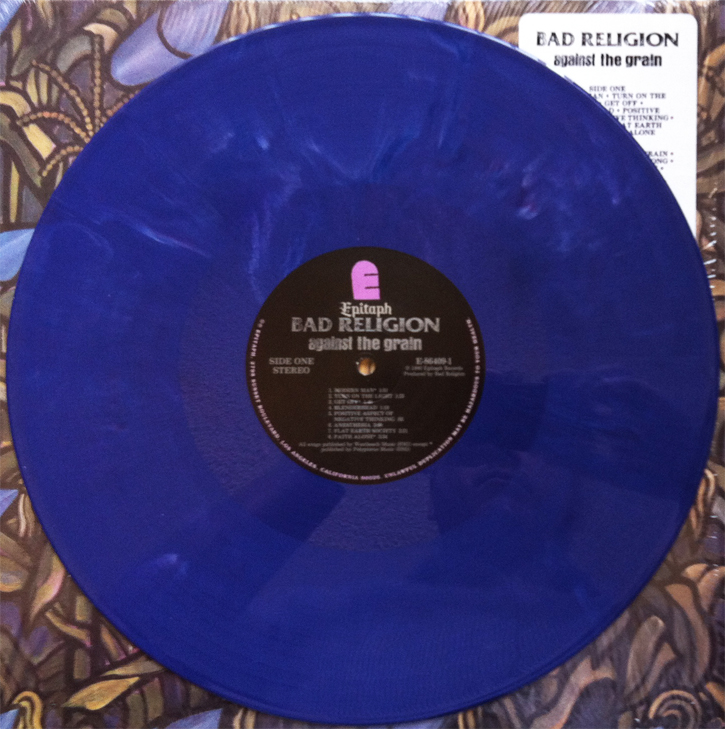
GrainThis is a picture of a recent (as of a few years) reissue of Bad Religion’s 1990 staple, Against the Grain. I’m certainly a fan of BR, even though I wouldn’t be the first to admit that once you hear one BR song, you’ve heard every BR song, but I’ve always tended to pass up BR releases every time I ran across one. Not entirely sure why, considering their history amongst my favorite genre, but perhaps BR’s role in my chronological music timeline has yet to come to true fruition. Time will only tell, but in the meantime I’ll simply forgo the spin, and admire Against the Grain for its aesthetic beauty.

The Most Difficult Decision in the World, Some 248 Years in the Making (Part 1?)

Best of MozTo narrow down the overpowering wealth of compositions in Wolfgang Amadeus Mozart’s untouchable arsenal to fit on a single, nolby titled disk may have been the most difficult decision anyone in the freethinking world has ever had to make. Lucky for those of us in possession of ABC Westminster Gold’s virtuous compilation (10 so far by Discogs stats), this decision was not met with half-assery.

Firing the first shot across the breakable bows of eager ears is (arguably) Mozart’s magnum opus, Eine Kleine Nacht Musik, followed by the ominous first movement from Symphony No. 40 in G minor, K. 550. With Piano Sonata No. 8 (first movement) in the three spot, and Serenade No. 4 K. 203 (again, first movement) batting cleanup, the first half of this LP, and the entirety of this post, come to an untimely halt.

I’ll eventually regurgitate my sheepish thoughts on the second most difficult decision in the world, aka the second half of ABC Westminster Gold’s overly ambitious, and painfully tedious deliberation, but not tonight. Don’t forget the classics, kids, and don’t wait until the last possible minute to post your daily rants!

Dr. Spock, Here to Rock

Dr. Spock Here to RockArguably the best album cover to arguably the best soundtrack to arguably the best sequel to arguably the best sci-fi series, Star Trek III the Search for Spock, in this, its audible incarnation, stands (pointed ears above the rest) superior, and profoundly climactic atop the pair of predecessors, and the slew of descendents that followed. George Orwell may not have envisioned an exploration for integral Klingons in his projected assessment of 1984, but that year’s theatrical release of Star Trek III the Search for Spock exceeded all anticipated expectations of technological storytelling, which is clearly evident by its impressive soundscape.

Prince Batman aka Batprince

BatmanBlank pages are the worst, especially when the minutes leading up to the end of the day feel as comfortable as an unnerving shiv under the index finger. Everyday is a balancing act of necessity vs. self-fulfillment, and that, which is regurgitated equal, to the contents of the Prudent Groove.

Featured today, momentarily and briefly, is a sticker on a soundtrack sleeve pimping the overzealous byproduct of 1989’s most accepting hero-film. Batman. Prince, the world love him, offers his brand of mainstream-funk that, for reasons far beyond my feeble comprehension, never reached the heights of artists 1/3 his stature.

1989 was a wacky year, and one that embraced a Prince-infiltrated DC comic was certainly one for the ages, and without question, necessitates a thoughtful listen.

Pulp

Pulp FictionFor being such a staple, or unquestionable necessity, I rarely ever listen to this 1994 musical masterpiece of cinematic wisdom. I remember discovering this soundtrack at a small-time Milwaukee record shop back, some 12+ years ago, and thinking how unbelievably underpriced it was at $4. Double that with the fact that I’ve never crossed paths with another copy makes me shamefully realize that I should spin the ol’ girl much more often than I do.

Desperado needs a vinyl release. I’m just going to put that out there and let the potential fate of Antonio Banderas-admiring record collectors (such as myself) scurry amongst the hopes and dreams of wishful thoughts, until it becomes a reality, if only within the confines of our own imaginations.

8-Track Library

8TrackWhen 7-tracks aren’t near good enough, it’s time for the heavy artillery. Here is, save for a few, the “less than complete” 8-track collection. The player ate Wednesday Morning, 3 A.M., so we’ve been reeling Janis Joplin, CCR, and the brothers Doobie as of late. Analogue entertainment is still prominent around these here parts, and with any collection, the end is never near.

Klean Machine

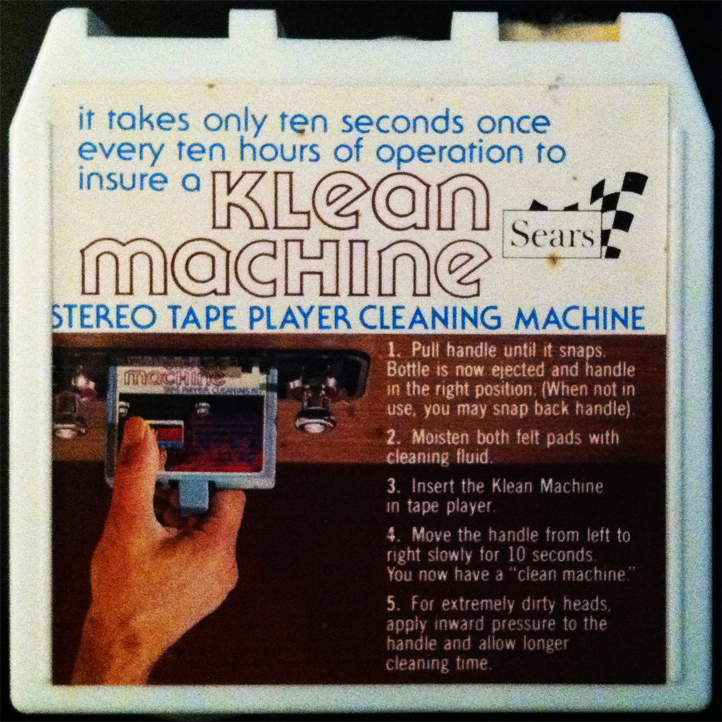
KLEANShots of vinegar, coffee brewing at 11pm, and this, Klean Machine 8-track stereo tape player cleaning “machine” at the ready. It takes only ten seconds once every ten hours of operation to insure a klean machine. Thank you, Sears! Now, my warbling 8-track stereo system can sound fresh and clean, thanks to the ¾ 8-track shaped stereo tape player cleaning machine.

It seems as though my yesteryear machines have needed some love as of late… lucky for me, love can be purchased at Sears circa: 1978.

(Personal tip: the Klean Machine stereo tape player cleaning machine doesn’t actually clean the stereo tape player listening machine… buyer beware.)

Prices Do Not Include Federal, State or Local Taxes

Ceiling PricesBack, wayyyyyyyyyy back in the day when records were housed in nothing more than paper sleeves (the high cost of colored board be damned!), companies, such as the 1929 founded Decca Records here, saw a blank paper sheath as an advertising opportunity to sell more of their product. Makes sense, right? I mean, why not utilize every square millimeter of space to keep the bellies full? No, it wasn’t the act of garnishing repeated consumers that struck me as aloof, but instead the terms in which Decca described their catalog.

Absent, and apparently a lavish afterthought, were the artist names for each of the 20 different recorded sound categories. Instead, the customer was given a series of genres (complete with color-coded label), with which to make their money-offering decision. Have a look at the wealth of universal genres offered by Decca Records, and tell me you aren’t breaking windows and stealing cars out of sheer excitement for Series 8500.

About Time for Smoke

About TimeOwning a hard copy of an album more than twice is usually an indication of some pretty stellar grooves, but my (excuse) rationale behind owning three copies of Pennywise’s 1995 effort, About Time, is purely for nostalgic purposes. Dubbed to tape more than a few times, About Time was one of the 8 or so cassettes sliding around the pickup (a 1989 Ford Ranger) for much of my Junior year of high school. I distinctly remember driving to and from work, and to the occasional bonfire, blasting Perfect People while hollering along to the lyrics (usually at full roar, and much to the dismay of my frequent, punk-deaf passengers).

Southern California pop-punk at its finest, About Time recently (as of a few months ago, I believe) saw a limited run (500 copies) on smoke colored vinyl. Seeing frisky releases such as this that incorporate the album cover into the vinyl color get me excited for upcoming reissues that will undoubtedly acquire my money (the smoke colored record ties in nicely to the timebomb on the cover, don’t you think?). For nostalgia’s sake, owning an album more than twice makes perfect sense to me.

A Split in the Swivel, A Warp in the Whirl

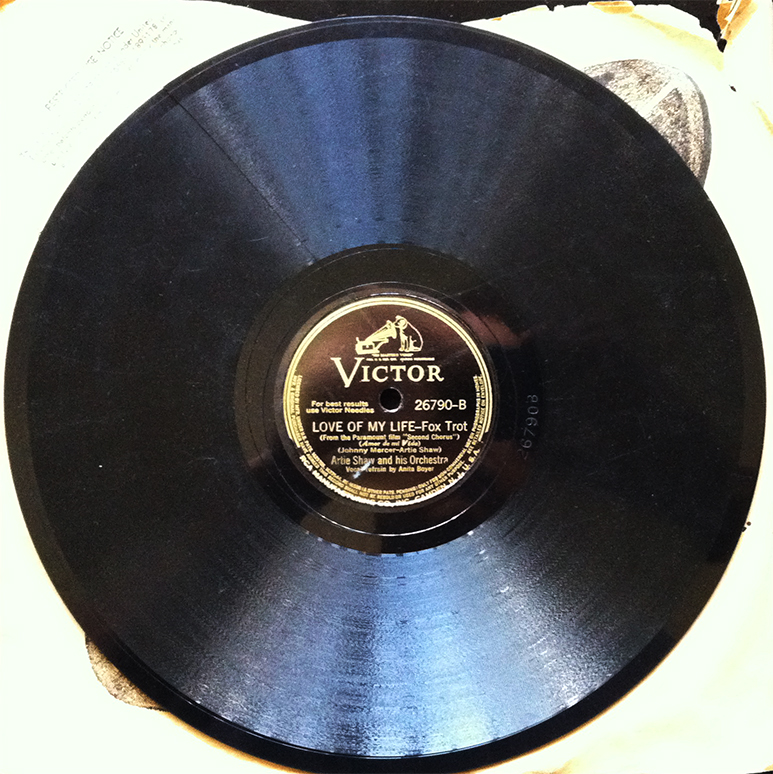
Pay no attention to the crack at 11 o'clock.

Pay no attention to the crack at 11 o’clock.

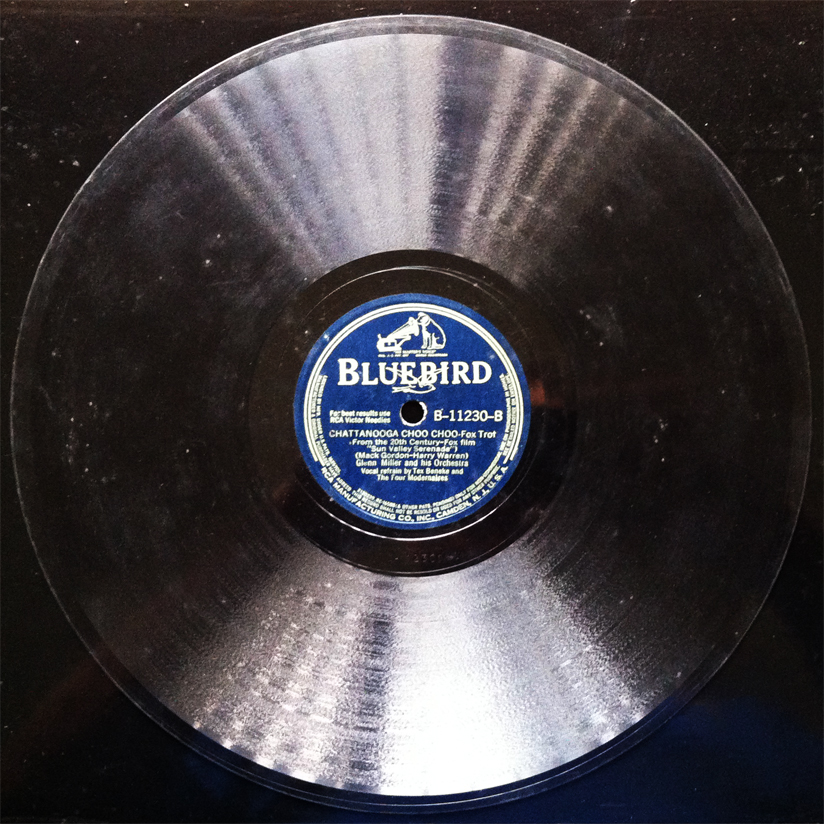
Cracked grooves break my heart… especially Oscar nominated cuts from the 1940s. The 1940 film, Second Chorus, featured both this shellac track, Love of My Life, as well as a clarinet-yielding Artie Shaw, masterfully (I assume) portraying himself up on the big, flickering dream-screen. Never saw it, but with a score and on-screen performance provided by Mr. Shaw himself, this little entertainment blip just spun onto my radar.

Chalk this oversight up to adrenaline, heat, or simple fatigue, all of which were raging through my withered carcass at the initial moment of this record’s discovery. Unplayable, but never-the-less pretty to look at, I’m thumbing my creative button to figure out what the hell to do with this glaring example of deplorable sadness. She’ll rest, having had her last 78rpm go around until I can figure out a decent and respectable way to upcycle her.

Dead records are never easy to stomach.

It’s Raining 78s!

Tandy MacKenzieA heavy haul of 78s was had at a local thrift store over the weekend. Nabbed a few Glenn Miller, Artie Shaw, Benny Goodman, and this single sided early Columbia Records release. More than anything, I slapped down the $3 for this stunning label graphic than the actual track it accompanied. I can’t say I’ve ever heard of Tandy MacKenzie, and due to the fact that I had to enter this release into discogs.com, not many modern collectors have heard much from him either. I was excited by the gold foiled 1915 printed in the band, but further internet digging dates this release closer to 1920. Either way, $3 for thrift store 78s, or thrift store 78s in playable condition at all, is worth a little PG excitement as this may very well be the oldest disc in my collection.