Stereo 8

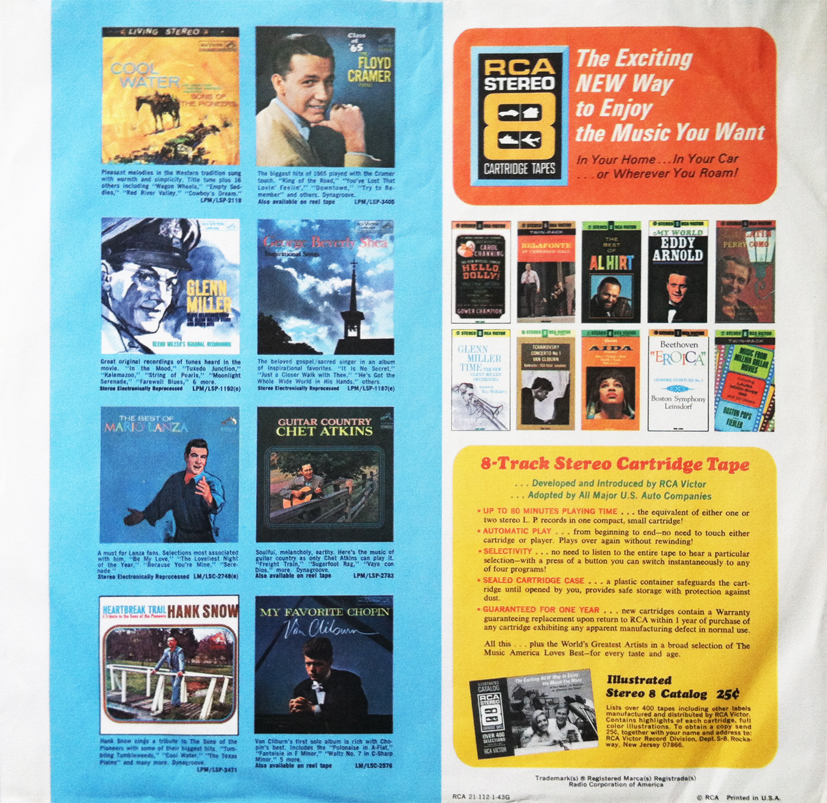
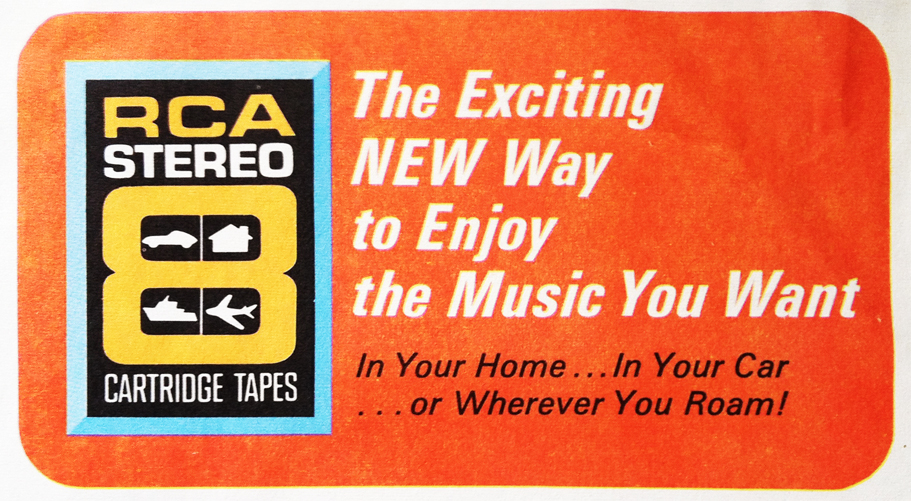
Stereo_8“In your home… in your car… or wherever you roam!” So true is the versatility that RCA stereo 8 cartridge tapes bring to, (well placed comma, don’t you think?) your home, your car, your jet, and your cruise ship (icon to specify, just in case you can’t determine between the options).

Insert_15The new and exciting way to enjoy Eddy Arnold and Perry Como on virtually any extended day travel situation. With “up to 60 minutes playing time,” your 8-track stereo cartridge tape will get you from Wilshire west to Burbank, in only 4-full cartridge flips (only 19 miles). RCA knows your need for portable, cumbersome libraries, and having been “adopted by all major U.S. auto companies,” your mundane trips to and from the unemployment office will feel like a warm, summer’s breeze… if that warm summer’s breeze came complete with the entire back catalog of Mr. Floyd Cramer.

Roam, to the blissful, warbling sound, of RCA stereo 8 cartridge tapes.

Jump Up

Jump UpSpice up your mundane Monday with a splash of enthusiasm with Mr. Harry Belafonte and his 1961 smash hit, Jump Up Calypso. The follow-up to 1956’s straight-shooting Calypso, Jump Up is a hurricane in all kinds of weather. Aside from offering both Angelina AND Jump in the Line, Jump Up Calypso was the unofficial soundtrack to the 1988 Tim Burton comedy, Beetlejuice. Listen to this, then watch that, and count how many times this album pops up. I count five, but I haven’t seen the film in a few years.

Monday’s don’t have to be banal. Sprinkle in a dash of Calypso, and your feet will feel as light as Caribbean air.

Also, if you’re in the states, don’t forget to vote tomorrow!

Army Air Force Band

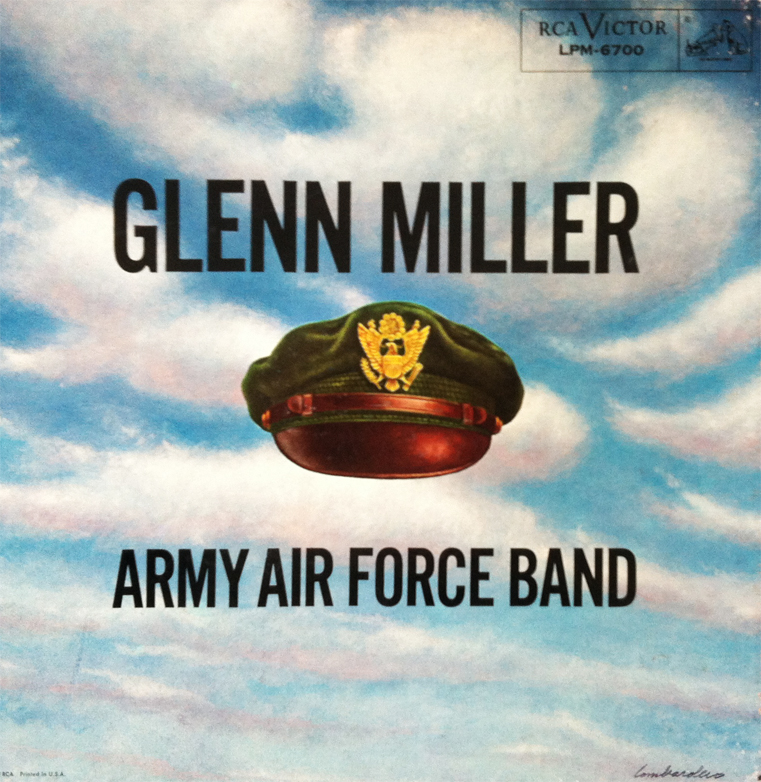
Air_ForceSlap a cap on the man, and give him a trombone, because RCA Victor Presents, Glenn Miller Army Air Force Band. Released in 1955, the five disc collection of patriotic big band hits serve God, country, and an eager ear with a cold shower, discipline, and a swingin’ good time.

As the 16-page informational booklet boasts:

“We didn’t come here to set any fashions in music. We merely came to bring a much-needed touch of home to some lads who have been here a couple of years. These lads are doing a hell of a job – they have been starved for real, live American music.” – Mr. Major Glenn Miller

Serving as leader of the 50-piece Army Air Force Band (from 1942 – 1944), Mr. Miller’s voluptuous, and international success was met with a stormy cloud of pouring despair when the plane he was occupying went missing on December 15th, 1944. The clouds of sadness would eventually depart, but the resulting flood has never receded.

Oh, and fyi, if you Google “Glenn Miller,” the photo that pops up (to the right) is of Jimmy Stewart, PLAYING Glenn Miller. Here’s a link, oh curious Curtis.

My Favorite Hits – Mickey Mantle Circa: 1958

MantleThe year, 1958… the legend, The Mick, aka Mickey Charles Mantle. RCA Victor compiled a list of jazz-pop, country, easy listening, and ballad-type hits which were “allegedly” personal favorites of The Commerce Comet on this listenable baseball card, My Favorite Hits – Mickey Mantle.

Whether these tracks by Glenn Miller, Hugo Winterhalter, Artie Shaw, Duke Ellington, and The Sons of the Pioneers were actually Mantle favorites is a topic of endless debate, but My Favorite Hits is a great, OLD, sports collectable with an amazing cover and a great soundtrack to a warm, summer, Tuesday evening. Mantle_back

God love the low, low prices at Discogs.com.

When Music Wasn’t Enough

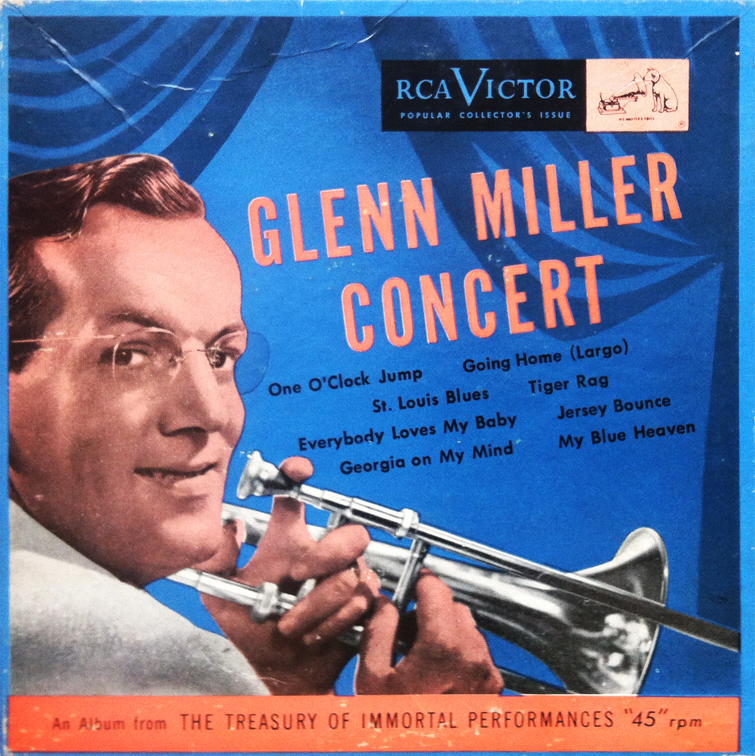
RCA Victor 45RCA Victor, with their Popular Collector’s Issue series, and their motto, “The Stars who make the Hits are on RCA Victor Records,” have manifested an abnormally eloquent designed 45 sleeve, as evident by these shoes on the feet of this Glenn Miller box of singles.

His Master’s Voice was certainly not in need of top-of-the-line design, as evident by their continued, timeless, design.

The Treasury of Immortal Performances “45” rpm

Mr. MillerIt’s difficult not to get excited about Glenn Miller. There’s something about the profound purity of a child’s smile behind a raging trombone, and, of course, the eternal Jimmy Stewart icon-association that makes this, or any Glenn Miller recording, an endless treasure.

This 4x 7” (45 rpm, naturally) set has yet to make its legendary entrance into the prolific discogs database, but if the winds of fate blow favorably, this weekend will truly unveil the Treasury of Immortal Performances.

A (Short) Evening with Belafonte

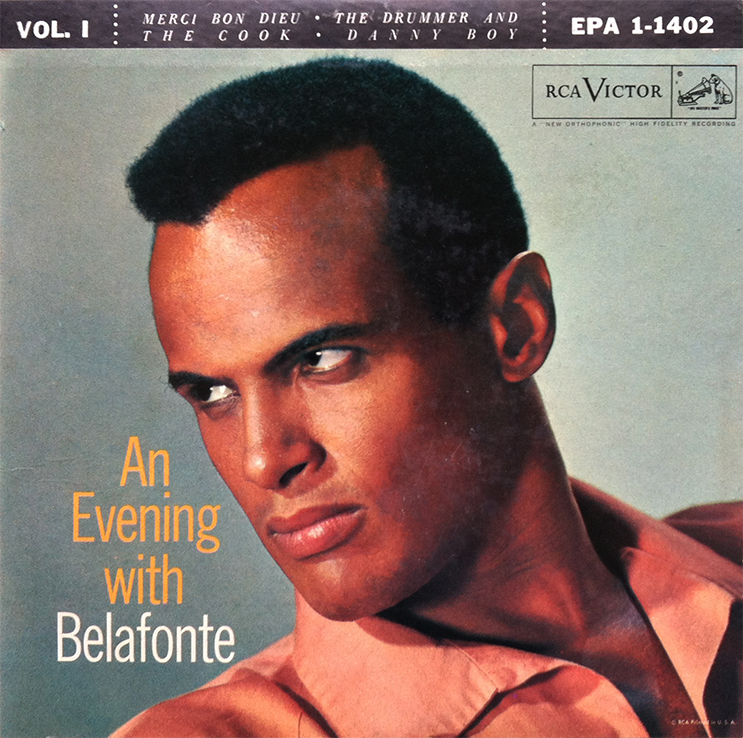
EveningDerived from the LP of the same name, this 4-track EP 7″ is perfect for those hurried evenings when a little romantic nudge is required, but the depth of a fully hammered out album is the LAST thing on your mind. As far as I’m concerned, any Belafonte is better than no Belafonte, and after a quick, 2-track flip, your planned, erotic evening will be swiftly underway, thanks to the nimble, intoxicating seduction of this unforgettable evening, with Belafonte.

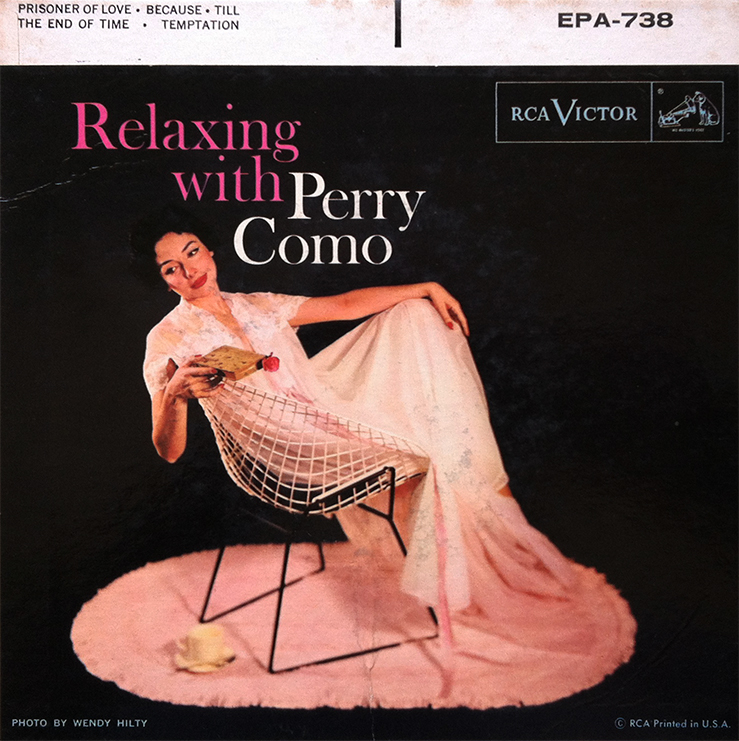
In a Relaxation Como

In a ComoRelax… you’ve earned it. But even if you haven’t, disguise your bourbon in a dainty tea cup, bathe yourself in the lavish frills of your favorite evening gown, close your rose-markered book and enjoy the provocative exclamations of the one, the only, Perry Como.

Better make it quick, as this is just a violent tease of Como-inspired relaxation. With only four tracks, your momentary break from the chaotic endeavors of everyday life will swiftly blow away, like the cool, lamenting breeze from the relaxation King, Mr. Perry Como.

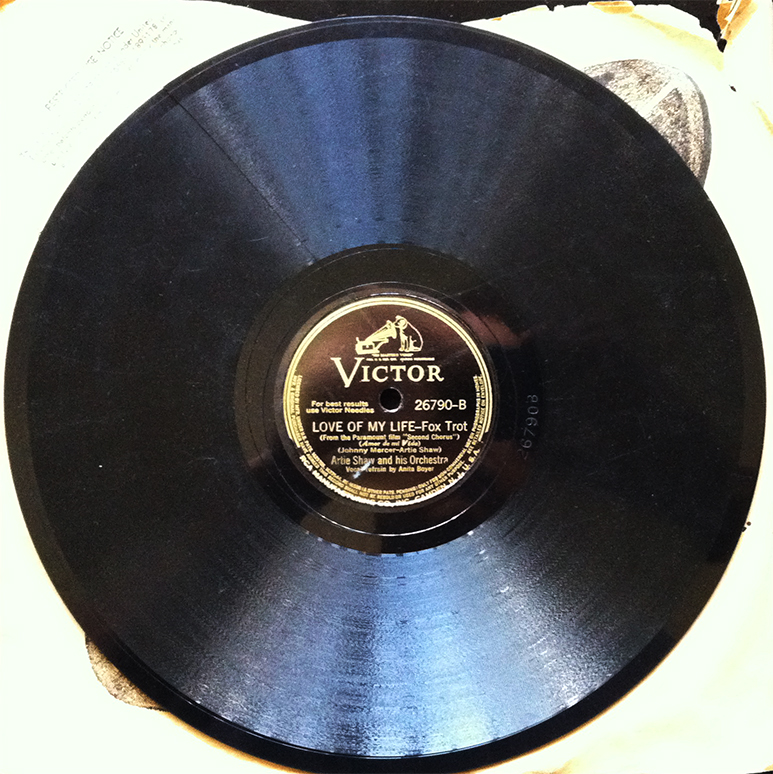
A Split in the Swivel, A Warp in the Whirl

Pay no attention to the crack at 11 o'clock.

Pay no attention to the crack at 11 o’clock.

Cracked grooves break my heart… especially Oscar nominated cuts from the 1940s. The 1940 film, Second Chorus, featured both this shellac track, Love of My Life, as well as a clarinet-yielding Artie Shaw, masterfully (I assume) portraying himself up on the big, flickering dream-screen. Never saw it, but with a score and on-screen performance provided by Mr. Shaw himself, this little entertainment blip just spun onto my radar.

Chalk this oversight up to adrenaline, heat, or simple fatigue, all of which were raging through my withered carcass at the initial moment of this record’s discovery. Unplayable, but never-the-less pretty to look at, I’m thumbing my creative button to figure out what the hell to do with this glaring example of deplorable sadness. She’ll rest, having had her last 78rpm go around until I can figure out a decent and respectable way to upcycle her.

Dead records are never easy to stomach.

Introducing, the Color Purple

Stereophonic PurpleBy now, we’ve all been schooled in the revolutionary ways of stereophonic sound (Part 1, Part 2, Part 3), but there have been significant advances since mid-March that will set the standard in audio technology. Ladies and Gentlemen, stereophonic sound is now available in the color PURPLE! That’s right! At no additional cost to you, the color purple has been integrated into the RCA Victor demonstration insert. Discount blue RCA Victor stereophonic sound demonstration inserts are currently on sale to make room for this year’s fall fashion purple extravaganza. With the holidays coming up, why not give the gift of blue, or if you’re one of the lucky ones whose ship has come in, why not spring for the new purple model? Discounts on the discontinued blue will be applied at the register.

New from RCA Victor Circa:1958

Enjoy1958 was a riveting year for RCA Victor Records, and this (Moon juiced) insert proves that the late 50s were a swinging, boisterous time for the 2nd oldest recording company in the United States. This prolific insert promotes everything from Frank Sinatra & Tommy Dorsey, to Perry Como, to the twins… you know the twins, Jim and John Cunningham (apparently Teenagers Love the Twins… who knew?), to the King, Elvis Presley, to a personal favorite, Glenn Miller, and finally to a little album called, My Favorite Hits, which is simply described as, “Mickey Mantle picks his favorites.” This last little number just made my Discogs Wantlist.

It’s enthralling to write about (barely touch upon) 1958 while listening to 1987’s Love an Adventure by Pseudo Echo, but things need to be kept into perspective, am I right?

In conclusion, here’s a little Thursday, mid-morning (or Friday, early morning in Australia) mind-melting math for you to digest:

     Love an Adventure: 1987 – (minus) My Favorite Hits: 1958 = 29 year gap

     Present Day: 2013 – (minus) Love an Adventure: 1987 = 26 year gap

If you’re like me, and you remember the Funkytown residing Pseudo Echo, than you, my friend, are old… you’re welcome.

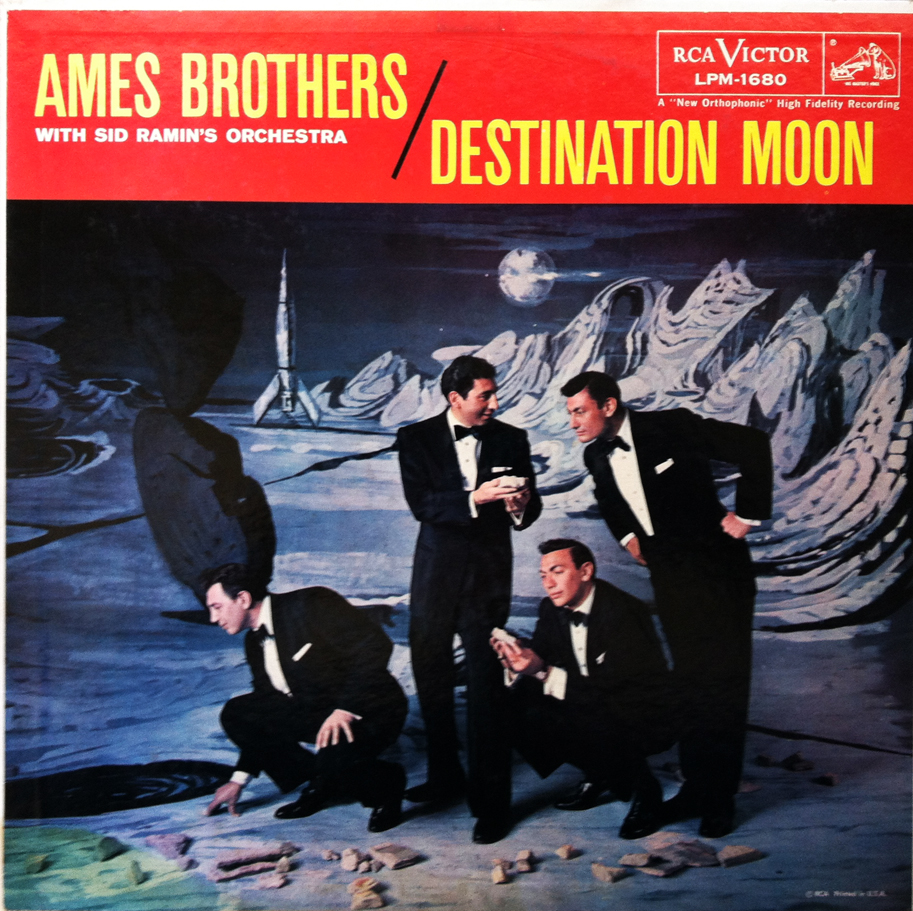
Did He Just Say “Supersonic Honeymoon?”

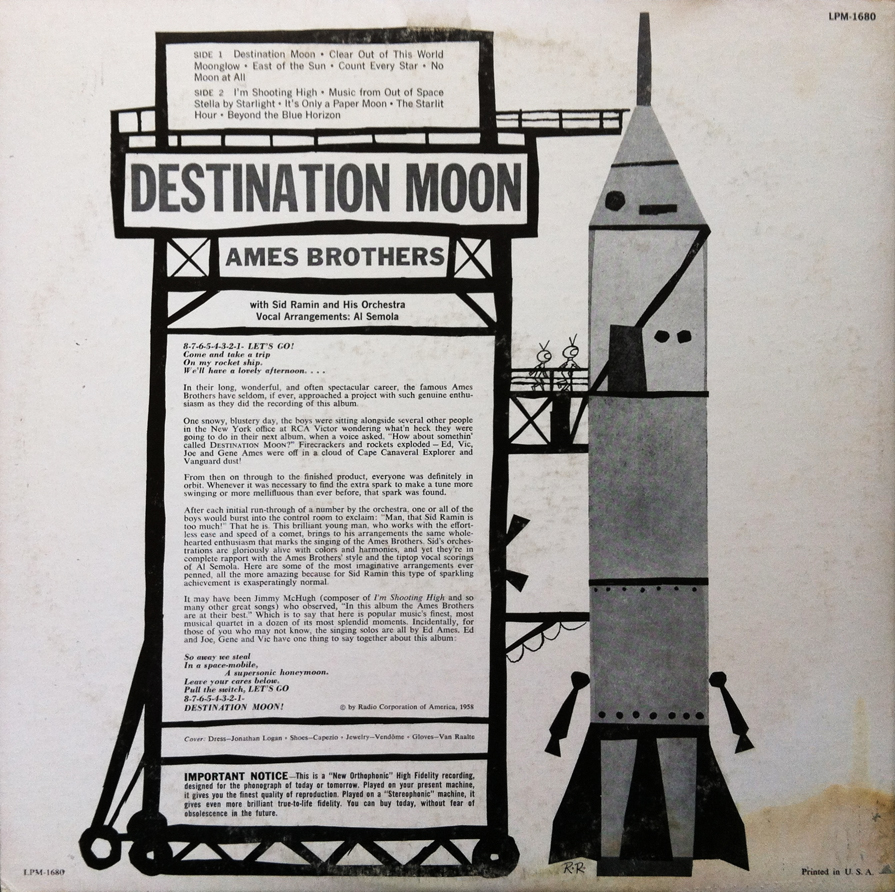
Ames BrothersI’m a sucker for vintage space and/or rocket-themed cover art, and you can imagine (it’s okay, I give you permission) my excitement when the spaced-out, black hole of vintage music behind the interstellar cover art is actually magnetic and borderline whimsically enchanting.

I’m on the hunt for another copy of Destination Moon, as the bottom left corner has a bit of Moon juice spilled on it (as you can plainly see). This album was released in 1958, so I’m going with the (by no means made up) story that the Ames Brothers ACTUALLY traveled to the moon to record AND press this album, but in their hurried attempts to jettison back to Earth to disperse their space-rock discovery amongst the lemming-like Earth creatures, they accidentally spilled a large amount of Moon juice on a few boxes containing Destination Moon, packed and ready for worldwide distribution. Yeah, that’s it…

Destination MoonLate 50s Jazz Pop with a theme that’s… I’m sorry; I have to… out of this world. I don’t own anything else by the Ames Brothers, but my intergalactic curiosity for more, good-time, secretly wholesome, space-themed 50s music will undoubtedly point me to the direction of the orbiting cluster of space debris called, the Ames Brothers.

Just in Case You Suffered A Swift Blow to the Head

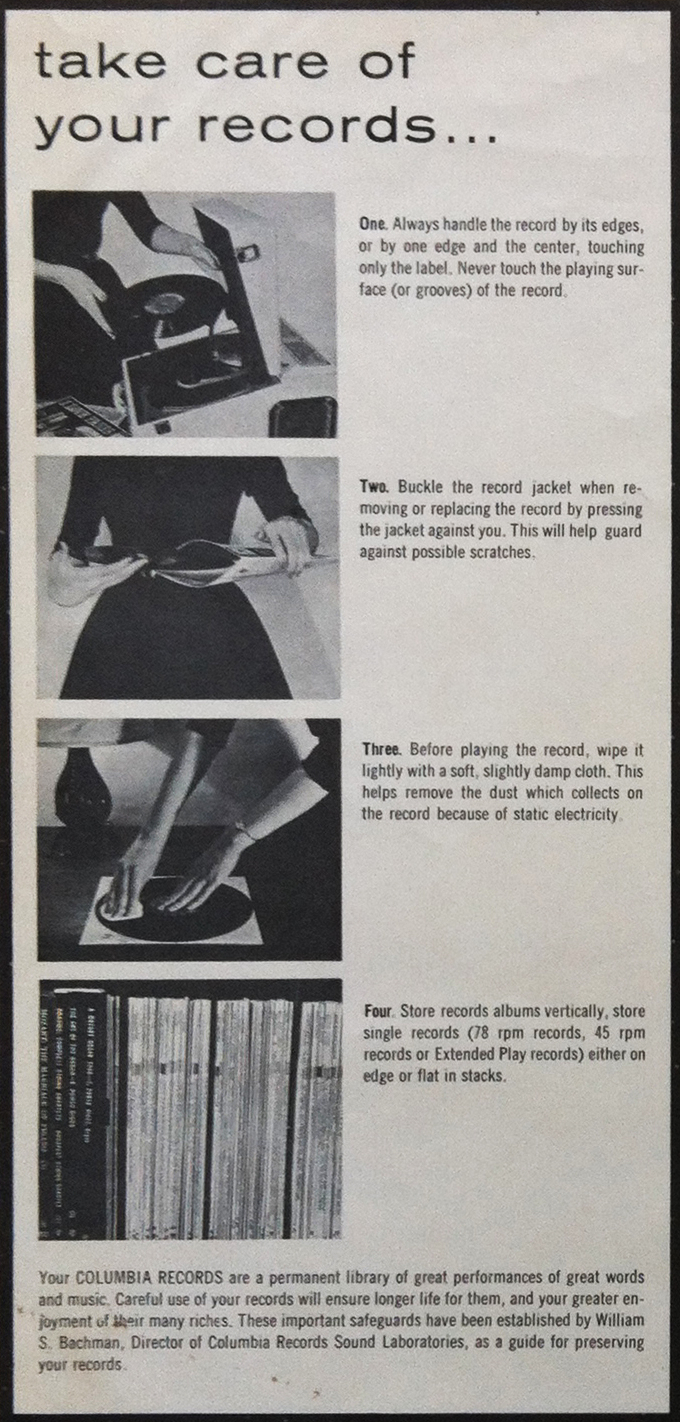
Take Care of Your RecordsBack by unpopular demand, and just in case you suffered a swift blow to the head, presented here, with all its painstakingly careful glory, is yet another “How to Take Care of Your Records if You’ve Never Owned Anything That You’d Like to Keep for More Than a Day.” This round… Columbia Records.

This is the third installment in mind-numbingly obvious, and exhaustively basic record care. First we heard from Mercury Records (Mercury Records Think You’re An Unmitigated Muttonhead), followed by RCA Victor (RCA Victor’s Simple Suggestions for Proper Record Care…). What sets Columbia Records a notch or two above the previously mentioned labels, when it comes to overtly apparent proper record usage, is the “live action” snapshots used to demonstrate each of the four (apparently) easy to forget steps to ensure proper record care. Mercury Records went with the casual, artist sketch look, while RCA Victor went with a more fiesta meets basic minimalist approach. It’s amusing to see how different labels tackle the same tedious (and did I mention obvious?) steps of proper record care. By the looks of these amazing stock footage shots, Columbia Records was doing well for themselves in 196?

By now you (should) know the dos and don’ts of proper record care, so I won’t waste your time by breaking it down for you. I will, however, waste your time by returning tomorrow with the third and final panel from this Columbia Records ad-sert. Here’s a little hint: It’s called Listening in Depth.

Magic Brain: A VERY Brief History

Magic BrainStarting around 1934, the term Magic Brain was given to high end, and often-expensive (especially for the time) radio receivers manufactured by RCA Victor. This new, futuristic, prewar technological improvement to the widely used radio receiver, allowed the heavy-pocketed user to 1) enjoy their favorite radio programs with new, higher fidelity tone performance, 2) tune in to more stations, 3) get exclusive access the RCA Victor’s “X” band, the same station aviators heard for up-to-the-minute, U.S. Government weather reports, and 4) the apparent alleviation of physical pressure when tuning into specific frequencies. (Citation)

Paralleling the start of the Second World War, RCA Victor released the Magic Brain RCA Victrola. This new, music listening wizard provided the same, groundbreaking, and industry redefining, features of the Magic Brain radio receiver, in a state-of-the-art radio-phonograph. The Magic Brain RCA Victrola offered a 180-degree shift in the way records were played, and how phonographs were manufactured. This model offered a tandem tone arm, which allowed the unit to play both sides of a record without having to flip it (there is something romantic about manually flipping a record, but there are certainly times when I’d love the ease and convenience of the Magic Brain). In addition to the tandem tone arm, the Magic Brain RCA Victrola allowed for up to two full hours of continuous, uninterrupted listening pleasure by the oversimplified ease of a single, pushed button. Mechanical noise was eliminated, the need to lift a lid was done away with, and the overall capacity was increased, housing up to 15, 10” records, or 12, 12” records.

Certainly an interactive jukebox for the family living room, this ingenious machine would unfortunately live an exceptionally short life. Due to the U.S. Government’s need for shellac, the material in 78rpm records as well as the main ingredient in U.S. made bombshells, it obtained nearly 70% of the nation’s supply, forcing two revolutionary music listening necessities. 1) With nearly no shellac to make new records, record companies began buying back out dated and/or unwanted records from the public (paying 2-3¢ per disc, equaling close to 500,000 lbs of shellac), to grind down in order to make new records. 2) With the short supply of shellac, and the high demand for consumable and obtainable mediums of portable music, the experimentation, and eventually the manufacturing of the vinyl record was introduced, and the rest is record collecting history. (Citation 1, citation 2)

With a new format, the Magic Brain RCA Victrola was rendered obsolete, and therefore was swiftly removed from production. A video of this monster in action can be found here.

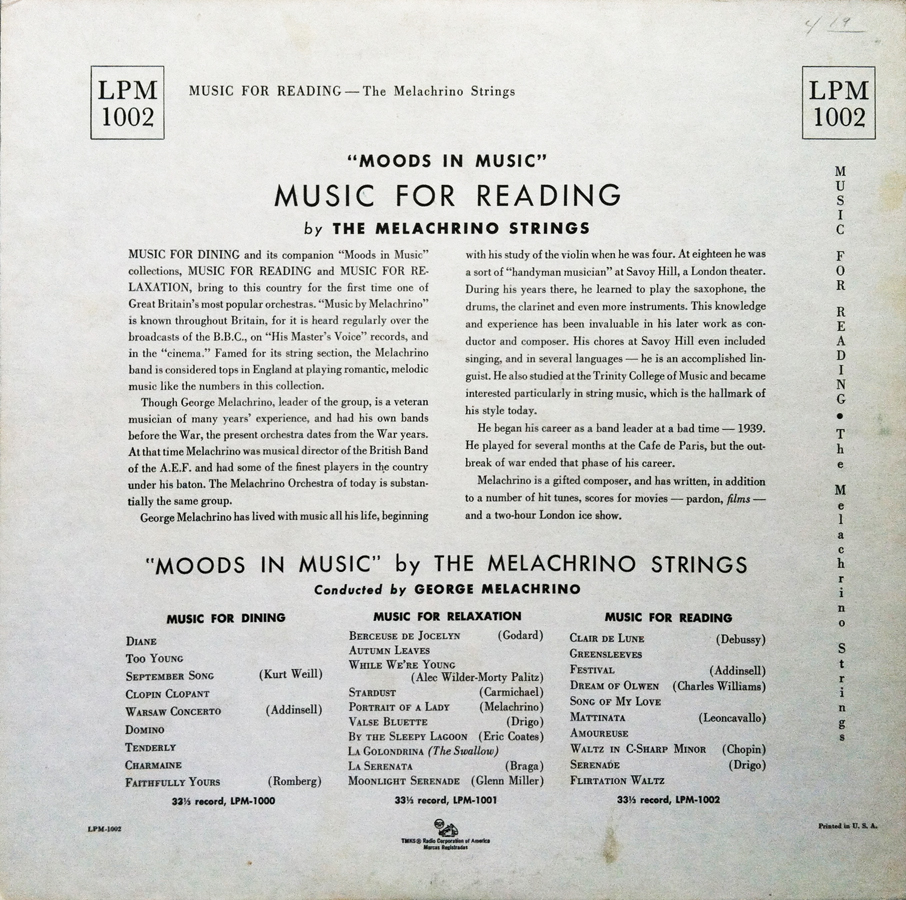
Music for Reading (Uncomfortably on the Floor)

Music for ReadingGrab your favorite E. A. Poe, H. S. Thompson, J. Shepherd or T. S. Eliot, and set your hi-fi to a warm and welcoming volume, because The Melachrino Strings wonderfully, and eagerly present, Music for Reading.

Gone are the ornery days of reading in unbearable silence. Like the welcome whisper of a cooling breeze on a warm, summer day, Music for Reading offers a cordial mood for any, and every worded adventure of the printed form. Like the soundtrack to a tightly bound roadmap of imagination, Music for Reading is your obedient counterpart through the vast universe of the black and white page.

BackOther records in the “Moods In Music” series include Music for Dining, Music for Relaxation, Music for Mowing the Lawn, Music for Angrily Signing the Divorce Papers, Music for Plotting the Overthrow of the Government, Music for Stubbing Your Toe, Music for Social Anxiety and Music for Writing About Music.

The next time you find yourself sprawled out in an uncomfortable position on the floor with a book and 30 minutes to kill, consider Music for Reading.  You’ll wonder how you ever reluctantly picked up a book without it.

Post #60: The Insert that Stopped Time (If Only Briefly)

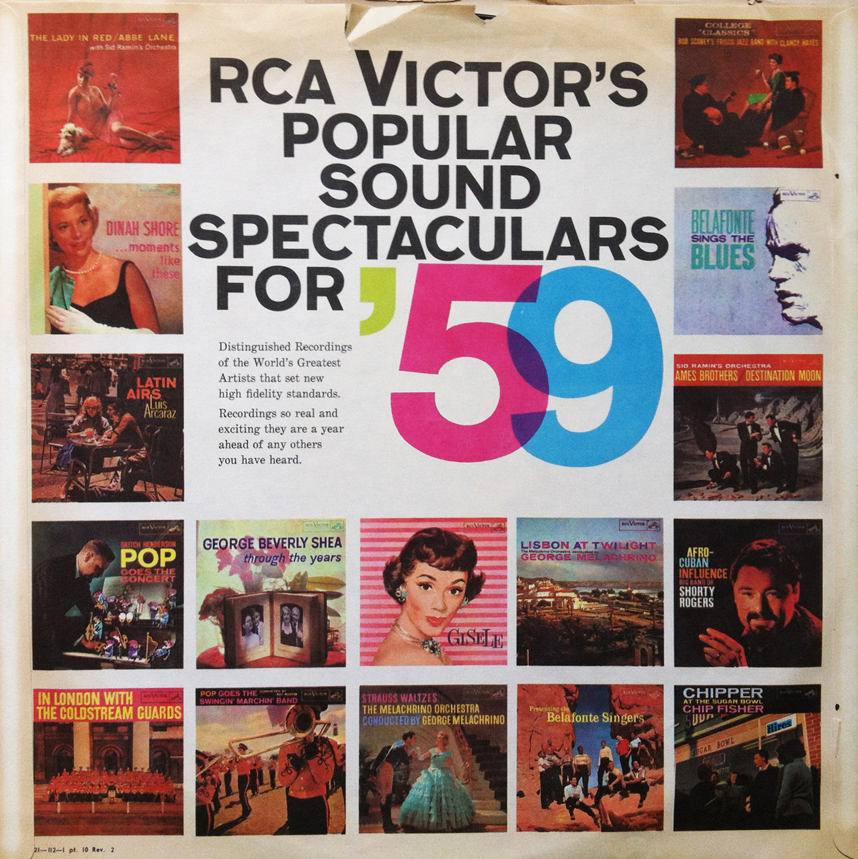
'59 Insert_SmallerThe curious reader asks, “Hey P. Groove, why wasn’t this fine looking insert from ’59 YESTERDAY’S post topic?” I’ll tell you, inquisitive peruser of yesteryear gems… and it may, or may not involve Don Draper.

Thank Artie Shaw and his 1958 album, A Man and His Dream, for this Madison Avenue beauty. A modern approach to selling a catalog of varied taste, this insert, with its subdued album-stacking design, pushes the consumer’s focus to its center, where we find the two, overlapping numbers of illuminating nobility: 59. This eye-grabbing approach renders an immediate connection between that number’s meaning (the year), and the everyday existence of this album’s original buyer. To look at this insert in 1959, is to self-reflect on the years that preceded it, and to project future hope into the years that follow. In other words, this insert stops time for a split second to offer deep cogitation.

Needing to reach the hip cats of Latin Airs, as well as the squares of Strauss Waltzes (I own Strauss Waltzes, so my insults only cut so deep), RCA Victor’s approach to reaching the spectrum of 1959’s musical audience needed to be forceful, yet memorable. I believe stopping time for meditation achieved this goal. Nicely done, Mr. Draper… nicely done.

You’ll see, neatly tucked into the corner of Latin Airs and George Beverly Shea’s Through the Years, the thesis to this modern advert:

Recordings so real and exciting they are a year ahead of any others you have heard.

Exactly one year… 59+1=60. And thus, Post #60: The Insert That Stopped Time (If Only Briefly) finds its inevitable message.

What is STEREOPHONIC SOUND? (Part 3)

What is Stereophonic Sound Logo

Over the past few days we introduced the notion that stereo, and the intricacies that make up stereo, may not be widely known to those enjoying her esteemed capabilities. So, in this dramatic conclusion, The Prudent Groove offers, without sarcastic interruption, the cliffhanging outcome to, What is STEREOPHONIC SOUND?

RCA Victor Horizontal Logo

Presented by RCA Victor

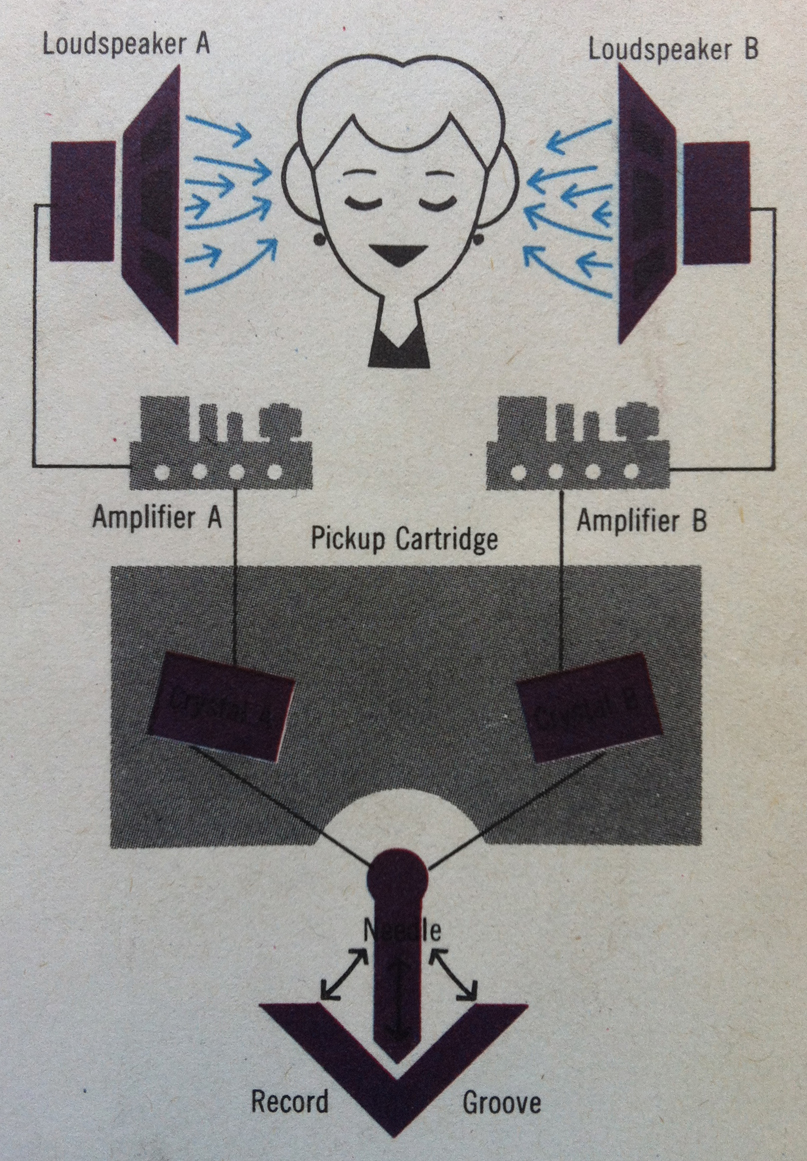
The two channels of sound picked up by the needle are then unscrambled by the stereo cartridge. The cartridge directs them into separate amplifier circuits, where they are magnified and fed in turn into two separate loudspeakers. The two speakers finally translate the musical impulses into intelligible sound which you hear in your living-room stereophonically.

Stereo Diagram Woman

The net of it is an overlapping and blending which gives music a more natural, more dimensional sound. For the first time, your ears will be able to distinguish where each instrument and voice comes from-left, right or center. In short, enveloping in solid sound, you will hear music in truer perspective.

Stereophonic sound is the latest step in an improvement process that began about 80 years ago. In listening to it, you will enjoy the highest achievement yet in the art of recording.

"Go Stereo" Type

What is STEREOPHONIC SOUND? (Part 2)

What is Stereophonic Sound Logo

Yesterday we inaugurated the intricate fascinations of Stereophonic Sound. Today, we pick up where we left off and continue with RCA Victor’s detailed explanation of the technical differences between recording a monaural record with that of the stereophonic record. So, without further ado, I present part 2 (out of 3) of RCA Victor’s What is Stereophonic Sound?

RCA Victor Horizontal Logo

Presented by RCA Victor

Let’s compare hearing to seeing for a moment. You see images on your left with your left eye, images on the right with your right eye. Yet, because your brain can do two jobs at one, you get a total unified picture in its true perspective.

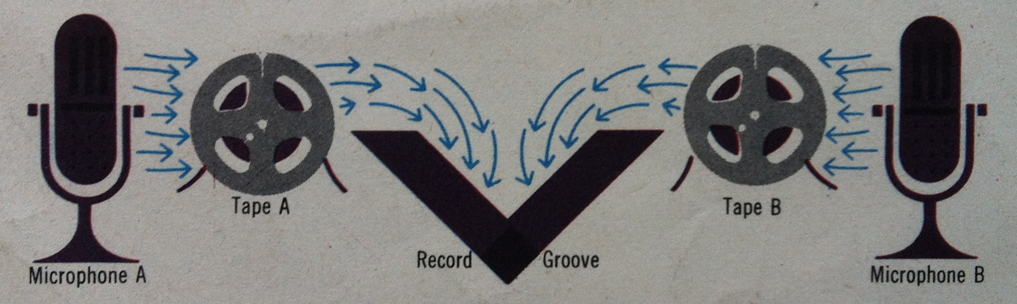
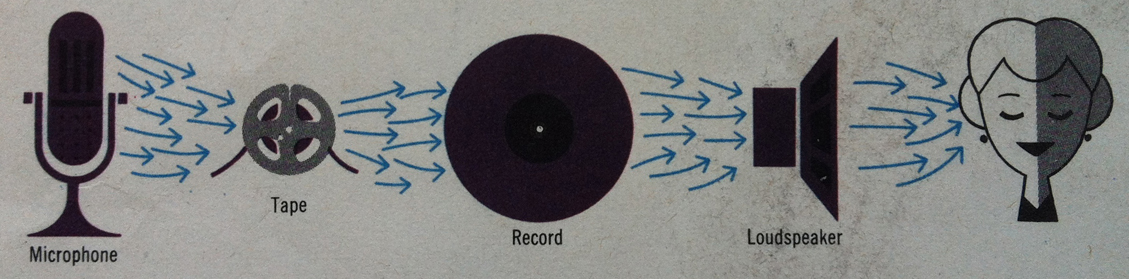
Stereo sound is simply the attempt to give you music as it is heard by both ears. Essentially, what happens is that two microphones, left and right, pick up what goes on in the orchestra at the recording session. These two microphones feed the musical impulses to two soundtracks on tape. The two soundtracks are then pressed into the grooves on a stereo record.

Stereo Diagram Needle

The sound from a record partly depends upon how the needle moves or vibrates. For example, when Edison designed his phonograph to play cylindrical records, he made the needle vibrate up and down. This is called the “hill and dale” system, or vertical cutting.

On a conventional, monaural record, however, the needle moves from side to side, or laterally. The lateral movement has been used ever since the flat record replaced Edison’s cylinder.

What about the stereo record? Each groove on a stereo record has two soundtracks cut into it, and they are cut into it both laterally and vertically. In order to pick up the two soundtracks, a stereo needle capable of moving complexly has been developed; it vibrates both laterally and up and down. Simultaneously, the lateral movement picks up one channel of recorded sound, the vertical movement the other.

What is STEREOPHONIC SOUND? (Part 1)

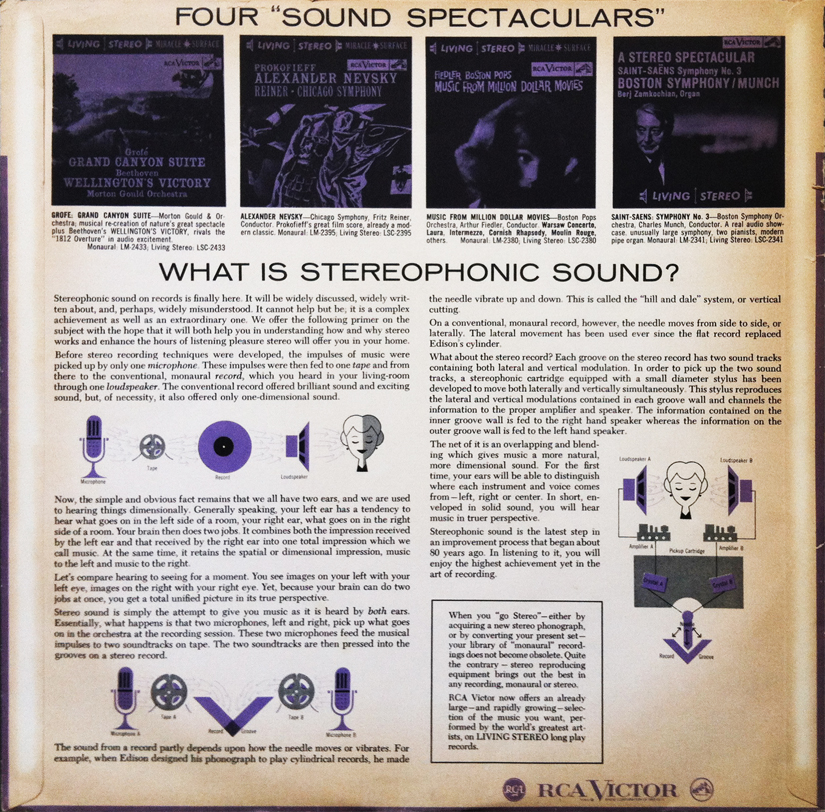
What is Stereophonic Sound LogoThink you can speak confidently about the intricate details of stereophonic sound? Think you’ve licked the volatile, short-lived, simultaneous ear experience? Over the next three days, The Prudent Groove will leisurely lift the contents of one coveted RCA Victor insert explaining, in intimate detail, exactly, What is STEREOPHONIC SOUND? The following is presented, without esteemed interruption, by The Prudent Groove. Part 2 will follow tomorrow. I’ll be completely honest and admit that I learned more than I thought I needed while transcribing this informative insert. Maybe RCA Victor was onto something.

RCA Victor Horizontal Logo Presented by RCA Victor

Stereophonic sound on records is finally here. It will be widely discussed, widely written about, and, perhaps, widely misunderstood. It cannot help but be; it is a complex achievement as well as an extraordinary one. We offer the following primer on the subject with the hope that it will both help you in understanding how and why stereo works and enhance the hours of listening pleasure stereo will offer in your home.

Before stereo recording techniques were developed, the impulses of music were picked up by only one microphone. These impulses were then fed to one tape and from there to the conventional, monaural record, which you heard in your living-room through one loudspeaker. The conventional record offered brilliant sound and exciting sound, but, of necessity, it also offered only one-dimensional sound.

Mono Diagram WomanNow, the simple and obvious fact remains that we all have two ears, and we are used to hearing things dimensionally. Generally speaking, your left ear has a tendency to hear what goes on in the left side of a room, your right ear, what goes on in the right side of the room. Your brain then does two jobs. It combines both the impression received by the left ear and that received by the right ear into one total impression which we call music. At the same time, it retains the spatial or dimensional impression, music to the left and music to the right.

Cover Me Como

Me First:Como

(Please note, this is not an album review, but simply a conscious observation of visual similarities. Proceed with caution…)

There will be several posts on copy-kitty album covers emerging from The Prudent Groove, and the order in which they appear need not indicate any type of importance or personal preference on my part. As a matter of fact, pretty much ANYTHING bleeding from The Prudent Groove can be attributed to the above statement.

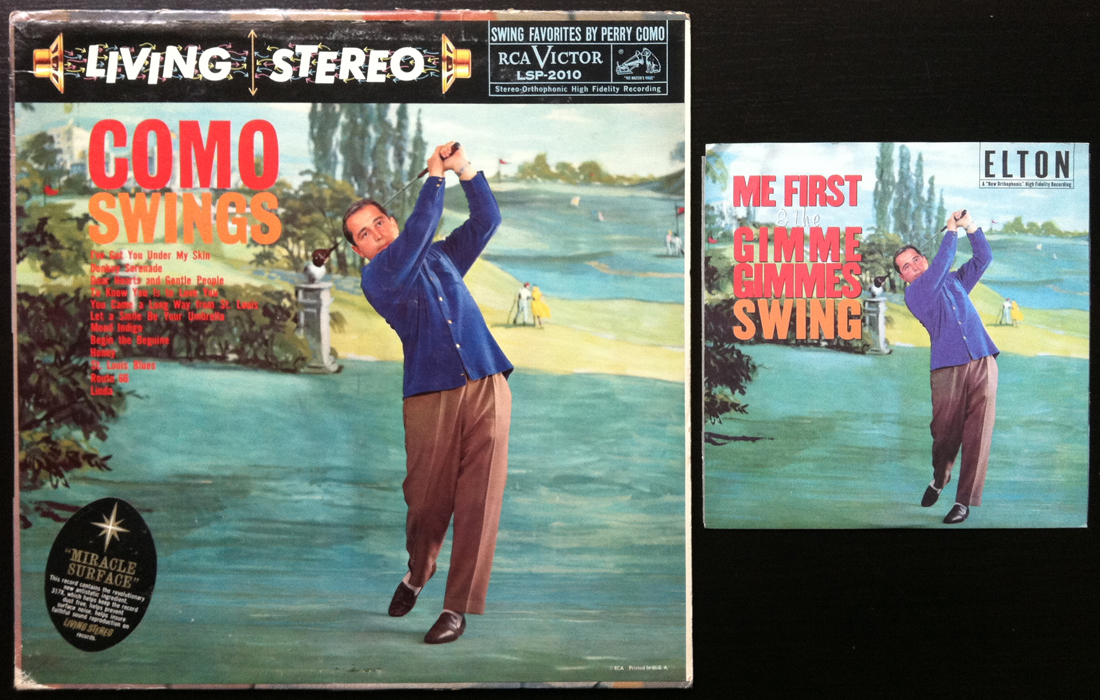
“Perry Como, meet Me First and the Gimme Gimmes,” is a phrase I’d have loved to be a fly on the wall for. Your grandfather’s sweet, succulent swoon music meets your older brother’s high school preppy-pop-punk cover act. While similar in appearance, the music, as Perry and his golf buddies would say, is as contradistinctive as a slice and a hook. The correlation stops with the cover art.

While choosing to lift both the front and the back covers of Perry Como’s 1959 classic, Me First and the Gimme Gimmes (or just Me First) chose a different artist when it came to the music. The artist would be, of course Elton John. (Painfully obvious, don’t you think?) Being solely a preppy-pop-punk cover band, Me First tackle Mr. John’s Don’t Let the Sun Go Down on Me and Rocket Man, the later of which got constant airplay on the radio station of my youthful mind. Boy was I a tool. WAS you ask?

It’s somewhat interesting how the likes and dislikes of an individual can go from a dogleg right to a dogleg left in seemingly no time at all. Back in my adolescent days I would have greatly preferred Me First to the swinging Perry Como. Now, Mr. Como has swung his way right into the par 3 hole in my heart.

At the end of the day, or at anytime really, I’d recommend both of these albums, even if exclusively based on the cover art.