
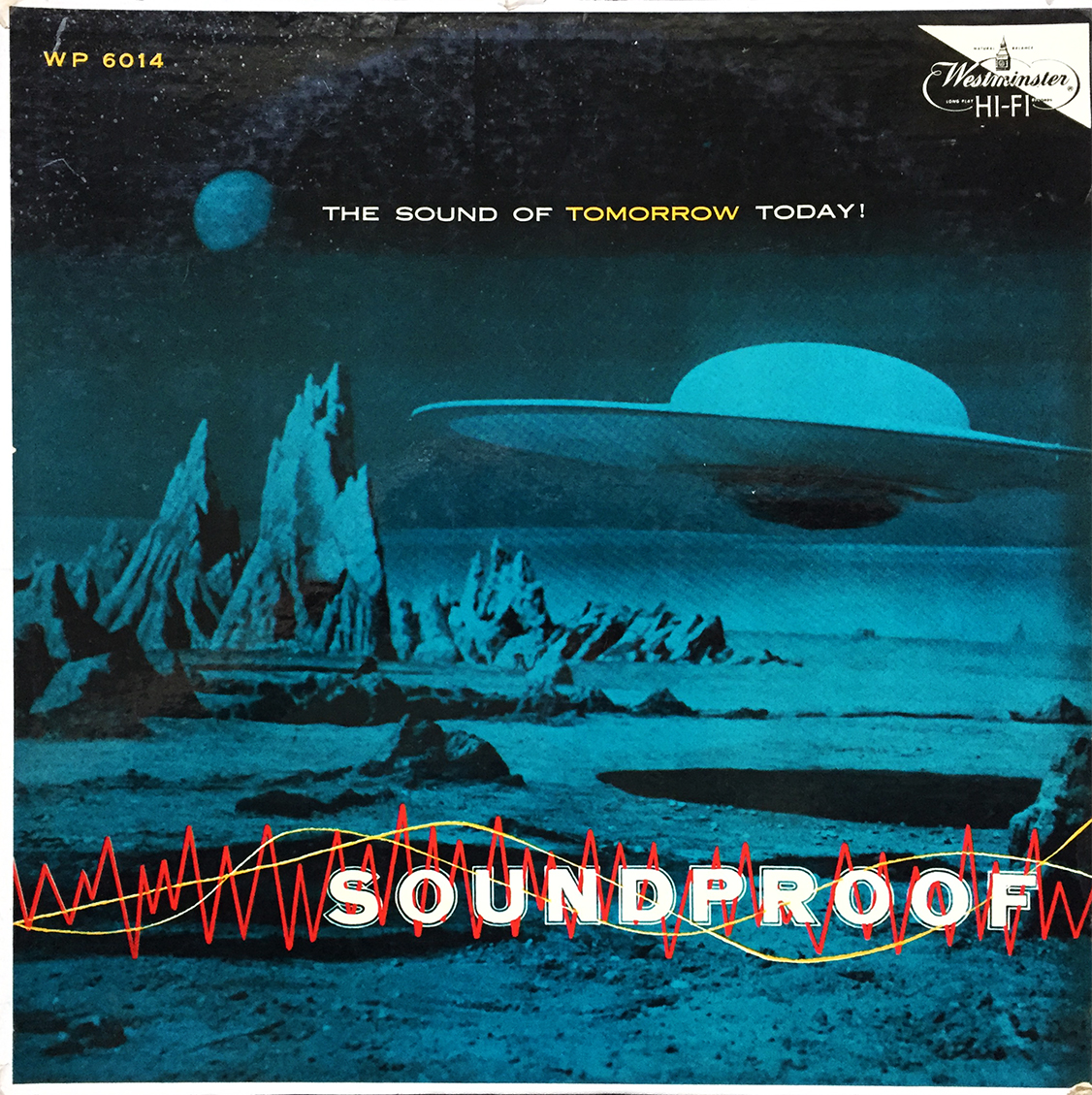
 Though yesterday’s sound of tomorrow sounds more like yesterday’s sound of yesterday, Ferrante and Teicher’s 1956 out-of-this-world classic, Soundproof, is pure, space-age jazz, complete with 50’s sci-fi, invaders from other planets cover. Actually, the cover photo is taken from MGM Pictures’ 1956 staple, Forbidden Planet, for those keeping score. What gets me scratching my head is that Ferrante and Teicher also release an album the same year on the same label with the same tracks as SoundBlast – The Sound of Tomorrow, but with a different, non-Forbidden Planet cover. Those cats in the 50s, am I right?!
Tag Archives: record collecting
Shake
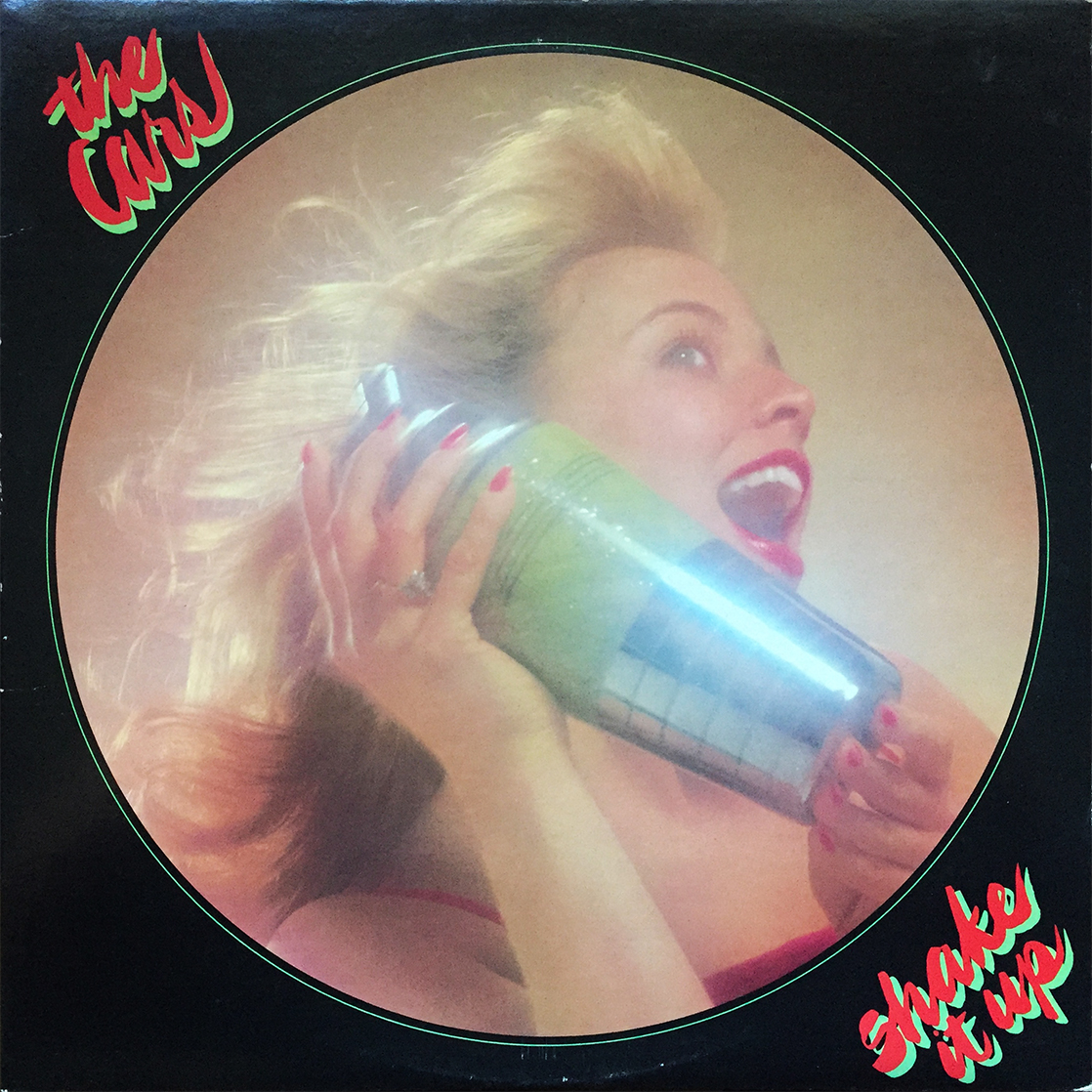 Shake It Up is The Cars’ fourth studio album and contains the band’s first Billboard top ten hit with the title track. Released in 1981, Shake It Up sees the band continuing their unprecedented string of unquestionable classics (1978’s The Cars, 1979’s Candy-O, and 1980’s Panorama). Though I’m partial to their self-titled debut, Shake it Up, in addition to the band’s other early releases, are strikingly inexpensive to obtain. One could obtain their first five albums for roughly $2 a pop. Definitely worth the charge of admission.
Jingle Bell Jazz
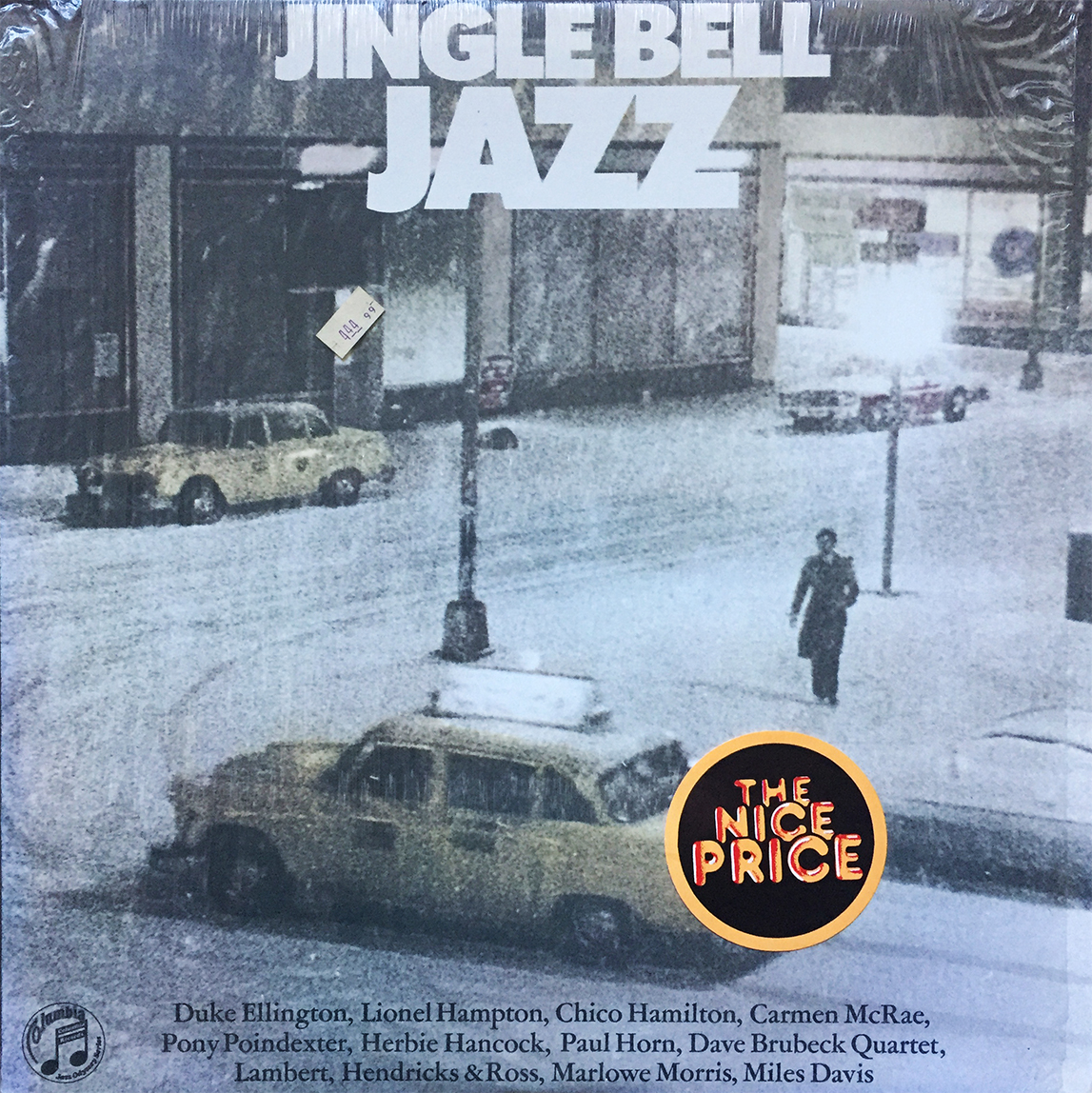 This copy of Jingle Bell Jazz was sought out by my better half, and contains jazz-tastic renditions of holiday favorites by Miles Davis, Herbie Hancock, The Dave Brubeck Quartet, Lionel Hampton, Duke Ellington, Chico Hamilton, among others. Recorded between 1959 and 1969, Jingle Bell Jazz was originally released by Columbia Records in 1962 (Frosty the Snowman by the Dukes of Dixieland was replaced by Herbie Hancock’s Deck the Halls on this 1980 reissue). Solid holiday music from start to finish, and a great find by my wife.
Let’s Listen
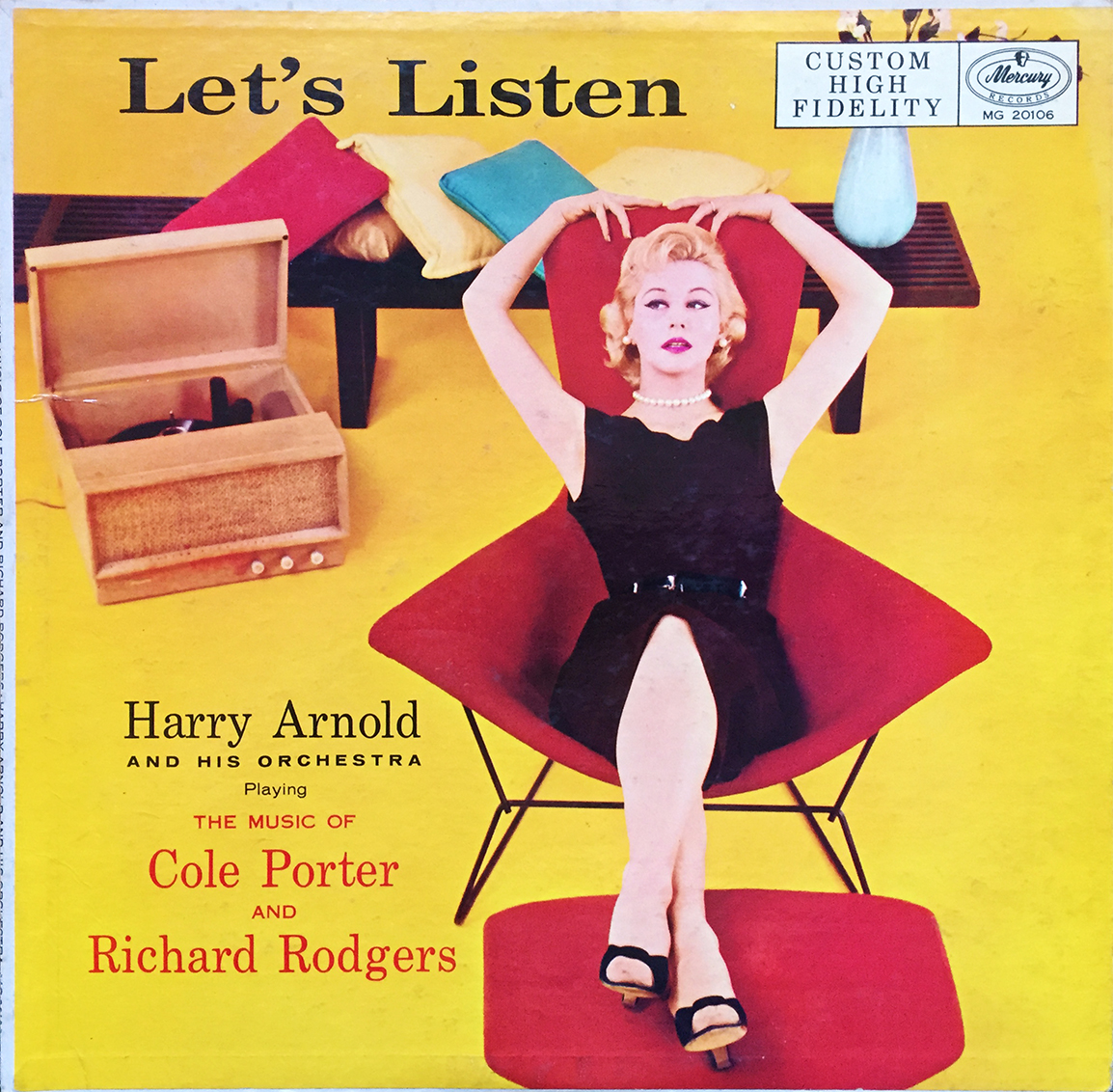 If you’re in the mood for a legs-up causal evening, alone, with loved ones, or even those you’d like to begin loving, try a few halves of Harry Arnold and his Orchestra as they elegantly and seductively jam through 12-tracks of Cole Porter and Richard Rodgers favorites on Let’s Listen, released by Mercury Records. Though the year is unknown, I’d guess and say this is a 1956 release, give or take a few years. Check it out if you can find it.
Miles and Miles of Decisions aka Help Me Make a Decision
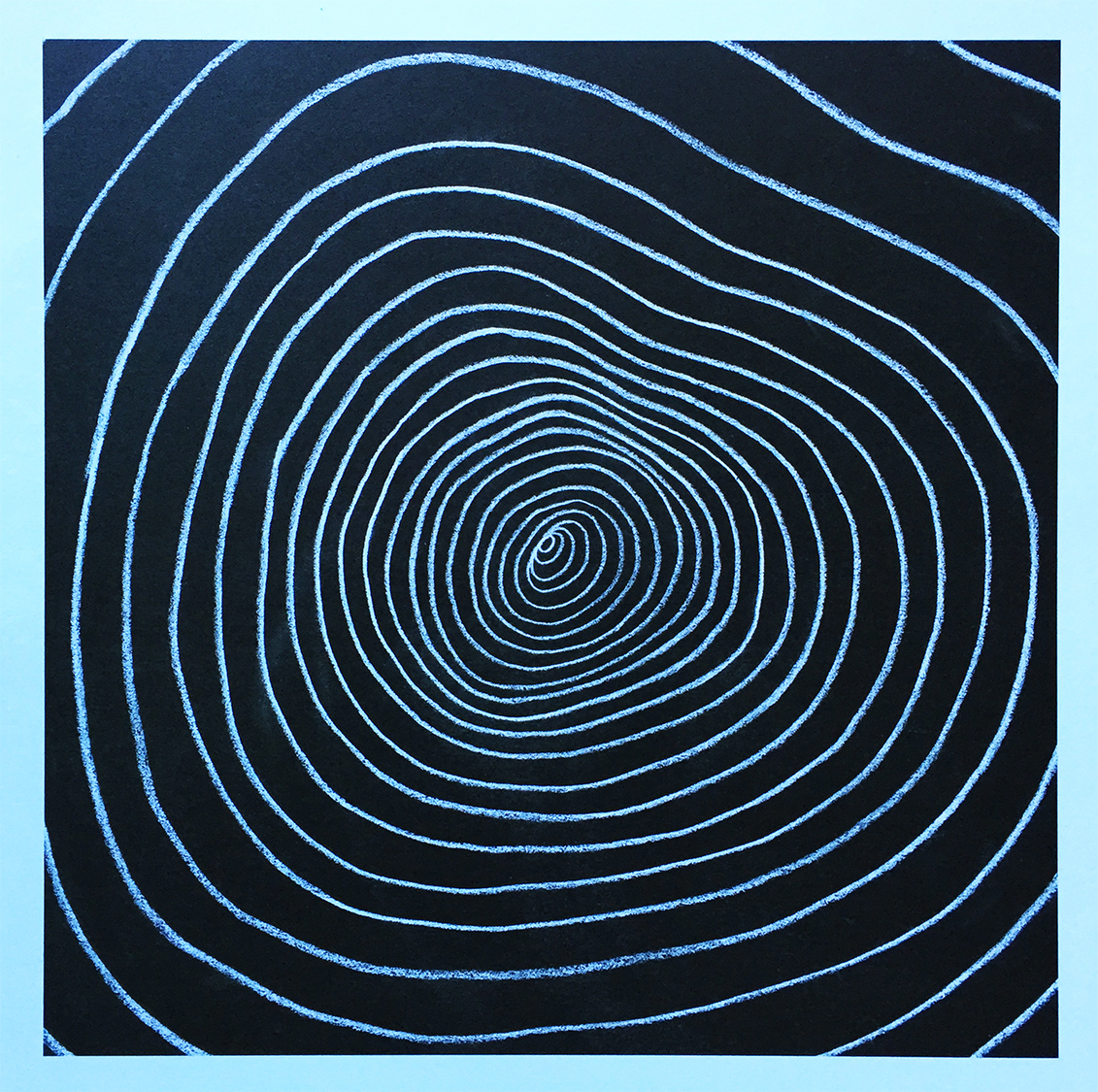 So I’m contemplating, debating really, about discontinuing my Vinyl Me, Please subscription. For a few reasons, really, but mainly because my personal wantlist is so vast and varied, I feel the $30 / month price tag can be better suited on other, needed releases. That being said, I just received Miles Davis’ 1967 Sorcerer last night, this month’s Vinyl Me, Please release, and I instantly fell in love with the minimalist art by Santiago Carrasquilla (an art print and drink pairing come with each month’s record, for those of you unfamiliar with VMP). The debate to stay a subscriber was predominantly one-sided, until I saw this print. Most exceedingly frame-worthy, this print is single-handedly forcing another thoughtful evaluation of this monthly service. To be continued, I suppose…
One Nation, Under Ian
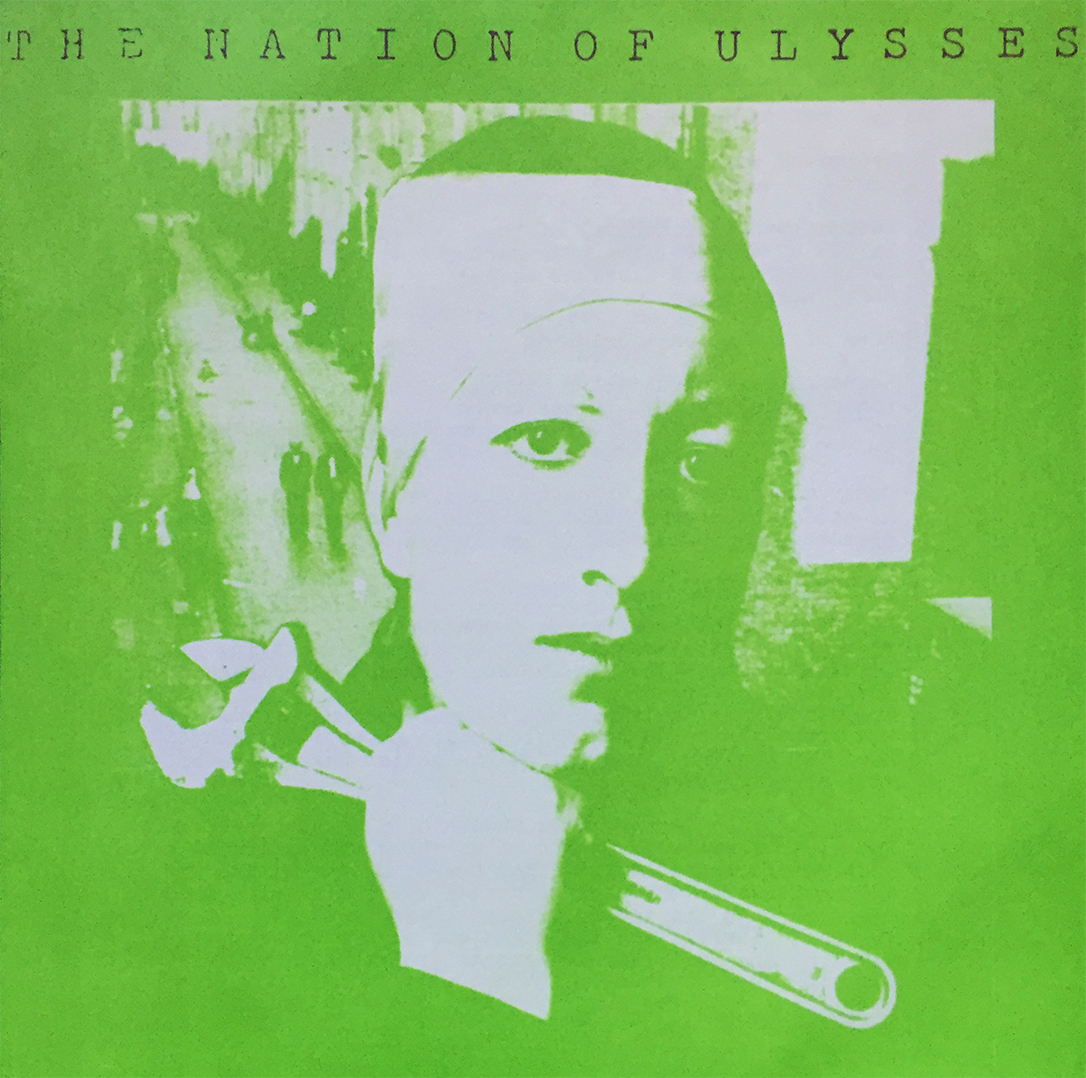 Nation of Ulysses, my latest audio crush, arrived twofold yesterday in the shape of 7″ 45s (they may not have been 45s now that I think about it, but really, who’s keeping score?). The first, pictured here, was 1990’s self-titled, three tracker (Sound of Young America, Channel 1 Ulysses, and Atom Bomb), while the second was of the 1991 persuasion with The Birth of the Ulysses Aesthetic (The Synthesis of Speed and Transformation). Tracks contained therein are The Sound of Jazz to Come, N.O.U.S.P.T.D.A, and Presidents of Vice. For you hardcore-garage-art-rock-types, these are exceptional, and surprisingly inexpensive finds. Raise the flag and drop the needle. Tell ’em The Groove sent ‘ya.
Touch Dancing…
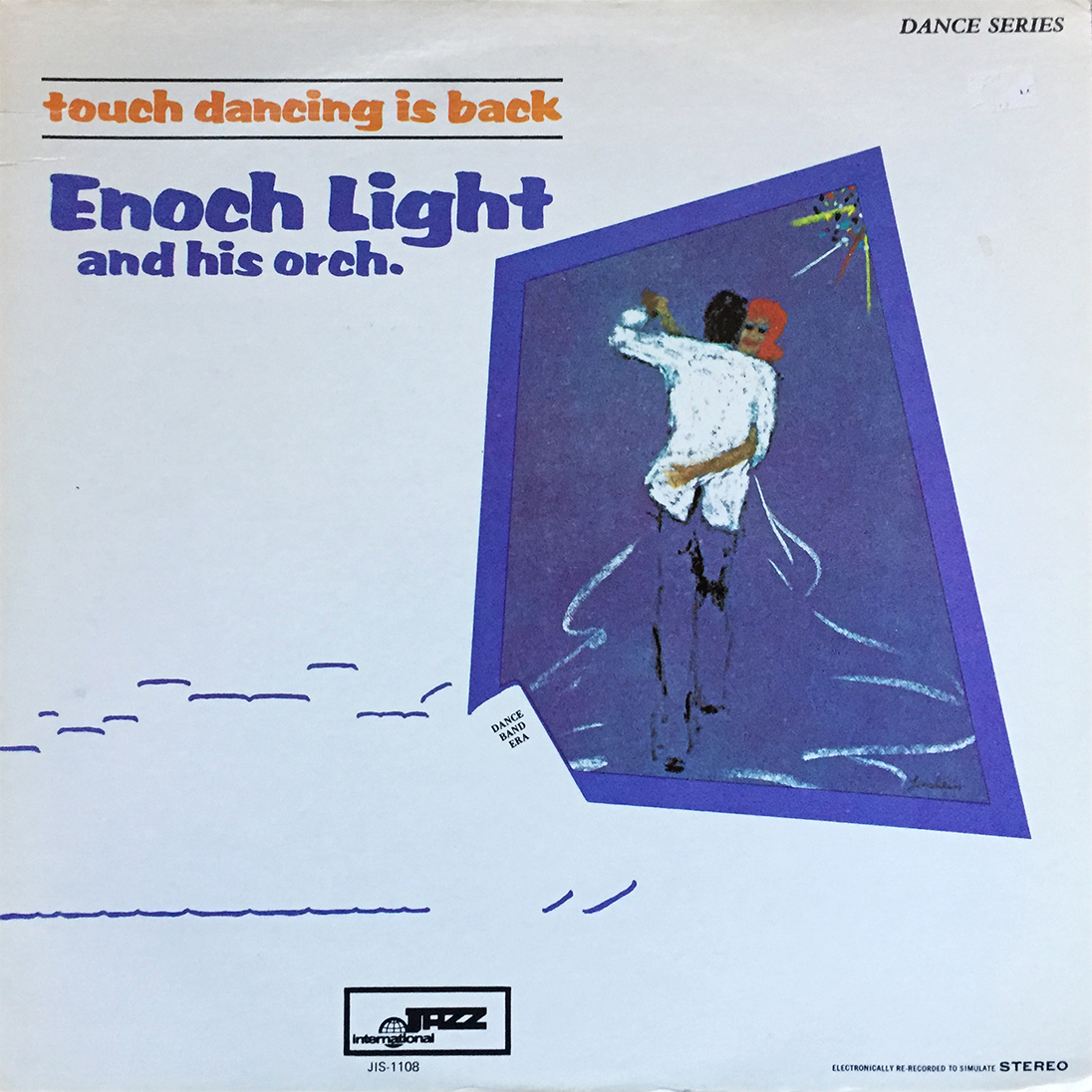 Well, it’s back, at least, according to this International Jazz release by Enoch Light and His Orchestra. It’s hard to imagine that touch dancing ever really went away, but that’s just, you know, my opinion. Appropriately titled Touch Dancing is Back, Enoch Light (and his crew) bring 10 tracks of pure, lustful touch dancing favorites like, Laughing on the Outside, I’ll Get You, and I Get Ideas. Whether you’re in the mood, or trying to plan a soft, rhythmic evening with your touch partner, consider Touch Dancing is Back. You won’t be disappointed.
Dusty Spin
 Just received my, wait for it, “doublemint w/ purple haze” colored vinyl version of The Bouncing Soul’s 2nd studio album, Maniacal Laughter. Happy to have stumbled across this when I did (3x weeks ago) because this 125 record release is now officially sold out. I will note, though it’s no consequence, that my sealed copy arrived very, very dusty. Perhaps tiny polyvinyl crumbs were left over from the pressing machine. Either way, a good cleaning is definitely in order before the windows start shaking and the neighbors start banging on the walls.
Find it All on Decca
 From “Children’s Music” like Danny Kaye and Winnie the Pooh, to “Movie and Broadway” with Oklahoma and Song of Norway, you can bet that Decca Records really does offer “a new world of sound.” Perhaps popular vocalists like Rick Nelson or Brenda Lee is more your bag, or escape the continental US with a handful of great “Hawaiian Music” with Alfred Apaka or The Honolulu Symphony Orchestra. Whatever your flavor, Decca has you covered.
Tis the Season
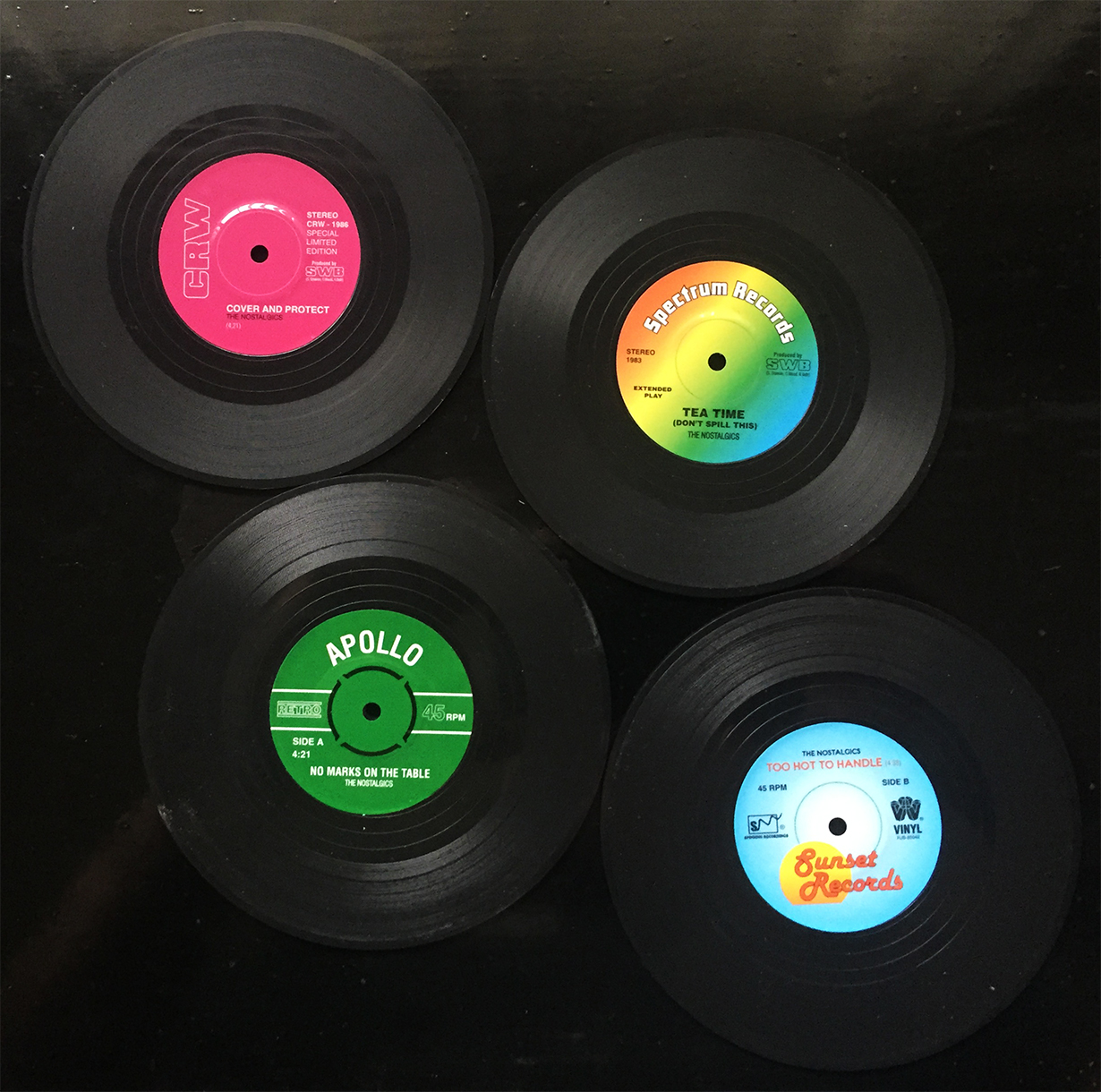 This holiday season, why not give the gift of record coasters? This set was gifted to me by my wonderful and thoughtful parents. Save your woodwork in style. They make the perfect gift for any cocktail enthusiast, and are great stocking stuffers.
Best of the Best
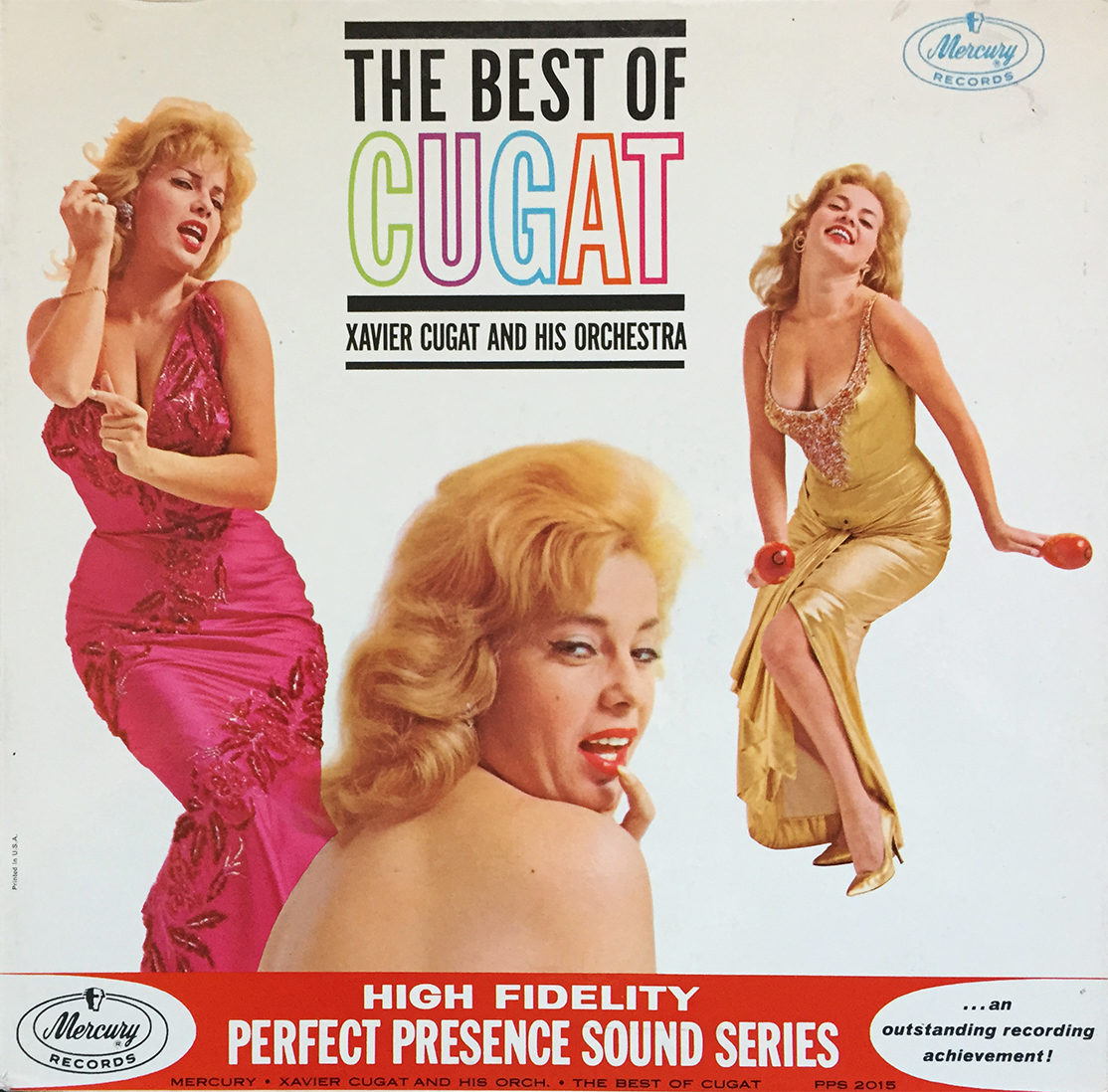 Xavier Cugat and His Orchestra released a riveting collection of Afro-Cuban-infused jazz for Mercury Records on his / their 1961 album, The Best of Cugat. Having been recording and releasing material since the early 1940s (Rumbas, released in 1941), it must have been painstakingly difficult to find only 12 tracks from Cugat’s vast, hip-swaying catalog to fill this compilation. If you haven’t heard of Xavier Cugat, climb out from under your rock and check out this “best of” comp. It’s a great place to start, and can be had for under $3.
Colorful Percussions
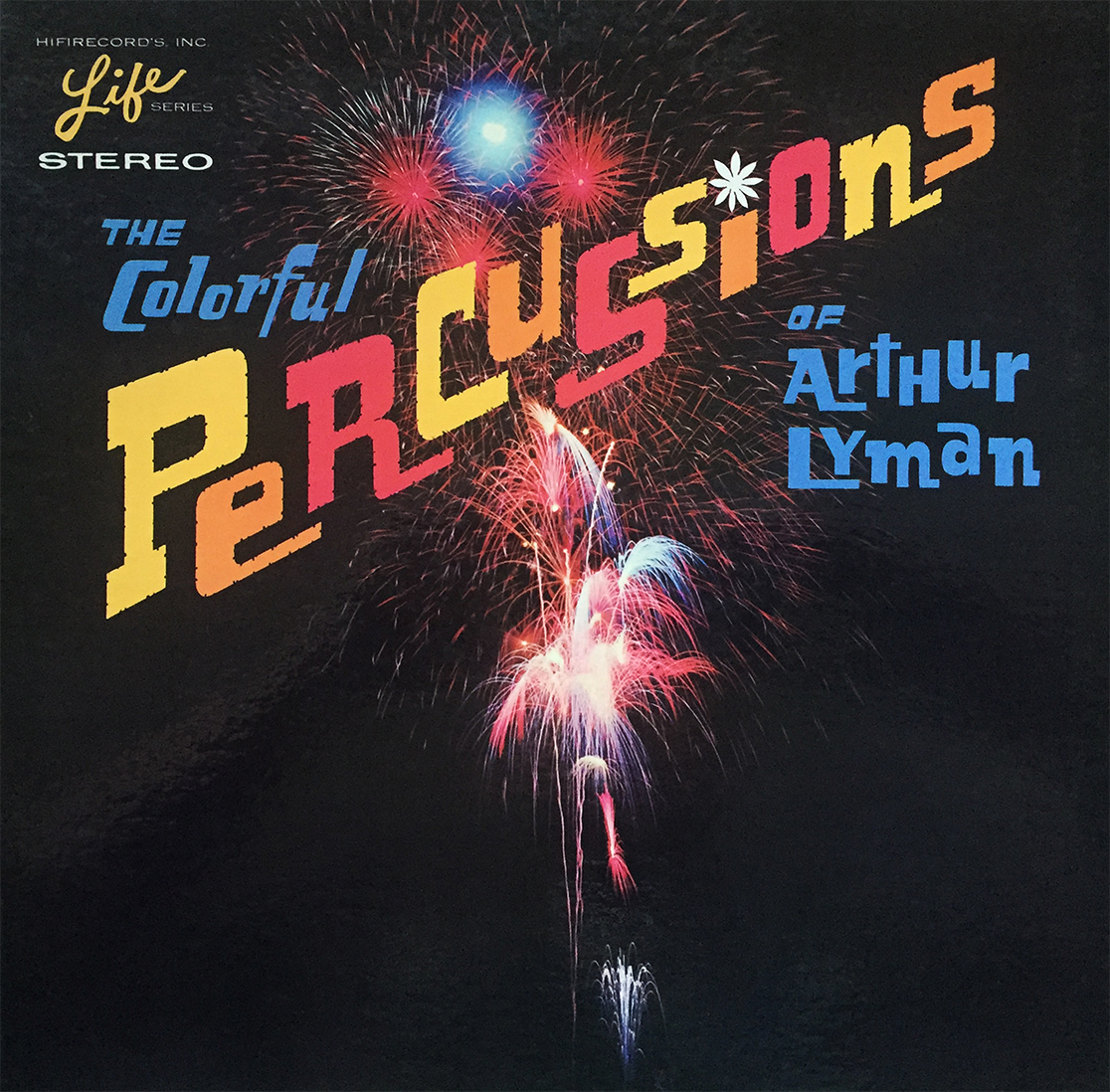 Arthur Lyman’s 1962 classic, The Colorful Percussions of Arthur Lyman, is a festive little listen that showcases, yet again, the many and varied talents of this Space Age Pop legend. Sandwiched between 1960’s Percussion Spectatular! (a reissued as Yellow Bird) and Many Moods of Arthur Lyman (also 1962), The Colorful Percussions of Arthur Lyman is as vivid and explosive as the title and cover art suggests. This, like with any Lyman album, comes highly recommended.
‘Torn Curtain’
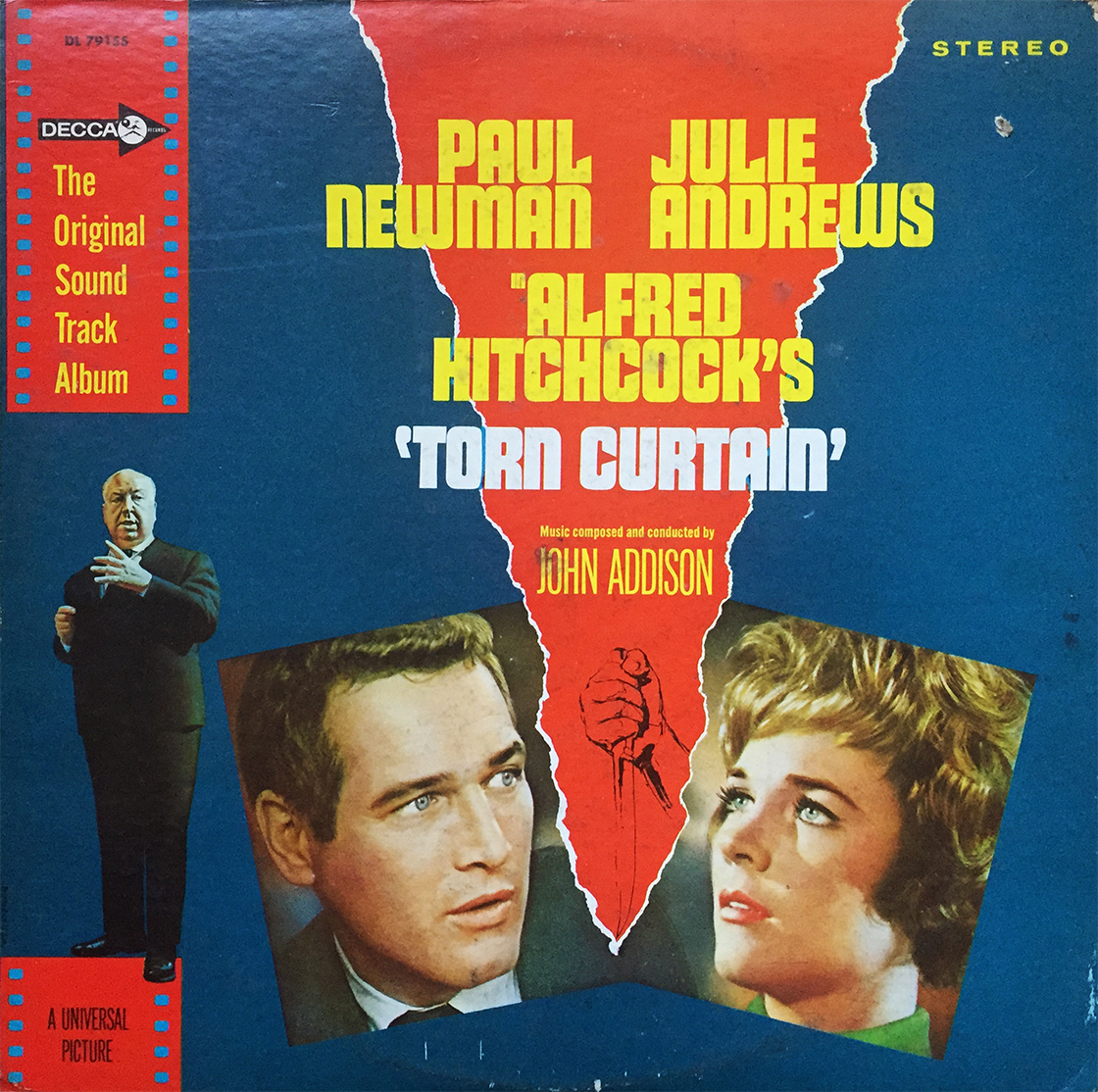 Torn Curtain, Hitchcock’s 1966 classic starring Paul Newman and Julie Andrews, has slowly become one of my favorite Hitchcock films, in no small part due to John Addison’s riveting soundtrack. Released by Decca the same year, this 12-track record clocks in at just under 30 mins, and serves as a perfect mini adventure for the ears as well as the imagination. If you haven’t watched it in while, I suggest taking some time during the holiday, and if you find a copy of the soundtrack on vinyl, I highly recommend picking it up.
DC
 Super excited for a few reasons here. One, that my copy of Dead Cross came in record time (no pun intended). Two, because I’m able to spin yet another collab between Slayer mainstay Dave Lombordo and golden throat magician Mike Patton. And finally, three, because Ipecac Recordings (Patton’s label) releases their records with digital download cards. Lots to be excited about.
Mocha Latte, or Zeppelin on 8-track?
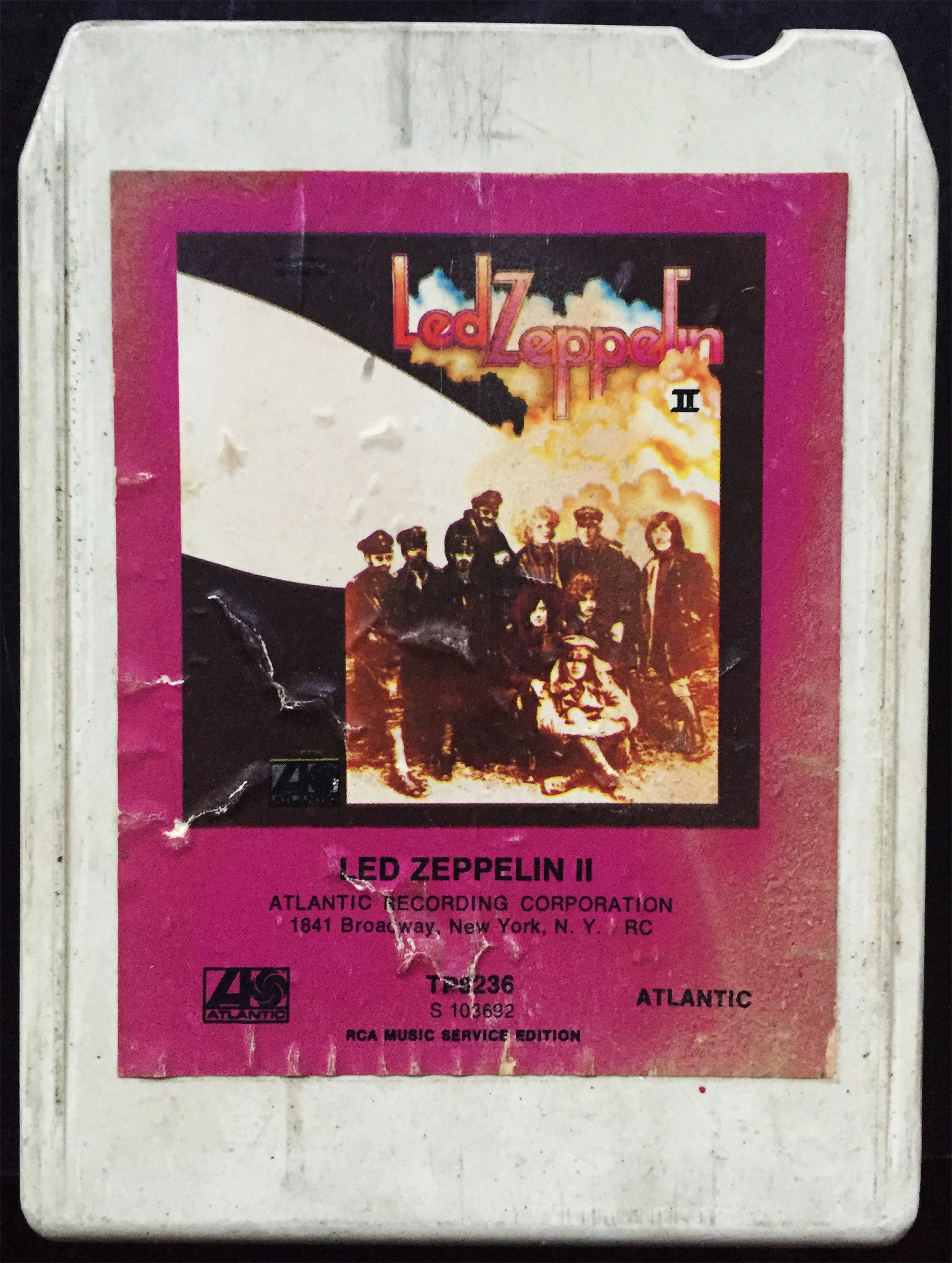 No deals were to be had on Johnny Cash albums, but $3 for Led Zeppelin II on (working) 8-track? Don’t mind if I do! Also included in the 8-track haul were George Gershwin, Jim Croce, and The Kinks.
CAUTION!
 Much needed caution should be observed when casually spinning your coveted records. Consider, for a moment, the quality of your needle. “It is better to replace your needle than your record collection.” You have Capitol Records to thank for this kind warning, one I’m sure will not fall upon deaf ears.
Dirt Music
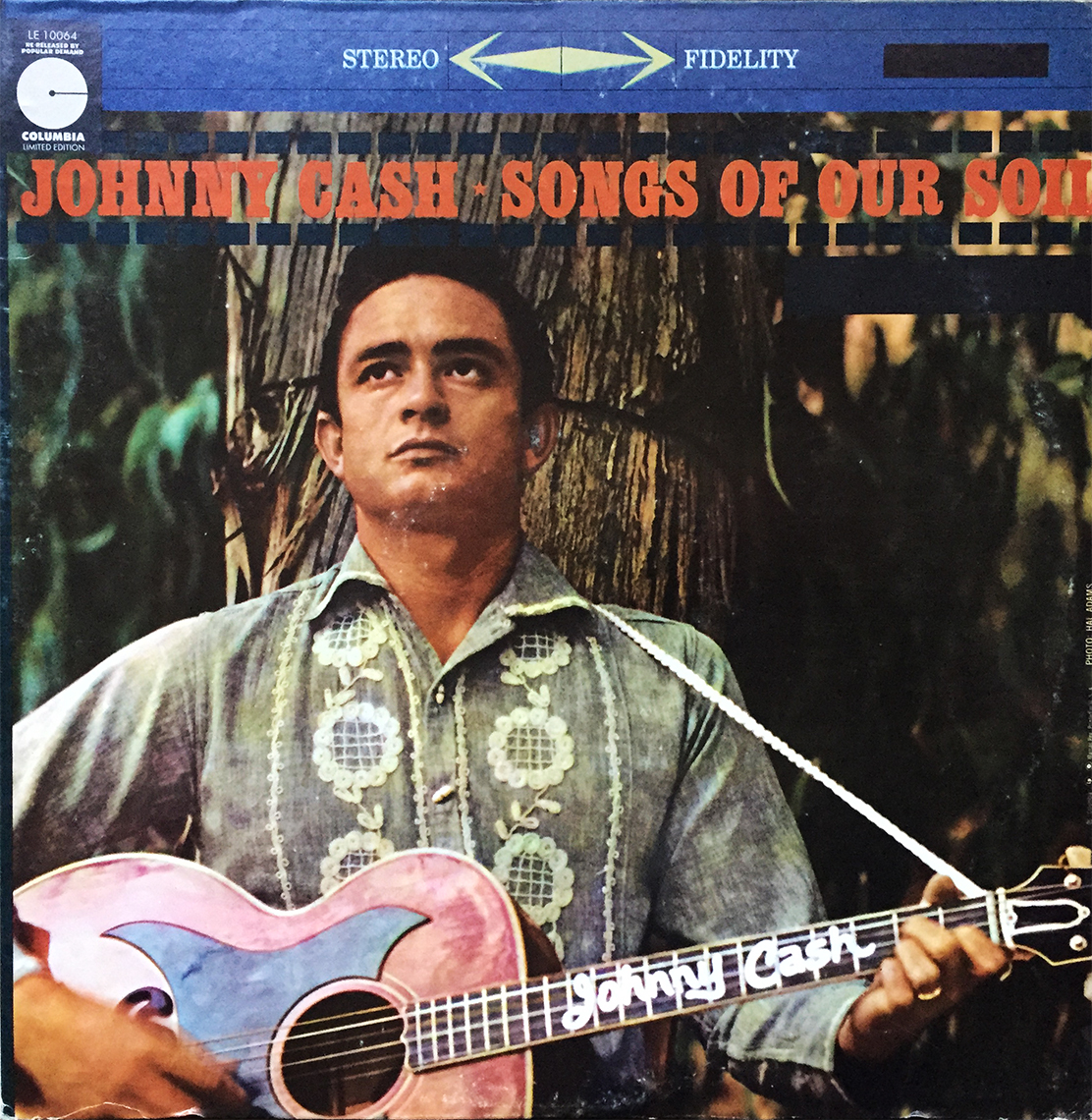 Another day, yet another Johnny Cash acquisition. This one, Songs of Our Soil, comes all the way from 1959. Look how young he is! Anyway, we’ve been slicing a sizable chunk out of our needed J.R. Cash discography lately, so this weekend, we’re going to try and keep that train a’rollin! (Heading to an old stomping ground for some cheap, quality, used records.) Wish us luck!
SPECIALISTS IN THE PHYSIOLOGICAL AND PSYCHOLOGICAL APPLICATIONS OF MUSIC
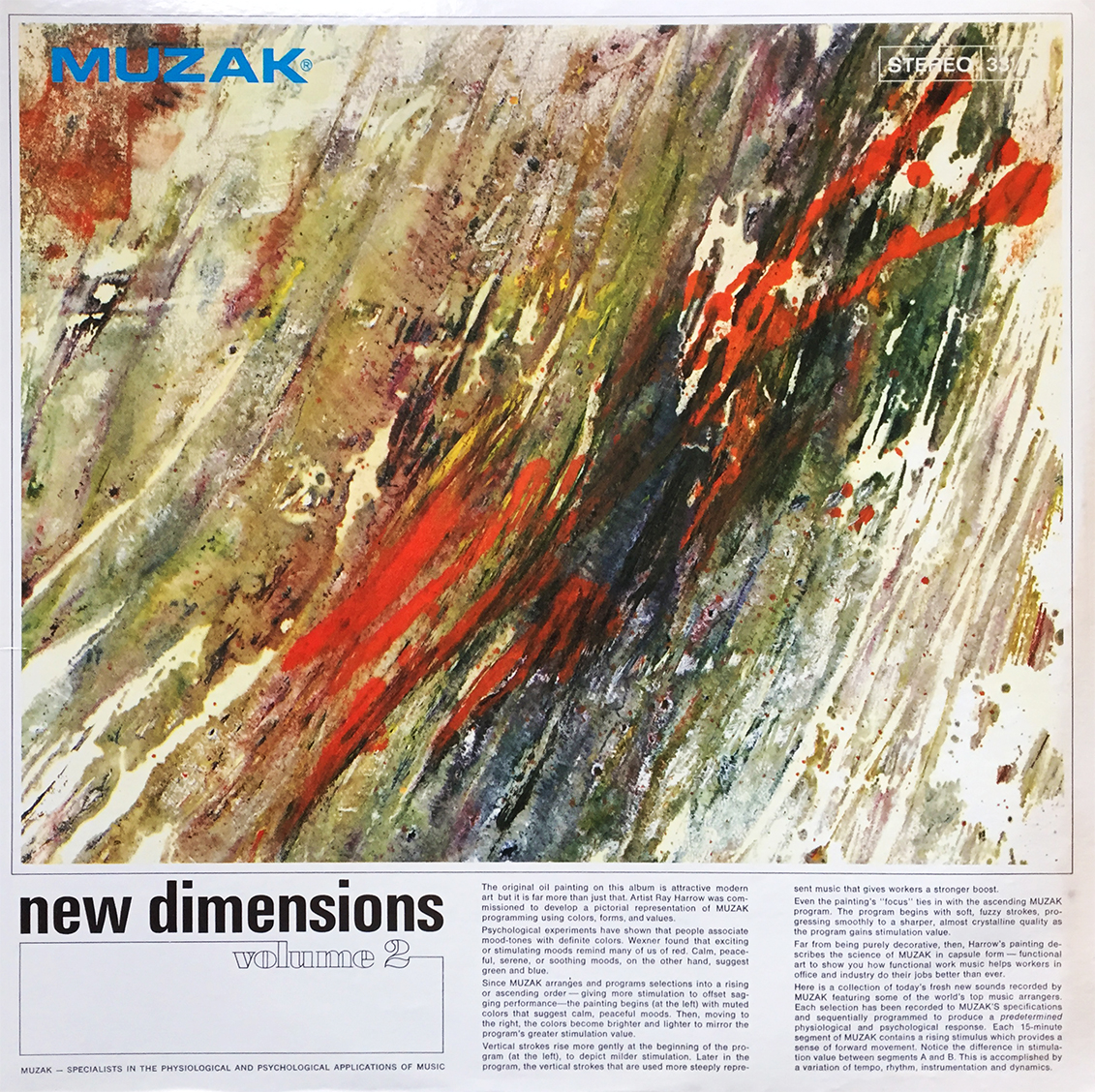 So, I was about to briefly touch upon this jazz-pop compilation exemplifying and showcasing the visual interpretation of music, or in their words, “The Physiological and Psychological Applications of Music” until I started reading the blurb on the front cover. This is some fascinating shit! So please bear with me as I transcribe this captivating write-up. I hope you enjoy. (Year unknown. Cat. #H-I (1) 35A. Released by MUZAK.)
New Dimensions Volume 2
MUZAK – SPECIALISTS IN THE PHYSIOLOGICAL AND PSYCHOLOGICAL APPLICATIONS OF MUSIC
The original oil painting on this album is attractive modern art but it is far more than just that. Artist Ray Harrow was commissioned to develop a pictorial representation of MUZAK programming using colors, forms, and values.
Psychological experiments have shown that people associate mood-tones with definite colors. Wexner found that exciting or stimulating moods remind many of us of red. Calm, peaceful, serene, or soothing moods, on the other hand, suggest green and blue.
Since MUZAK arranges and programs selections into a rising or ascending order – giving more stimulation to offset sagging performance – the painting begins (at the left) with muted colors that suggest calm, peaceful moods. Then, moving to the right, the colors become brighter and lighter to mirror the program’s greater stimulation value.
Vertical strokes rise more gently at the beginning of the program (at the left), to depict milder stimulation. Later in the program, the vertical strokes that are used more steeply represent music that gives workers a stronger boost.
Even the painting’s “focus” ties in with the ascending MUZAK program. The program begins with soft, fuzzy strokes, progressing smoothly to a sharper, almost crystalline quality as the program gains stimulation value.
Far from being purely decorative, then, Harrow’s painting describes the science of MUZAK in capsule form – functional art to show you how functional work music helps workers in office and industry do their jobs better than ever.
Here is a collection of today’s fresh new sounds recorded by MUZAK featuring some of the world’s top music arrangers. Each selection has been recorded to MUZAK’S specifications and sequentially programmed to produce a predetermined physiological and psychological response. Each 15-minute segment of MUZAK contains a rising stimulus which provides a sense of forward movement. Notice the difference in stimulation value between segments A and B. This is accomplished by a variation of tempo, rhythm, instrumentation and dynamics.
RAMATAM
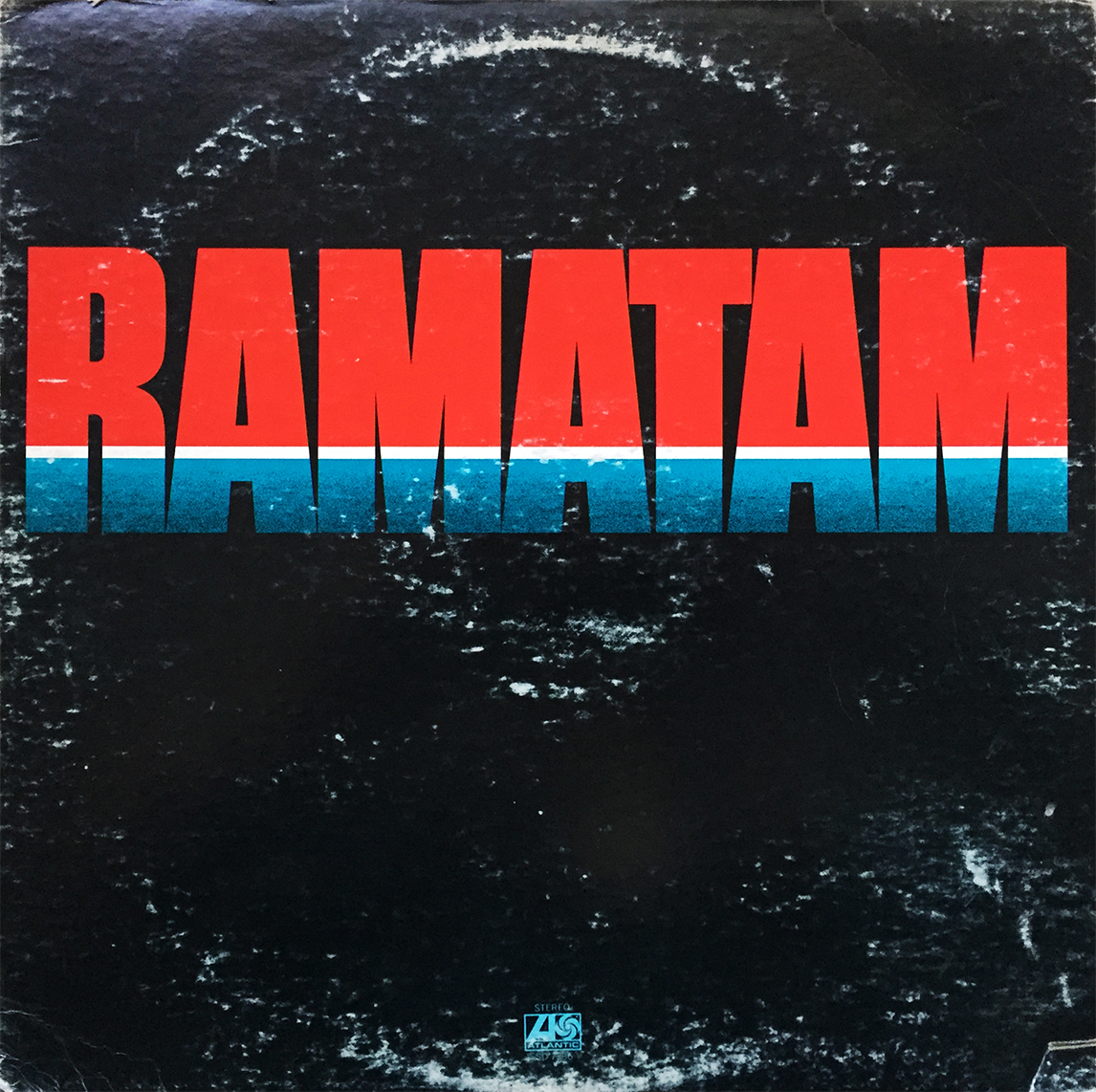 Ramatam’s 1972 debut album first caught my eye from an early 70’s Atlantic Records insert. The almost modern simplicity of the cover (red, white, and blue text over black background) stood out to me, mainly as I’d never heard of the band, but also because I thought the all-caps boldness of the art demanded some exploring. I filed that image away and went on about my day, which turned into a few months, then finally to little over a year where I (just recently) found a copy for a cool $4.98 at my local b&m (brick and mortar). This, their first album (of two) contained some heavy, early 70’s names (Mitch Mitchell, drums, having spent time with The Jimi Hendrix Experience, and Mike Pinera, guitar and vocals, from Blues Image). It’s sad that Ramatam’s stint only spanned two albums over two years (1972-1973), but with such a small discography, they’re certainly worth checking out.
One in a Million
 Another fantastic Mary Tyler Moore cover, this time touting Lew Raymond and the Hollywood Studio Orchestra. From what I can quickly gather, Mary appears on 7+ album covers from the late 50’s to the early 60’s. Million Sellers is our third, behind Cha Cha Cha and Miguelito Valdez Plays His World Famous Latin Rhythms. Always an exciting find, Mary covers are a sign of space-age-rhythmic-eruptions only the late 50’s can provide. RIP Laura Petrie.
 The Prudent Groove