The Summa Cum Laude…

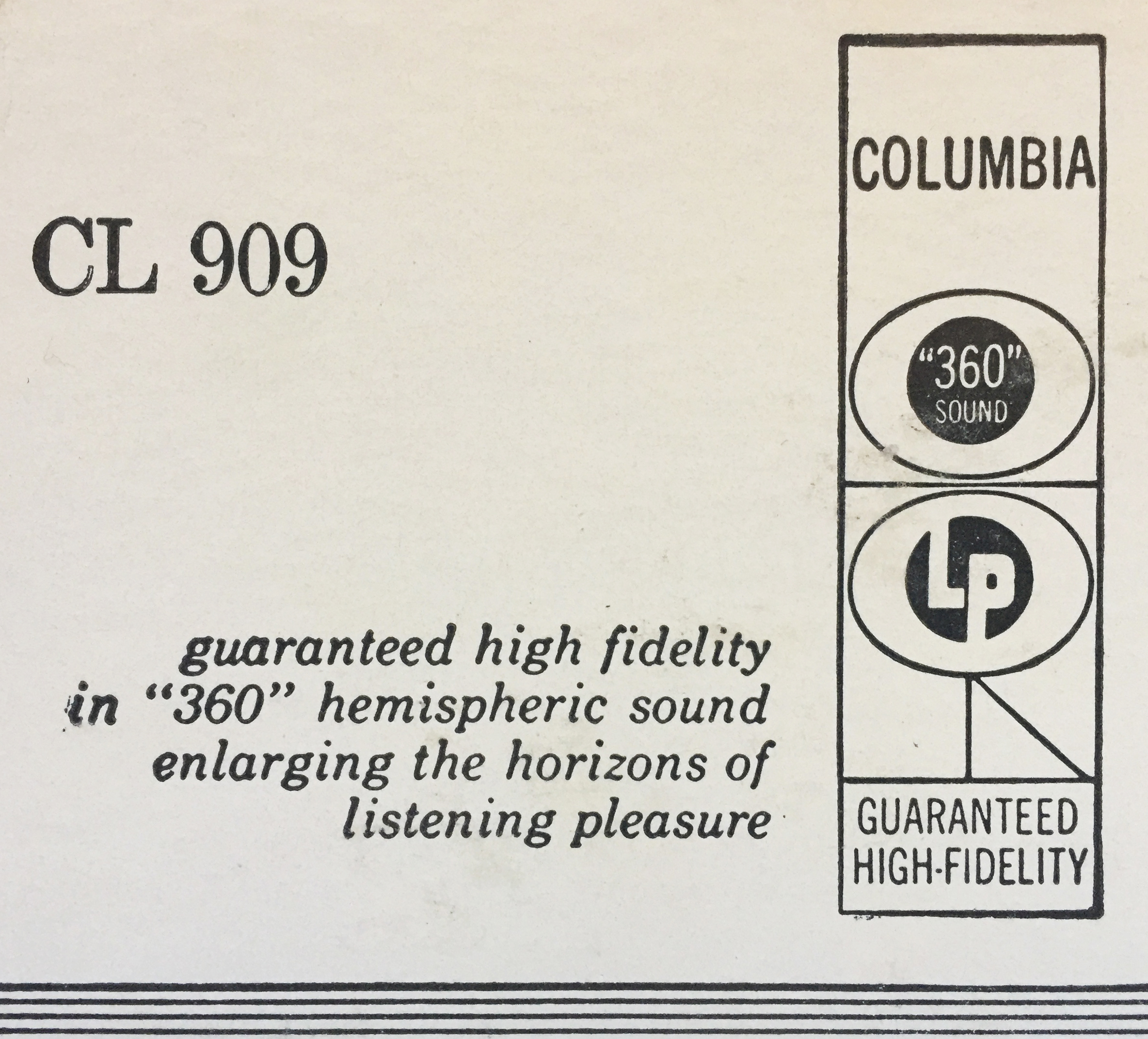
cl909… of high fidelity, or so Columbia Records claims, circa: 1956. At a time when many lesser-than labels were pushing “high fidelity” as more of a general, blanket statement rather than something that could necessarily be guaranteed, Columbia felt the incessant urge to mark themselves above all others with their “360” SOUND symbol. Have a read below from the majestic wonders of “360” SOUND, in Columbia’s own words (as found on the back of Paul Weston and His Music from Hollywood’s Moonlight Becomes You):

The symbol “360” SOUND is the summa cum laude of high fidelity.

It is your GUARANTEE that each record so designated has been engineered and individually tested under the supervision of the Columbia Sound Laboratory.

Starting with the taping of the performance, through strategically placed wide-range microphones, every step in the manufacturing process is checked for peak efficiency — including an actual laboratory-calibrated playback of each disc before it is released.

Not only original masters, but stamper test-pressings are required to match, in A-B tests, the tapes from which they were derived.

Only such rigid control permits production of recordings covering the entire 30 to 15,000 cycle range within a plus or minus 2-decibel tolerance.

Like the 360 degrees of a perfect circle, “360” SOUND is the true spectrum of high fidelity.

For this reason Columbia Records, the oldest name in recording and creator of “Lp”, GUARANTEES without reservation the fidelity of this “360” SOUND record.

Editor’s note: Hot damn!
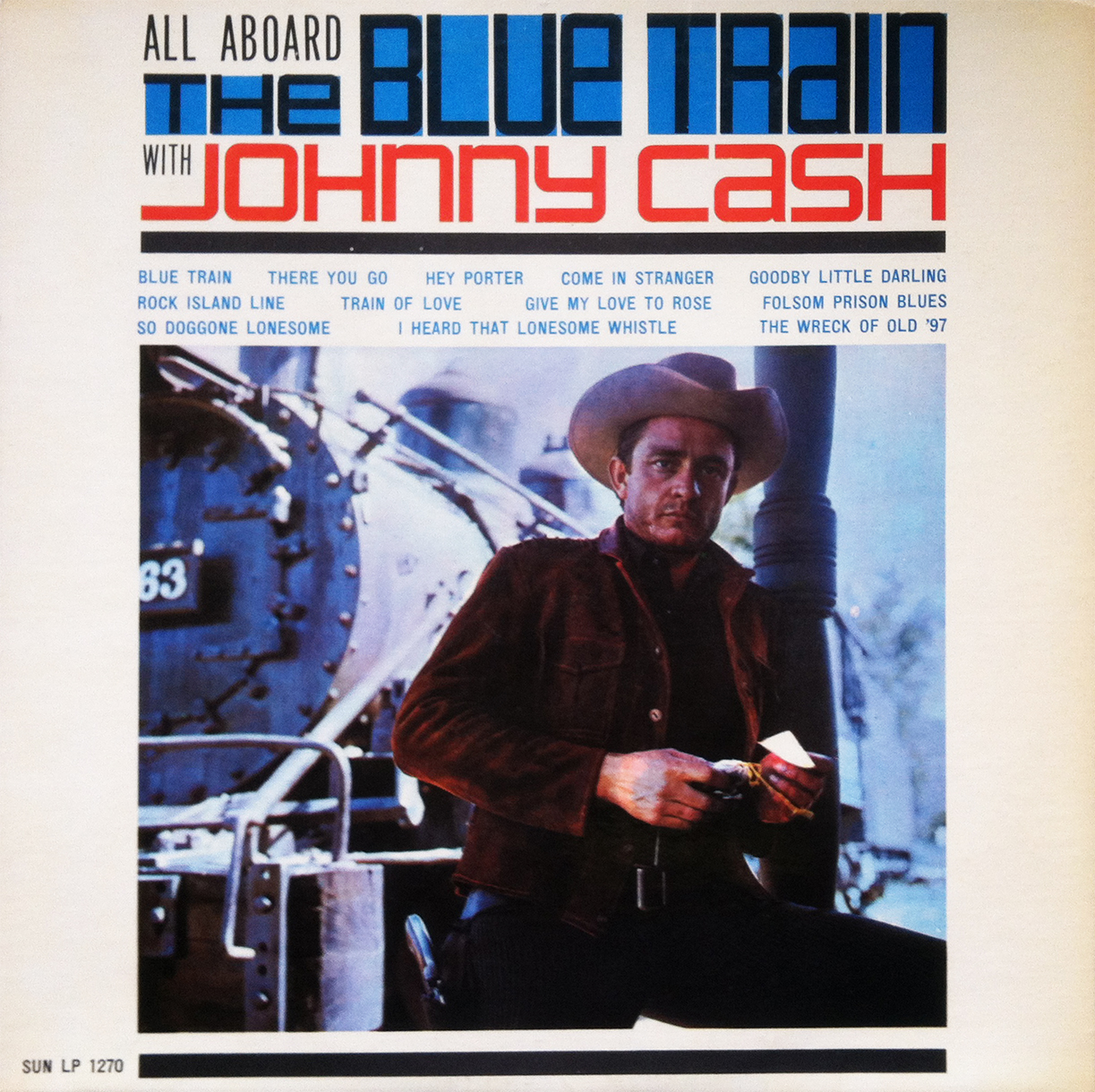
Sun LP 1270

BlueThe 14th studio album by J.R. Cash was released in November of 1962, and was titled All Aboard the Blue Train, for those of you inquiring. Featuring several heavy hitters (Wreck of Old 97, Folsom Prison Blues, Rock Island Line), All Aboard the Blue Train is a collection of previously released Sun Records tracks (save for Blue Train), and was a cash in by Sun after Cash moved to Columbia. It’s a damn good album, as is anything by Cash, and comes highly recommended.

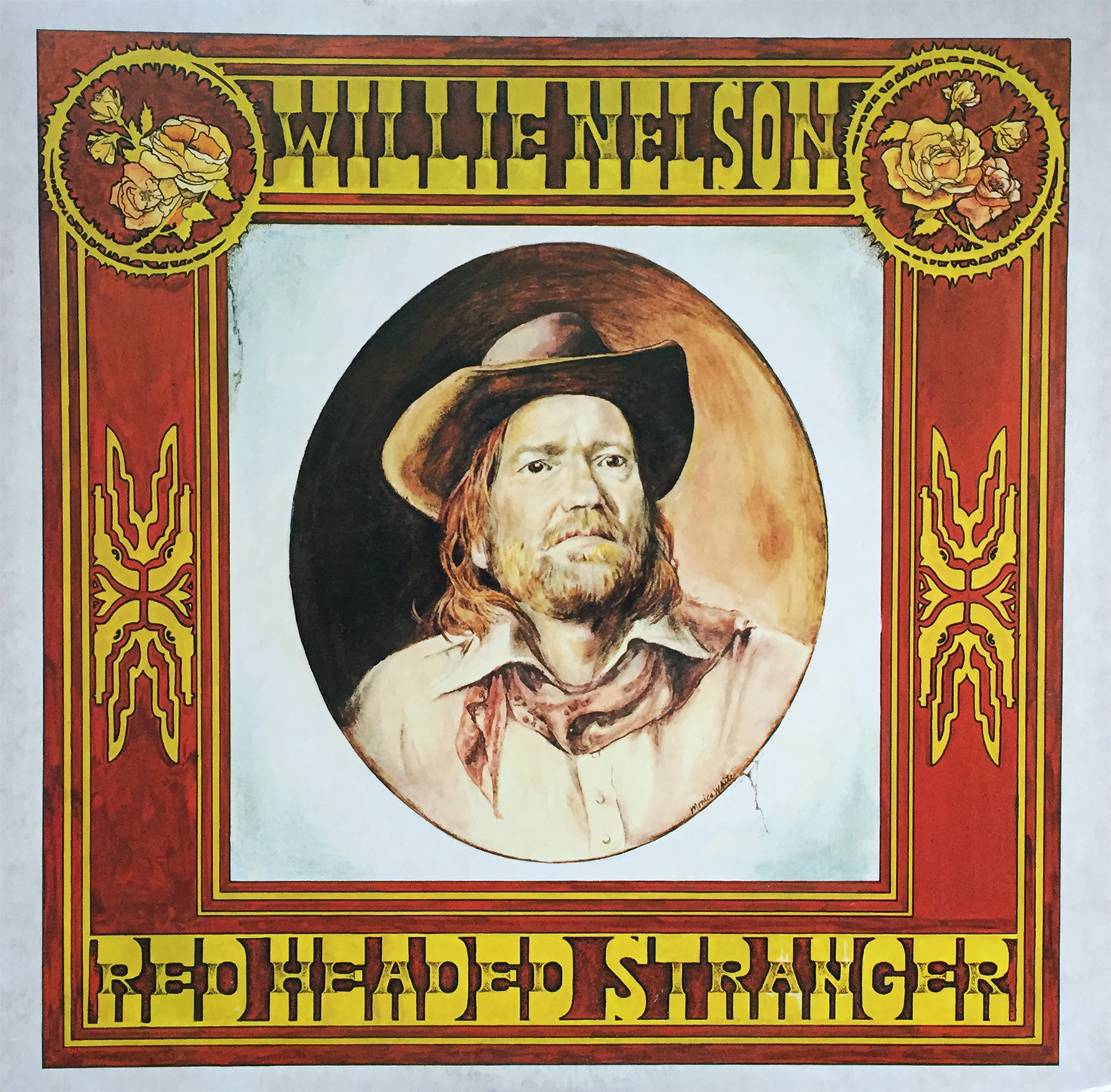
Red Headed Seeker

RedHeadedStrangerThis illusive little slithering snake has managed to outrun me for the last, conceivable time. Found this essential gem over the weekend for a cool $6.42 at my local brick & mortar. I’ve checked the country section for this album at that store every week for the past several years, and I finally walked away red handed. Blue Eyes Crying in the Rain, originally a track written for Roy Acuff by Fred Rose, has been covered in the studio over 8 times, includes renditions by both Conway Twitty and Hank Williams. I can’t say I’ve heard each and every version, but I’m confident in stating that none could be better than Willie Nelson’s soft-spoken, heartfelt version, track five on Columbia Records’ 1975 masterpiece, Red Headed Stranger.

Music’s Leading Man

KostelanetzMeet Andre Kostelanetz is a fascinating compilation of easy listening classical jazz from 1955. Made up of a handpicked selection of Kostelanetz’s earlier Columbia Records recordings, Meet Andre Kostelanetz features, among others, cuts from Carmen, The Nutcracker Suite, and classic Gershwin, while beautifully offering hi-res (albeit small), full color images of his previous Columbia Records releases. A great companion for early evening ambient noise while prepping for dinner or cleaning out the fishtank, Meet Andre Kostelanetz is a perfect introduction to this brilliant and hard working Russian conductor.

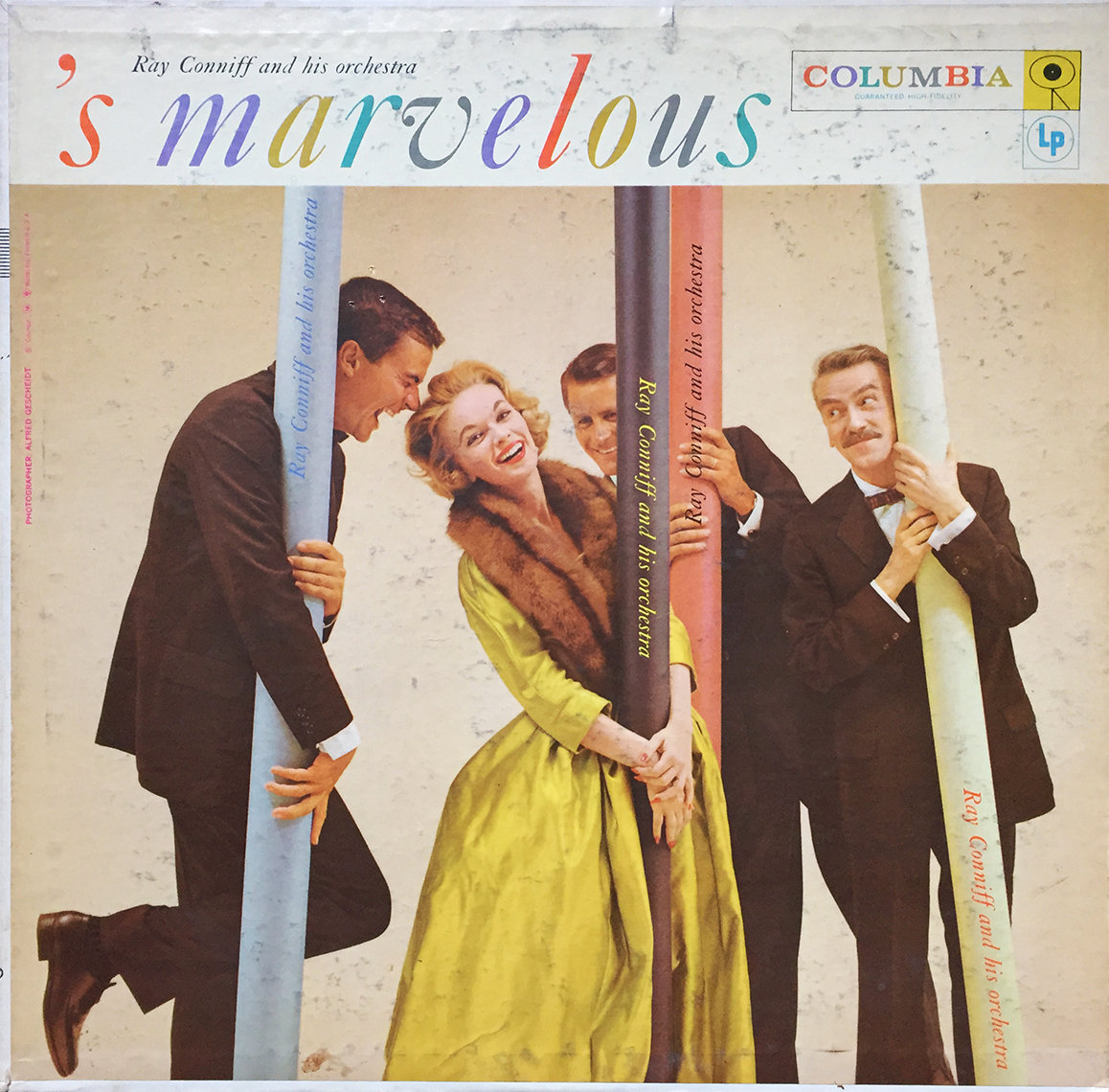
‘S Marvelous

s'marvelousA precursor to 1958’s ‘S Awful Nice, 1957’s ‘S Marvelous features another pack of serenaded love woos, and another “girl tells hilarious joke while pack of horny lapdogs rigidly struggle to bury their bones” cover. It’s 1957 sweet as candy living room music by Ray Conniff and His Orchestra, and it’s spectacular.

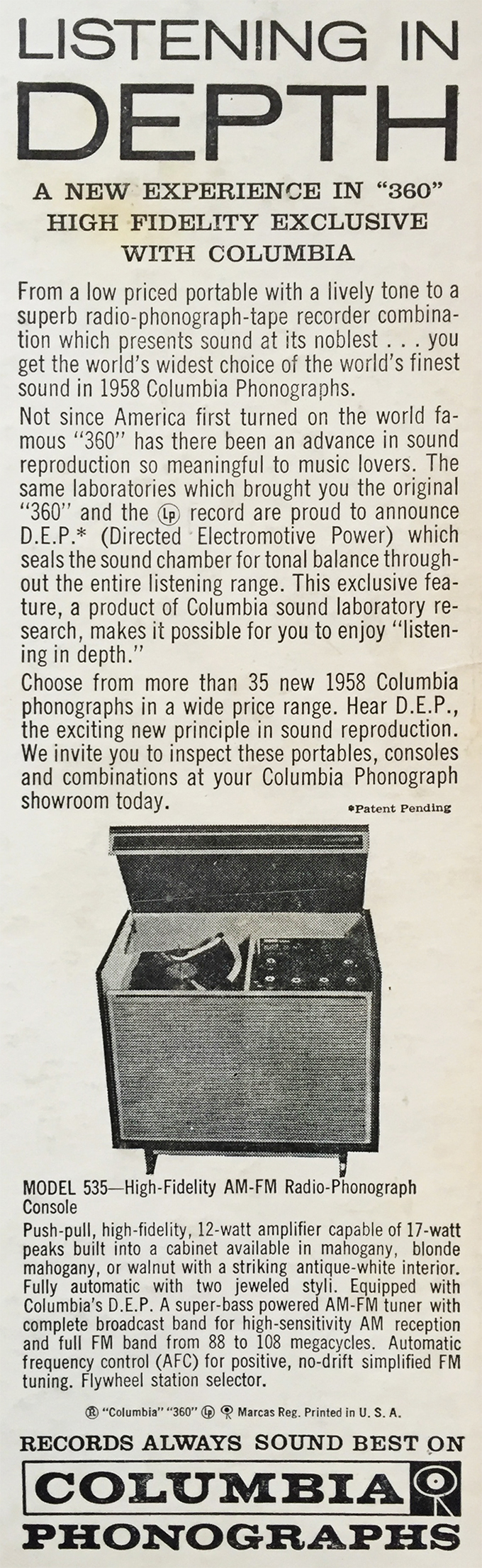
Listening in Depth Part II aka Sound at its Noblest

DepthYou have to go way back to July 17, 2013 for the first Groove post on fine quality Columbia Phonograph ad-serts. As you’ll recall, “Listening in Depth” is a buzz term used by Columbia sound laboratories to promote their seemingly revolutionary Directed Electromotive Power (D.E.P.) phonograph console. Featured here is Model 535 which boasts and brags about all the same cabinet wood finish variations as Model 532, but ups the ante in overall power and sound quality (if only marginally). This beautiful piece of 1958 machinery would go perfectly in any (or every) room in my house, and I’ll personally shake the hand of the first person to send me one. Email me for shipping address.

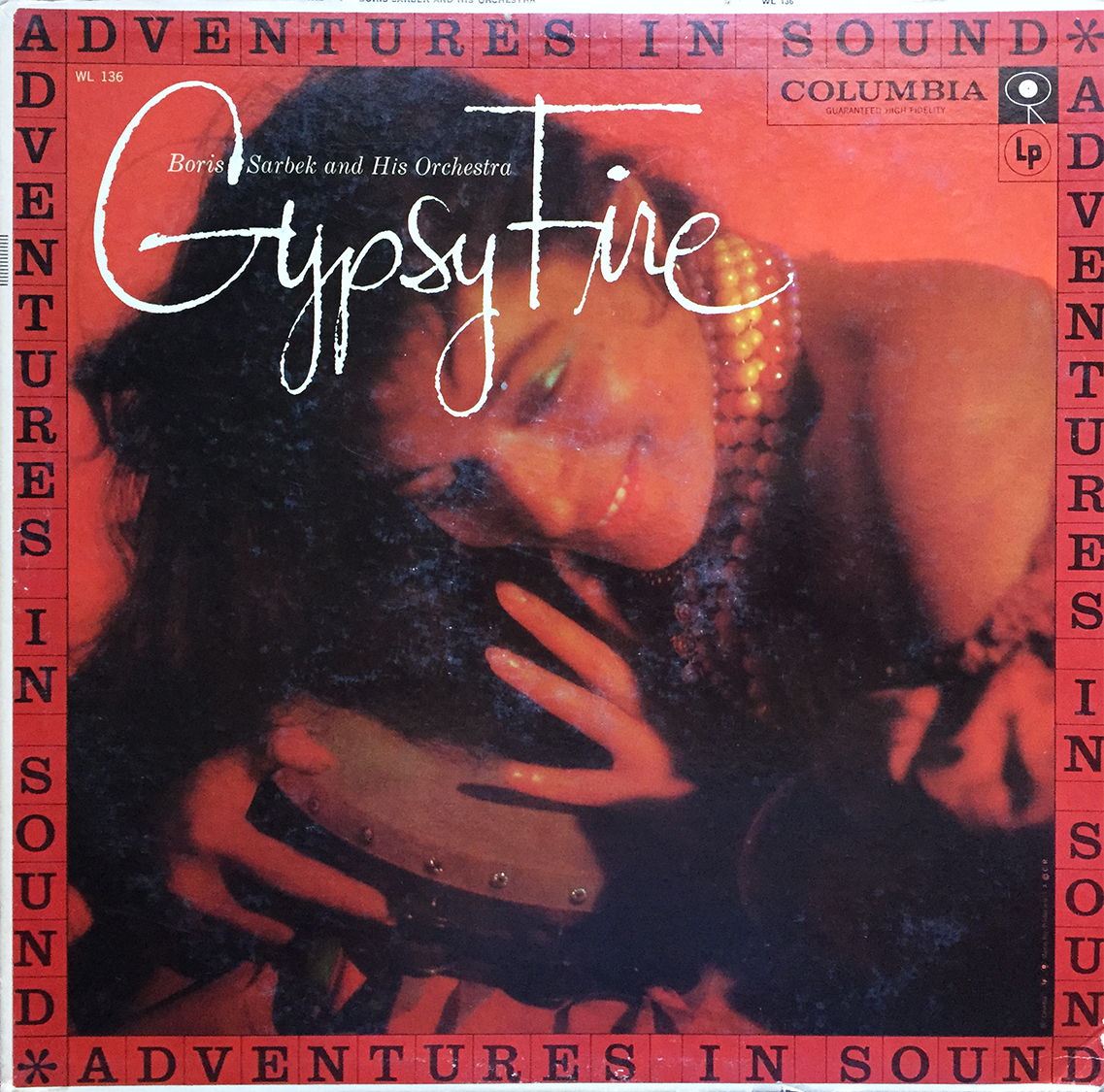
Gypsy Fire

GypsyIt’s a random Wednesday in December, so let’s celebrate the mundane doldrums of mid-week mediocrity with Boris Sarbek and His Orchestra’s 19?? Gypsy Fire. This enticing, bongo-hugging, ethnically-charged, gas-fireplace-raging, not-so-subtle-hint of sexual emotion is, by all intents and purposes, the perfect mid-week ear snack.

Polly, No Pockets

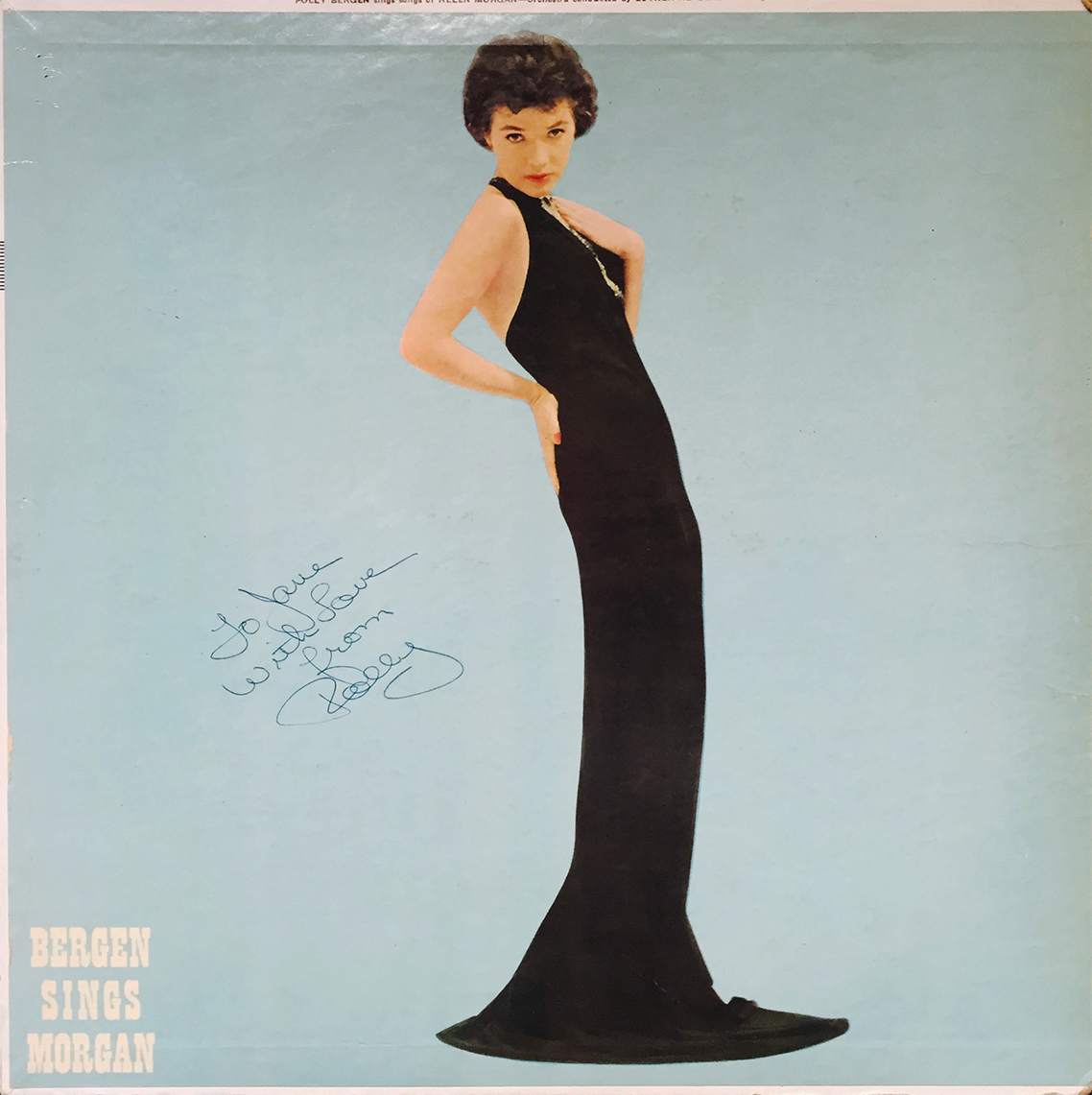
PollyI know absolutely nothing about Polly Bergen (sorry, Polly), but this 1957 Columbia records release, at one point, and likely very briefly, graced her hands. I imagine a 1957 year old Jane was a lover of Polly’s early film career, or perhaps Jane was just a monster fan of The Pepsi-Cola Playhouse (Polly hosted from 1954 – 1955 before getting her own show, The Polly Bergen Show in 1957). I found this copy at a Goodwill in the valley and decided I had to have it. Maybe I should give it a spin sometime…

Crumb Thrills

  
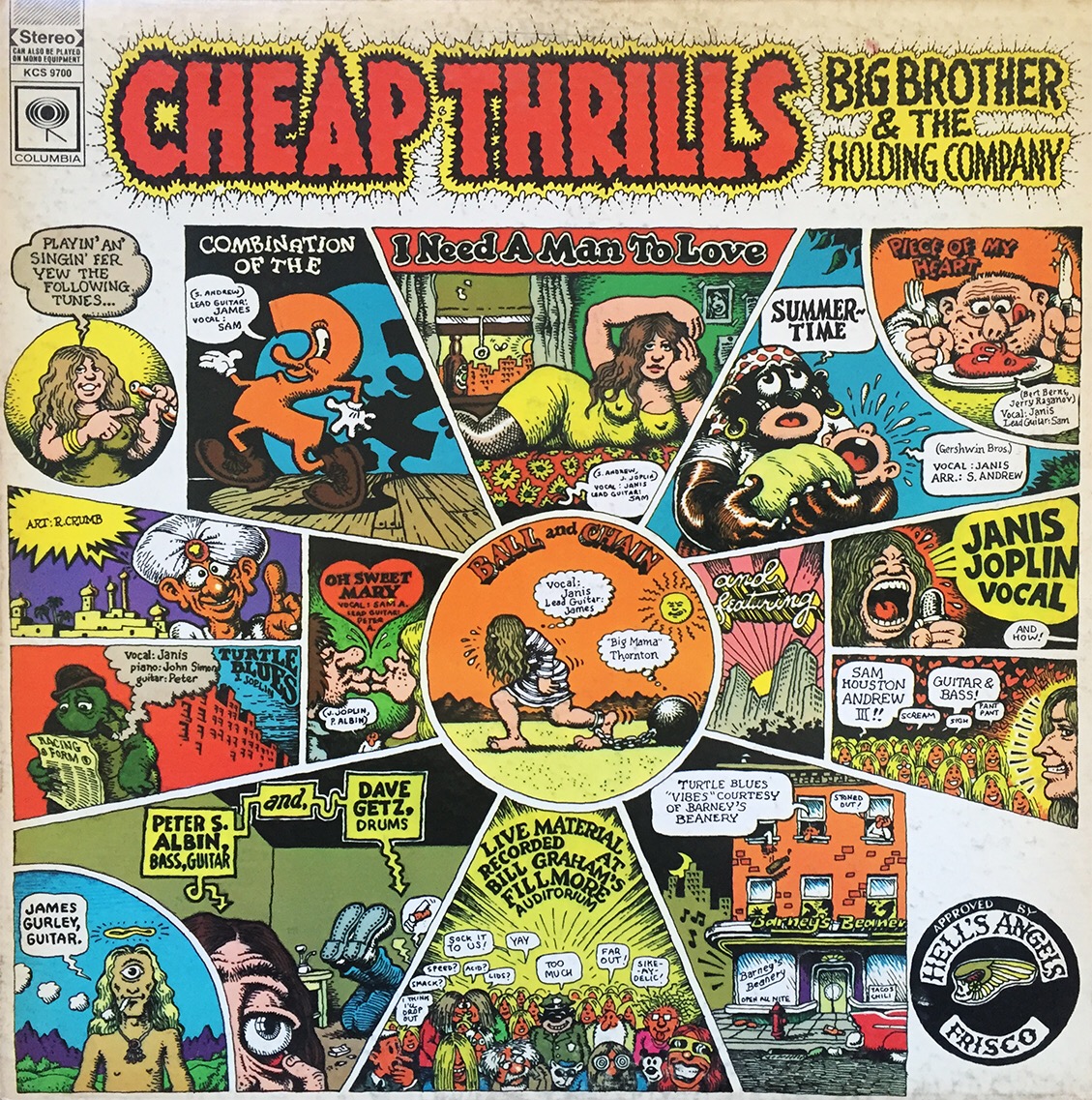
Big Brother & the Holding Company’s 2nd studio album, 1968’s Cheap Thrills, featured not only the groundbreaking single, Piece of My Heart, but also a vibrantly illustrated cover by Robert Crumb. Rolling Stone created a list of the 100 greatest album covers of all time. Cheap Thrills ranks no. 9. Interesting fact is that this was originally intended to be the album’s BACK cover, but apparently Ms. Joplin preferred Crumb’s art to a picture of herself and Columbia Records swapped covers. Smart move if you ask me, and you didn’t.
Side note: All this time I thought Southern Comfort took Janis. Thanks for that one, Bruce! Heroin, eh. Moderation, kids! Oh, and happy Friday!

The Fab JC

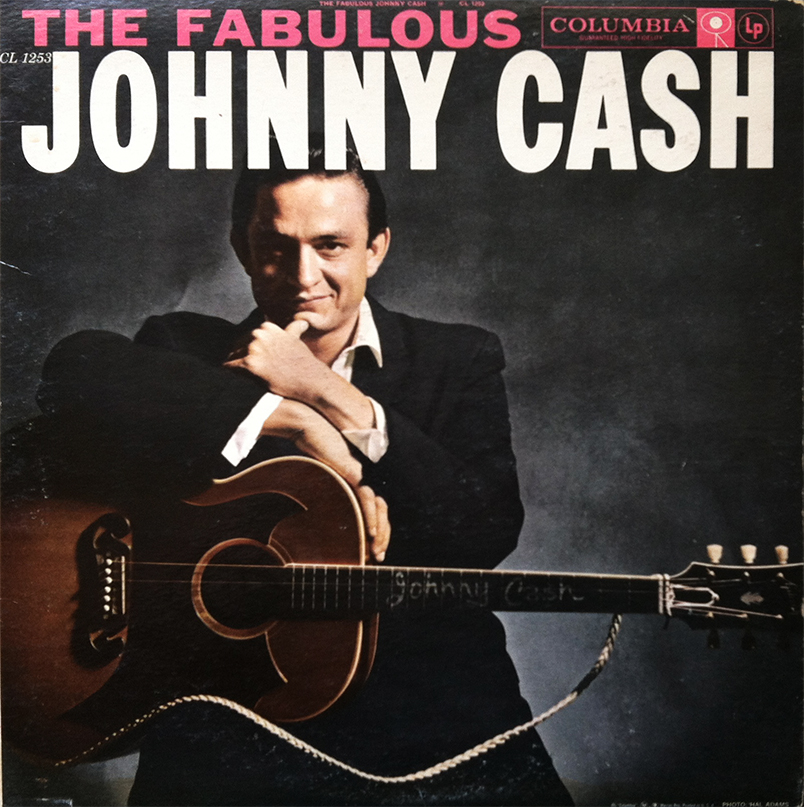
FabulousFor J. R. Cash’s third studio album, 1958’s The Fabulous Johnny Cash, the legendary man in black, or The Undertaker, as he was jokingly nicknamed, took a staggering leap up the distribution ladder and landed a contract with acclaimed Columbia Records, a label he’d stay with until moving to Mercury Records in 1985. It should be noted that J. R.’s stint with Sun Records, his first label, is the favored batch of rural tunes by yours truly. Be it either the simplistic and underproduced approach, or the documentation of a storied artist making his first marks, I for one just can’t get enough of that radiant, Sun sound.

Mr. Cash released two singles from TFJC. Frankie’s Man, Johnny and Don’t Take Your Guns to Town, the latter proving to be one of his biggest, early successes. It’s painfully obvious to mention that J. R. Cash was as unstoppable as Old 97 for Columbia, churning out hit after record breaking hit, a three decades long merger that proved, what I assume, immensely lucrative for both parties.

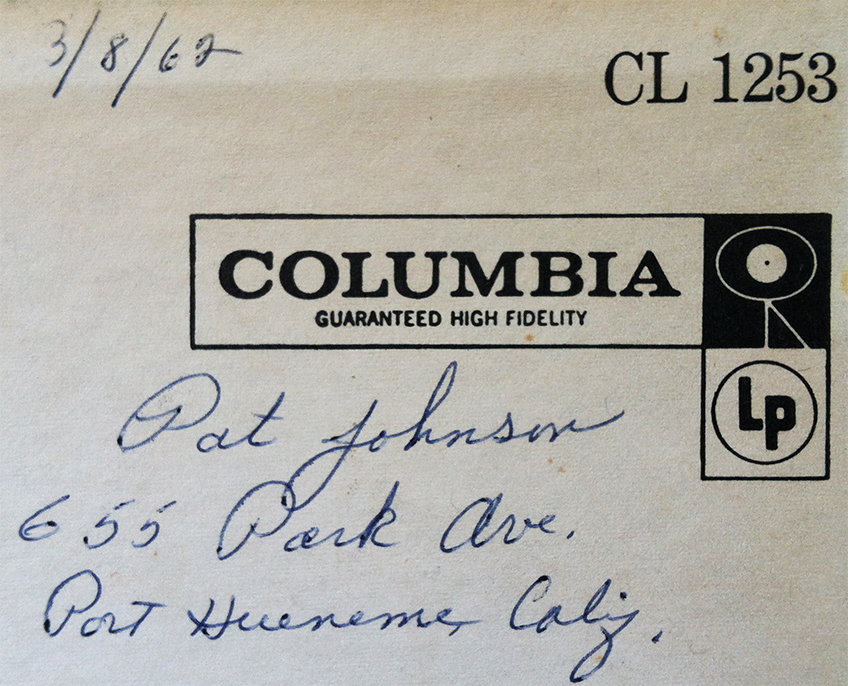
Pat_JohnsonThis copy was a thrift store find about a decade back, and was apparently pre-owned by a Pat Johnson from 655 Park Ave in Port Hueneme, CA. I venture to think, since 3/8/62 until the day it was offered to an Oxnard, CA second hand store, that Pat cherished The Fabulous Johnny Cash almost as much as I do.

Blood, Sweat and Tears

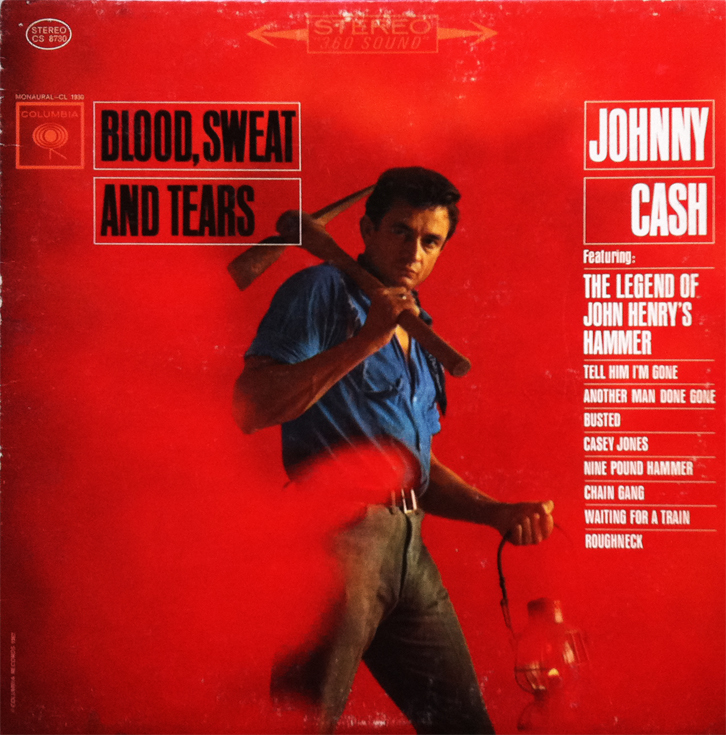
BS+TWhenever I’m feeling nostalgic, I tend to turn to the roughneck, blue-collar grit of Johnny Cash. While I’ll prefer Mr. Cash’s work with the Tennessee Two during their Sun Records days, there was something about Blood, Sweat and Tears that stuck out like a rusty spike awaiting its inevitable drive into the cold, hard Earth that grabbed my sleep-clouded eyes this morning. Since it’s Monday morning for all of you hard working pencil pushers, the inevitable start to yet another inevitable workweek, Blood, Sweat and Tears seemed desperately appropriate.

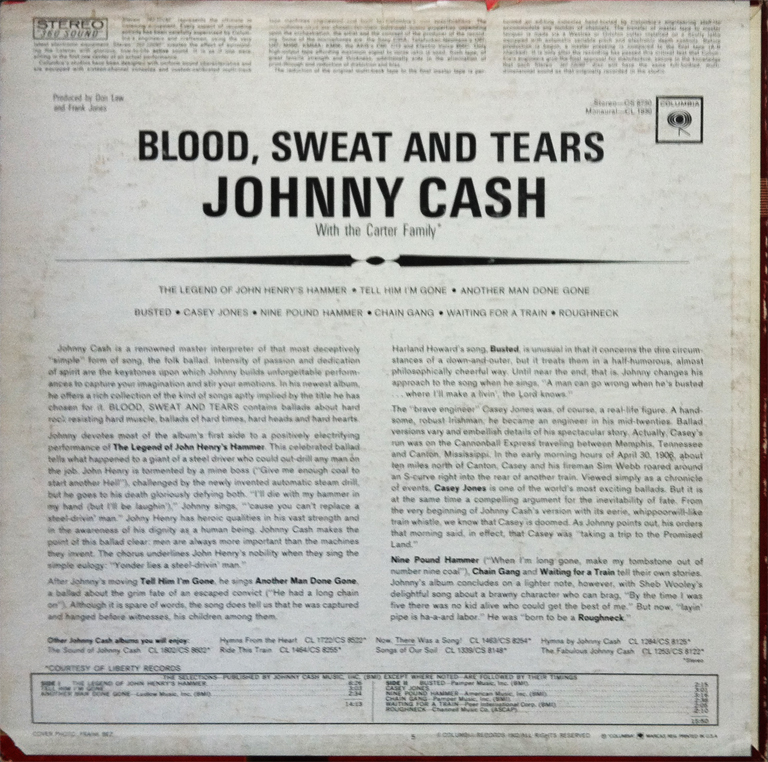
BS+T BackA collection of working man ballads, this, Mr. Cash’s 15th album, was released in 1963 on Columbia Records and features the soulful accompaniment of the Carter Family, the same legendary folk ensemble he’d become a part of some five years later, in March of ’68, when he married June Carter.

So, welcome to the working week, and if you find yourself daydreaming for an era without redundant meetings, corner-cutting executives, or inner-office politics, book some time with the musical spokesperson for the hardworking everyman, Mr. Johnny Cash.

What’chu talkin’ ‘bout, Willis?

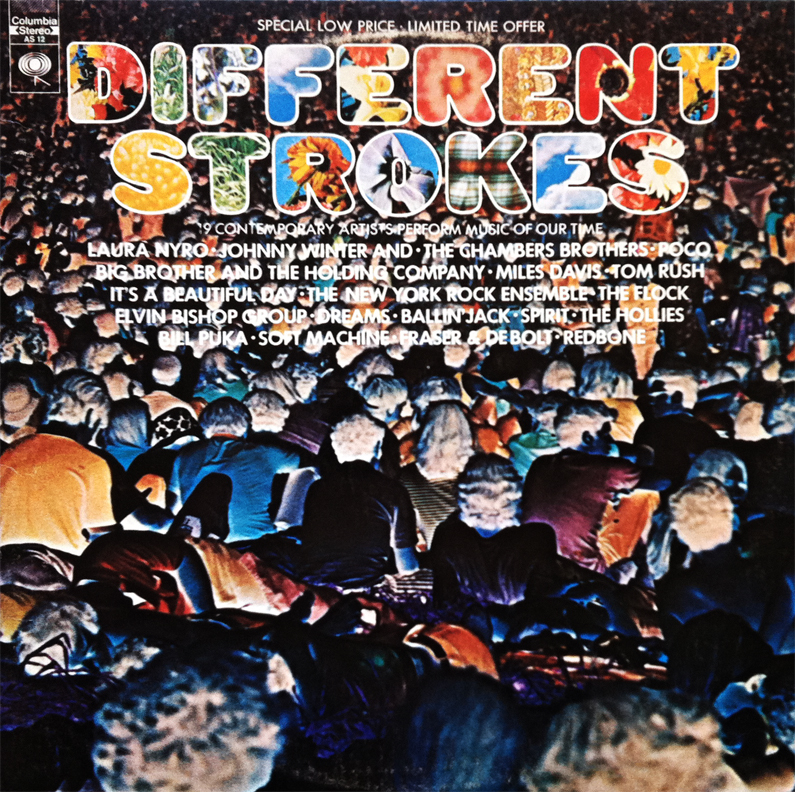
Strokes FrontI’m not entirely sure how different these strokes of “19 contemporary artists performing music of our time” were in 1971, but that doesn’t stop Columbia Records’ “special low price limited time offer” marketing ploy from capturing a wonderful, meshy, medley of jazz rock, southern fried rock, psych rock, sci-fi jazz, open field soul, and piano-friendly folk rock (and that’s just side A) on one, easy to access record.

Strokes BackDifferent Strokes launches with a bit of a gaffe as Johnny Winter And’s Rock and Roll, Hoochie Koo leads the pack of (somewhat) lesser known greats, but strategic placing of the needle can very easily, and wisely, turn this 19 track slab of delicately formed polyvinyl chloride into a 18 track time capsule representing the best Columbia Records had to offer in the burgeoning, wide-eyed, and fried-minded 1970s… but what the hell do I know? I wouldn’t have been born for another eight years.

Different Strokes is definitely worth seeking out if you don’t already own it, and can be had for exceptionally cheap if you’re so inclined. Coming highly recommended by the PG, Different Strokes is the perfect soundtrack to this, or any coffee-sipping, cloudless, southern California Saturday morning (my esteemed apologies to those residing in less than ideal climate conditions).

I Remember Buddy

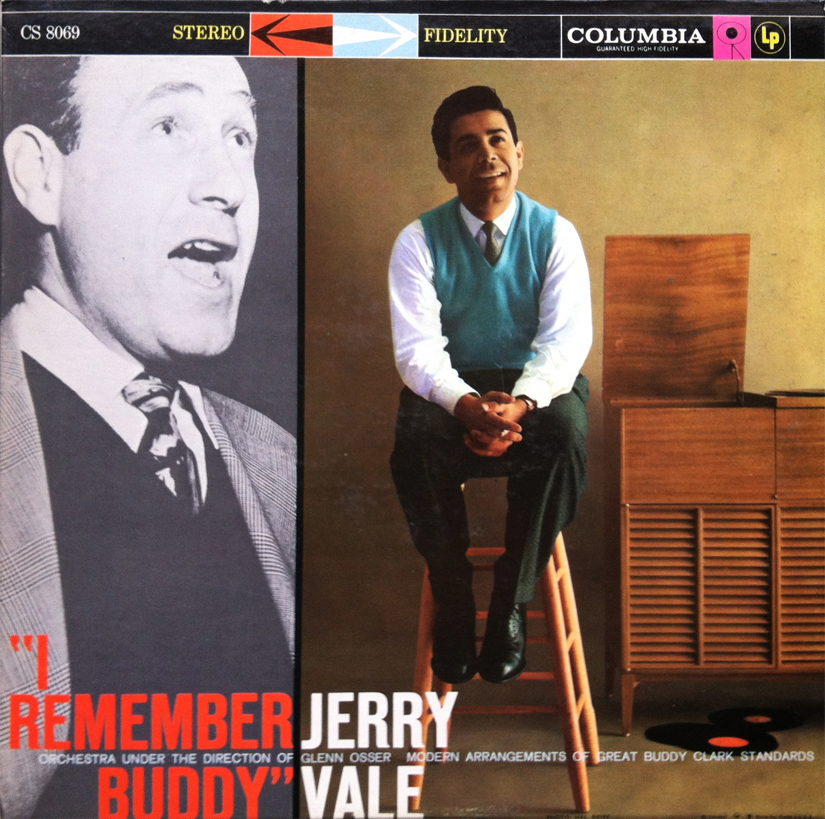
BuddyYeah, I remember Buddy! That Birkenstock-wearing, Top 40 Radio-listening, part time tree-hugging philanthropist. It’s nearly impossible to forget him, given his gaudy, rhinestone eye patch he considers, “a necessary fashion accessory, regardless of my 20/20 vision.” Yeah, Buddy’s ideals are more based on the weekly grocery circulars than anything he learned in Philosophy V01 up at Ventura College.

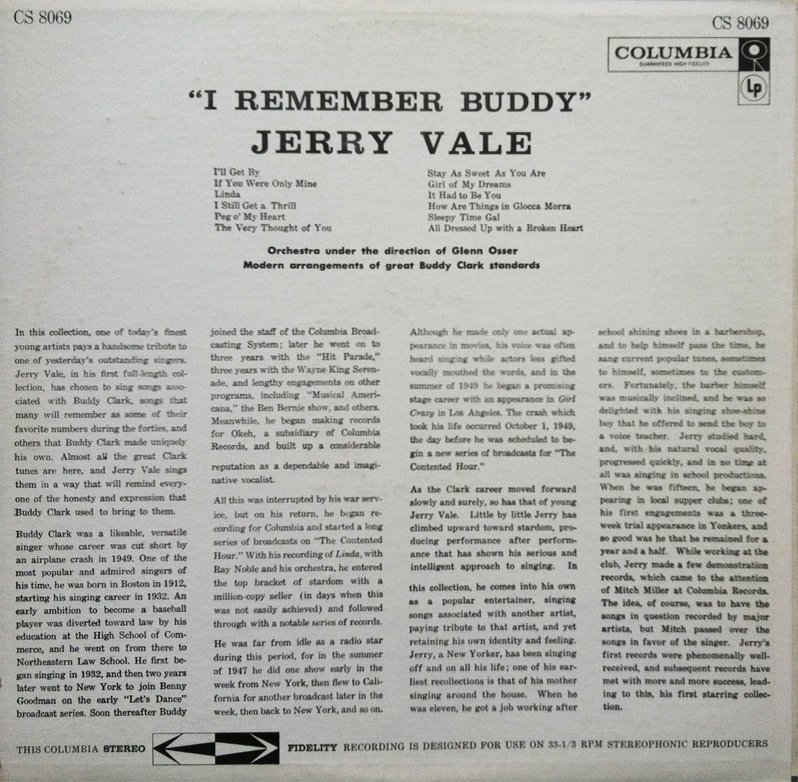
Jerry BackI remember Buddy, and so does Jerry Vale. My memory of this tip-stealing, hot sauce drinking, re-gifter isn’t near as sentimental as they appear to be for Mr. Vale. Unlike Mr. Vale and his sugar-sweet, golden-throated praise in Buddy’s memory (why he would do such a malignant thing is far beyond the grasp of my comprehension), my memories of Buddy, the vagrant oil stains littering the driveway of my past, those memories need to take a permanent vacation and never get a striking urge to write home. I’ll never forget you Buddy, although I would do just about everything in my conceivable power if given the opportunity.

Listening in Depth

Listening in DepthListening in Depth, as apposed to listening in width, I suppose, is Columbia’s new (at the time) marketing gimmick to sell their “360 High Fidelity” phonographs. “Choose from more than 35 new Columbia phonographs in a wide price range and variety of cabinet designs and colors.” The phonograph featured here, Model 532, is available in mahogany, blonde mahogany, dirty-blonde mahogany, sandy-blonde mahogany, unnatural-blonde mahogany, ditsy-blonde mahogany, or walnut.

Announced in this ad-sert is Columbia sound laboratory’s own Directed Electromotive Power, or D.E.P. for short. This new feature “seals the sound chamber for tonal balance throughout the entire listening range.” (Seals it with a kiss, I suppose.)

Considering a phonograph upgrade to your own private domicile? “We invite you to inspect these portables, consoles and combinations at your Columbia Phonograph showroom today.” Update: All former Columbia Phonograph showrooms have, rather unfortunately, been converted into Jo-Ann Fabrics stores, with the exception of Wisconsin. Those have been transformed into Ben Franklin discount stores.

Just in Case You Suffered A Swift Blow to the Head

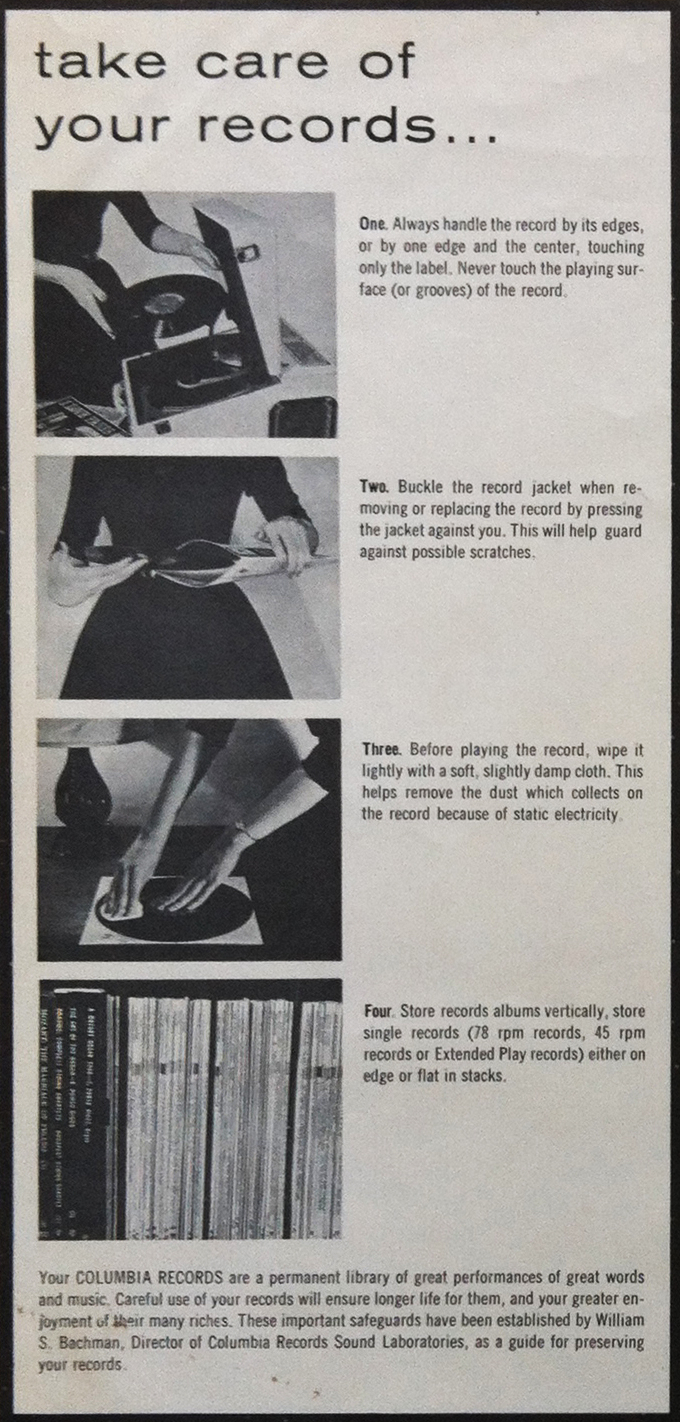
Take Care of Your RecordsBack by unpopular demand, and just in case you suffered a swift blow to the head, presented here, with all its painstakingly careful glory, is yet another “How to Take Care of Your Records if You’ve Never Owned Anything That You’d Like to Keep for More Than a Day.” This round… Columbia Records.

This is the third installment in mind-numbingly obvious, and exhaustively basic record care. First we heard from Mercury Records (Mercury Records Think You’re An Unmitigated Muttonhead), followed by RCA Victor (RCA Victor’s Simple Suggestions for Proper Record Care…). What sets Columbia Records a notch or two above the previously mentioned labels, when it comes to overtly apparent proper record usage, is the “live action” snapshots used to demonstrate each of the four (apparently) easy to forget steps to ensure proper record care. Mercury Records went with the casual, artist sketch look, while RCA Victor went with a more fiesta meets basic minimalist approach. It’s amusing to see how different labels tackle the same tedious (and did I mention obvious?) steps of proper record care. By the looks of these amazing stock footage shots, Columbia Records was doing well for themselves in 196?

By now you (should) know the dos and don’ts of proper record care, so I won’t waste your time by breaking it down for you. I will, however, waste your time by returning tomorrow with the third and final panel from this Columbia Records ad-sert. Here’s a little hint: It’s called Listening in Depth.

Columbia Records Reminds You to Take Care of Your Needle…

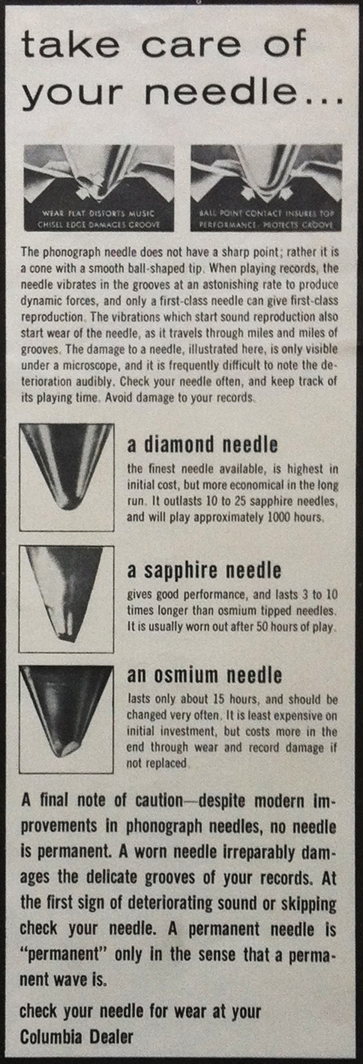
Take Care of Your Needle_smallerDo you own an animal? Perhaps a yippy dog that draws anger and vengeful hatred from your neighbors when it constantly yips all day and every night? Or maybe you own a furniture scratching cat, or a cannibal fish, or maybe even a pot-bellied pig whom you call “Breakfast.” If you’ve ever owned an animal, you know the inherent responsibility that tags along. Your hi-fi stereophonic home entertainment system is no different. Sure, it may not need blood worms twice a week, or it may not require you to scoop up its feces with a thin-layered bag from Ralph’s, and it may not even wake you up at 4am by sitting on your face, but your phonograph’s needle gives you years of listening pleasure, and like a money-sucking (but unquestionably worth it) house pet, it needs your care.

What I learned from this ad-sert (an advert crossed with an insert):

1) An osmium needles lasts only 15 hours. For those of you who enjoy the tedious trip to your overpriced phonograph dealer (and if you’re in LA you’d be required to brave the bumper-to-bumper to get there), then this is the needle for you. Nothing compliments a majestic, and borderline romantic dinner-date at home quiet like the phrase, “I’m sorry dear, I’ve got to head to George Meyer TV & Stereo for another osmium needle. Please put the meatloaf in the microwave, and when I get back we can finish this Burl Ives album.” 15 hours?! Are you kidding me? Why even bother making them? Why not have turntables that only last 24hrs? I struggle to see the logic.

2) Only a first-class needle can give first-class reproduction. Second, third, and even fourth-class needles don’t only cause breakage and ear-slapping skips on your favorite Hollies album, but they’ve also been known to short out the wall socket, fry your nice shag carpet, and even burn down your lovely (this is subjective, of course), and fashionably outdated bachelor pad. A wise man doesn’t fly Coach when it comes to purchasing a needle. Don’t be an unwise man.

3) Avoid damage to your records. You mean I SHOULDN’T use my Marlene Dietrich albums as serving ware at my poorly catered, and forcibly causal dinner parties? Gosh, maybe I should stop carving my initials into the grooves so as to mark my territory when I take my records to those rye and record parties. Perhaps I’ve been ignorant to the whole “take care of your records” thing.

Columbia Records is never one to miss the overbearing opportunity to point out the painfully obvious when it comes to basic, record-related audio care. Tomorrow, we’re going to focus on yet another elementary approach to securing the longevity of your music library, and once again, it comes courtesy of Columbia Records. Happy Monday, kids!

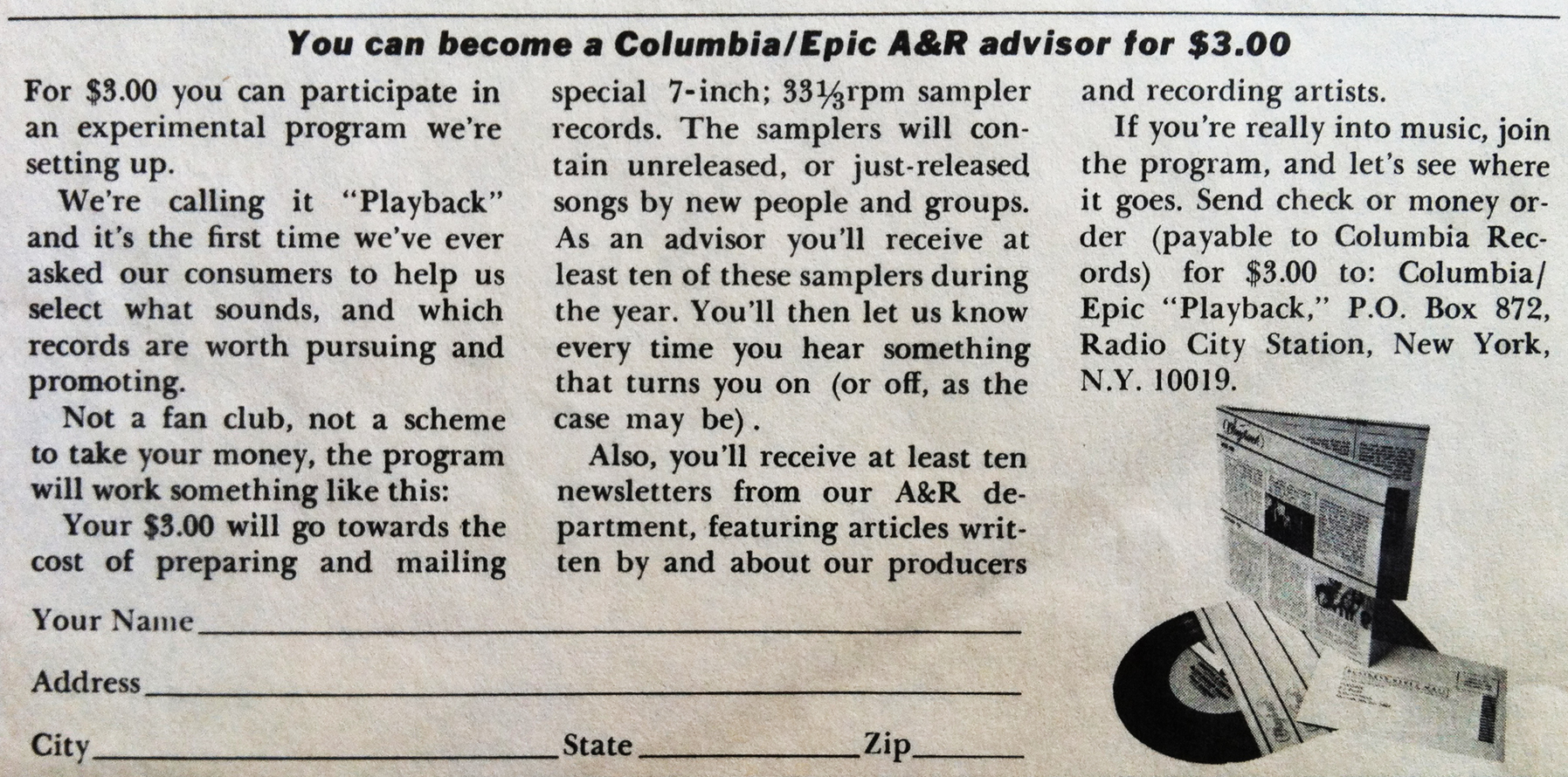
Become a Columbia/Epic A&R Advisor for Only $3.00

A&R Advisor AdvertIf you get a few moments, read this inventive mail-order program aimed at late 60s music connoisseurs (I’m assuming it’s from the late 60s as it was found in an album from 1968).

Basically, you’d send Columbia Records $3 ($19.53 by today’s inflation-soaked, nightmare-inducing terms) and over the course of one year, you’d receive 10 special, “7-inch or 33 1/3 sampler records containing unreleased or just-released songs by new people and groups.” After receiving these records, it was your duty as an A&R Advisor to inform Columbia Records which songs tickled your fancy, and which were better suited for the vinyl graveyard, also known as St. Vincent De Paul.

A fairly elaborate concept to comprehend today, given that the same back and forth info-swap between record labels and faithful listeners is now done via the cloud and email, this little piece of music history shows that just because it’s pressed doesn’t mean it’s good, and that just because it’s backed by a label, doesn’t mean they know what the hell they’re doing.

There’s hope for us yet.

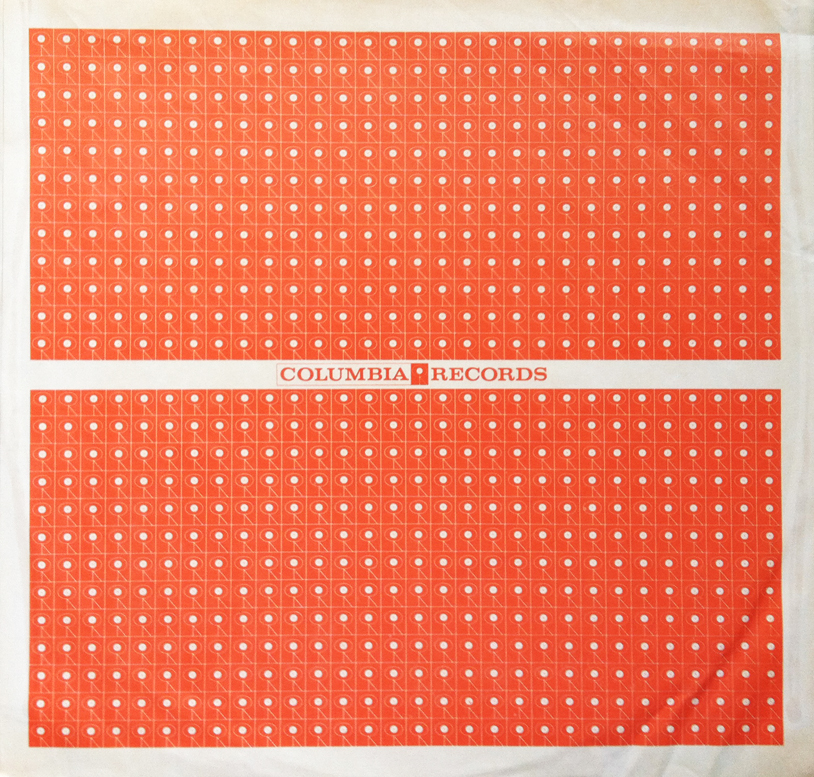
Columbia Records Sleeve

Columbia Records InsertIn lieu of today’s biggest release in the history of Columbia Records (which is an argument to be had, I know), I present a simple, yet elegantly designed sleeve from 196?

Using repetition, and a simple (not to mention inexpensive) two-color layout, the designers at Columbia Records produced an elegant piece of 1960’s design in the often hidden form of a protective record sleeve.

As you can plainly see, the Columbia Records logo is subtly patterned on either side of the centered, Columbia Records name. There is no question that a bold white line amongst a sea of orange logos was designed specifically to demand attention from the eye, and only after you’ve read the text do you realize the tiny logo creating the hemispheric patterns.

If you haven’t already, go out and pick up a copy of Daft Punk’s Random Access Memories. When you leaf through the futuristic (2013) album, think back to the mountainous Columbia Records catalog, and how simple, yet tasteful, their design (and musical) history was.

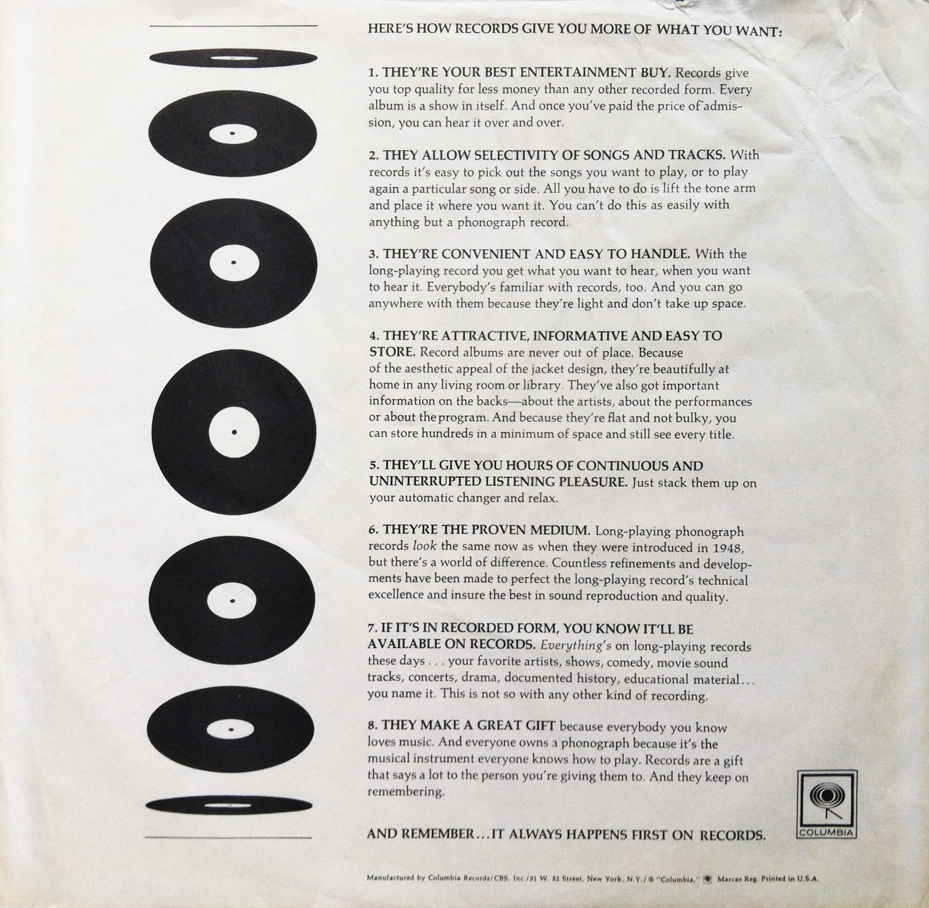
It Always Happens First on Records

Here’s How Records Give You More of What You Want:

New Columbia Insert1. They’re Your Best Entertainment Buy. Forget about your relationship with touch-screen baby wipes and bowel movement status updates. The vinyl record is way more entertaining than that new Smart (fill in the blank), and it’s cheaper too. Cheap is good. That means you can finally afford that sticky tattoo-removal procedure so you can forget about that regrettable weekend in Cabo.

2. They Allow Selectivity of Songs and Tracks. Gone are the archaic days of slaving through an entire album’s worth of songs. Feel the need for a quick spin of Obsession by Animotion but don’t want to wade through the dull, 8 filler tracks? With records, you have that option.

3. They’re Convenient and Easy to Handle. They’re not say, as convenient as an automatic fish feeder or adequate plumbing, but records are more accessible than lugging Mott the Hoople around with you everywhere you go.

4. They’re Attractive, Informative and Easy to Store. Forget those overpriced, dysfunctional dating sites. Records are attractive, smart, funny, and they won’t mind if you don’t wash your shirt laundry as often as you probably should.

5. They’ll Give You Hours of Continuous and Uninterrupted Listening Pleasure. Hours? Yes. Uninterrupted? I can think of a few times records may interrupt your listening flow. Like say, when you need to flip the record to play the 2nd side, perhaps?

6. They’re the Proven Medium. This one is true. I mean, we all know digital files are on their way out. Am I right?!

7. If It’s in Recorded Form, You Know It’ll be Available on Records. Ever get the hankering for the smooth, swinging sound of Richard Nixon and his administration conversing about secret, and often illegal activities? It was recorded, so there should be a record out there somewhere.

8. They Make a Great Gift. Kids love ‘em, old folks love ‘em, and your local grocery store owner’s mistress loves ‘em. They’re like cats. They make a great gift.Spinning Record